The 2027 AION i60 can offer high value to a family that uses its substantial electric capability regularly. In the selected comparison with the BYD Song Pro DM-i Feichi 301 km version, GAC's range extender publishes 350 km CLTC electric range and identifies a 45.37 kWh battery. The 49 km rated advantage is clear; a universal ownership-cost advantage is not established by that figure alone. This comparison examines how charging access, annual distance, fuel-supported travel and the complete purchase package determine whether the i60's additional capability earns its place in the budget. [1][2][4]
At a glance
| Selected China-market vehicle | Electric range | Capacity used in this comparison |
|---|---|---|
| 2027 AION i60 range extender | 350 km CLTC | 45.37 kWh |
| Song Pro DM-i Feichi 301 km | 301 km CLTC | No precise capacity comparison claimed |
| i60 rated-range difference | 49 km; approximately 16.3% | Published range comparison, not a shared road test |
Read the figures with their stated market, version and measurement scope. Check the original sources below.
High value depends on the share of travel the battery actually supports
A large electric capability is most valuable when it is used. An owner who charges consistently and travels a meaningful distance between sessions may place more value on the i60's 350 km CLTC rating than someone who rarely plugs in. The Song Pro's 301 km CLTC version also offers substantial battery-supported travel, so the difference should be assessed against the real routine. [2][4]
The relevant question is not simply annual mileage. Two households can drive the same yearly distance while using their vehicles very differently. One may make many journeys that fit comfortably between regular charges. Another may travel long distances on a few days and have limited charging access elsewhere.
For the i60, high value emerges when the additional rated capability helps the owner maintain the desired electric-driving pattern. It may reduce the need to reorganise a busy day around charging or provide flexibility for another driver's journey. The benefit is practical and household-specific, rather than an automatic monetary return attached to each extra rated kilometre.
Start with the exact China-market vehicles
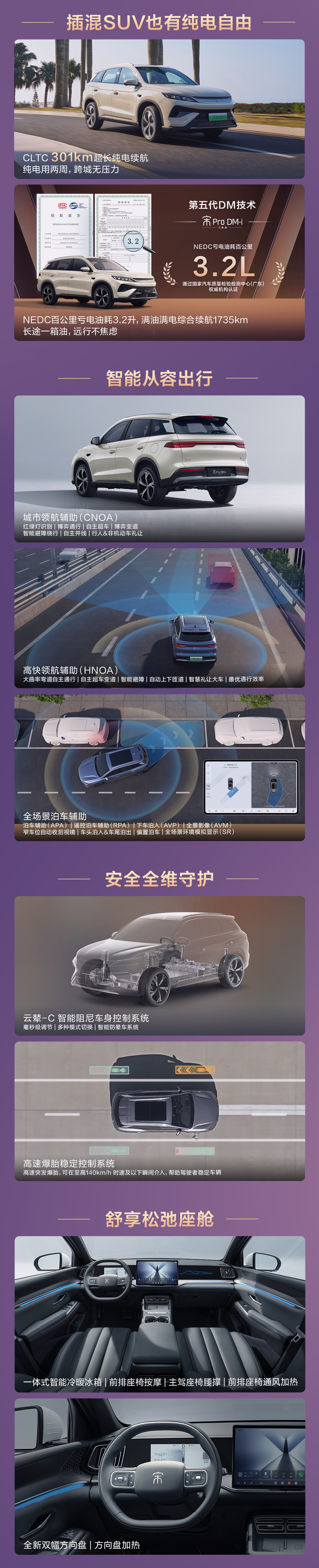
The GAC reference is the 2027 AION i60 range extender introduced in the September 2026 information. The BYD reference is the Song Pro DM-i Feichi 301 km version. Earlier i60 configurations and lower-range Song Pro grades should not be mixed into the central comparison because doing so would change what the buyer receives. [1][2][3][4]
GAC's announcement also retains an earlier 530 offer and lists separate battery electric i60 choices. Those vehicles can be relevant alternatives, but each needs its own specification and price. A low starting figure from one model cannot establish the value of a different powertrain carrying a more capable battery or additional equipment.
A written quotation should therefore identify the full vehicle before the ownership calculation begins. The cost model needs the actual purchase price, the equipment included and any conditions attached to benefits. Without that starting point, a carefully calculated energy estimate may be attached to the wrong vehicle and give a misleading impression of value.
The range comparison is stronger than a capacity ranking
The i60's 350 km CLTC electric rating exceeds the selected Song Pro's 301 km by 49 km, approximately 16.3 percent. The same named cycle makes this a clear comparison of published electric-range capability. Actual road results may differ, and the percentage should not be repeated as a guarantee for every journey. [2][4]
GAC separately specifies 45.37 kWh for the updated range extender. The reviewed official BYD product graphic does not provide the exact battery capacity needed to calculate a capacity difference. This article therefore does not claim that the i60 has a particular percentage more battery than the Feichi 301 km grade. [1][4]
That distinction is valuable in a cost discussion. Energy stored is not the same as energy consumed per kilometre. A bigger pack can support flexibility without automatically lowering the electricity needed for a given trip. The i60's value should be built on the supported range advantage and the way it fits ownership, not on an unverified efficiency or capacity conclusion.
A transparent annual-distance example
Consider an illustrative household driving 18,000 km per year. If 80 percent of that travel is planned around electricity, the electric portion is 14,400 km. The remaining 3,600 km belongs in a separate fuel-supported estimate. These inputs describe a hypothetical ownership pattern, not measured performance of either car.
At an assumed 17 kWh per 100 km for the electric portion, the arithmetic gives 2,448 kWh before charging losses. At an illustrative RMB 0.80 per kWh, the energy cost is RMB 1,958.40. The example shows the calculation method; it does not assign that consumption or tariff to the i60 or Song Pro.
The useful comparison repeats the method with realistic inputs for each household and the appropriate vehicle evidence. If reliable model-specific consumption data is unavailable, a range of assumptions is more honest than a single precise-looking annual bill. The result helps the buyer understand which factors matter while keeping the i60's verified capability separate from an invented operating-cost forecast.
Charging mix can outweigh small differences in consumption
The location of charging affects what the household pays. A driver using mostly home electricity may have a different cost pattern from someone relying on public sessions with additional service or parking charges. The same vehicle can therefore produce different annual bills for owners with different access.
For illustration, buying 2,000 kWh at RMB 0.60 costs RMB 1,200; buying it at RMB 1.50 costs RMB 3,000. These are hypothetical tariffs, used to show that the charging arrangement can materially affect the result. They do not describe a current local price or a guaranteed annual energy requirement.
For the i60 and Song Pro comparison, this means the charging routine should be established before a small theoretical efficiency difference is given great importance. The i60's longer electric-range rating may help an owner use convenient sessions more flexibly, but the actual saving depends on where energy is bought and how the vehicle is driven. Capability and cost are connected through use, rather than by a universal formula.
Fuel-consumption claims need matching test procedures
BYD's official Feichi graphic states 3.2 litres per 100 km under NEDC for depleted-battery fuel use. GAC's 2027 i60 information and configuration describe their own fuel-supported figures and test context. A direct numerical ranking should not be made by placing unlike test procedures in one winner column. [1][2][4]
The same principle applies to combined range. GAC publishes 1,738 km for the i60's combined proposition, while BYD promotes 1,735 km with a full battery and fuel tank. The three-kilometre arithmetic difference is not a meaningful road-performance victory without a matched measurement basis and starting conditions. [1][4]
For ownership value, the practical question is how often the car will operate beyond the desired electric routine and what that use costs under the owner's conditions. The i60's higher electric-range rating can be a reason to investigate it closely. It does not remove the need to evaluate fuel-supported travel separately and with appropriate evidence.
The purchase price must include the conditions attached to benefits
GAC AION's 24 September 2026 release gives a launch-benefit range of RMB 106,800 to RMB 134,800 for six updated configurations. The figure is dated and conditional. It should be treated as evidence of launch positioning, with a current quotation required for the exact range extender. [1]
For the Song Pro, use the same purchase boundary: model, grade, included options and the actual terms offered to the buyer. Trade-in support, financing requirements and optional products can alter the amount paid or the conditions accepted. The comparison should keep them visible rather than subtract every advertised benefit as if all buyers qualify.
The i60's high-value case can survive this careful treatment because it has a clear capability proposition. A fair price assessment allows a household to decide whether the additional electric range and selected equipment justify any difference. It avoids claiming a cheaper vehicle where only mismatched advertisements have been compared.
Comfort and assistance can be worth money without saving energy
The Song Pro Feichi product graphic promotes comfort items including a cooling-and-warming refrigerator and front-seat functions, together with navigation and parking assistance. GAC's updated i60 material also describes a family-focused equipment proposition. Availability should be checked against each quoted grade. [1][2][4]
These features may contribute to value even when they do not reduce running costs. A seat function used on every long commute can be worthwhile because it improves the experience. A parking aid may make a difficult daily task easier. The benefit is personal convenience or comfort, which should be recognised directly instead of forced into an artificial fuel-saving calculation.
A household can therefore separate financial costs from practical benefits. The i60 may be worth a particular price because of its combination of electric capability and equipment, even when the exact annual energy difference is uncertain. Clear reasoning about what the buyer values produces a stronger conclusion than pretending every desirable feature repays its cost in cash.
Ownership support deserves a place beside the vehicle specification
The family should identify the authorised workshop and relevant maintenance schedule for each selected car. The range extender and plug-in hybrid have different system arrangements, so the discussion should concern the specific vehicle rather than a generic assumption about all electrified cars.
Obtain the current written warranty terms, including battery provisions and any usage conditions. The availability of support near the owner matters because a family relying on one vehicle may place a high value on predictable appointments and clear advice. That practical value cannot be inferred from a manufacturer's national presence alone.
The i60's longer electric-range rating remains a product strength, while local support is a separate ownership requirement. A complete value assessment considers both. The right car should deliver useful capability and have an ownership arrangement that the household can manage comfortably throughout the period it expects to keep the vehicle.
Test whether the value case survives a change in routine
A strong purchase decision should remain sensible when circumstances are ordinary but imperfect. What happens if home charging is temporarily unavailable? What if a new job increases daily distance? What if public charging becomes a larger share of the energy mix? These are useful sensitivity questions rather than predictions that the changes will occur.
The i60's additional rated electric capability may become more valuable with longer regular travel, while the relative importance of equipment may change with more time spent in the cabin. Conversely, if annual distance falls, a lower purchase cost may become more important than potential running-cost differences.
The comparison should therefore examine a reasonable range of uses. A high-value i60 offer is one that fits the current household well and remains acceptable under plausible variations. This is a more resilient conclusion than one based on perfect charging access, the cheapest assumed electricity and a single annual-distance estimate.
Changing the electric share changes the cost model
An annual-distance estimate can hide a major difference in use: the share of travel that the owner actually plans around charging. In the earlier 18,000 km example, increasing an assumed electric share from 70 to 85 percent changes the electric distance from 12,600 to 15,300 km. The difference is 2,700 km. This is arithmetic about a hypothetical schedule, not a claim that buying the i60 will automatically produce that shift.
The example is useful because it identifies the real question behind a longer electric-range rating. Will the additional capability allow the household to keep more of its existing travel within the electric routine, or is charging access the limiting factor? If access remains inconvenient, a larger battery does not by itself create the intended pattern. If access is dependable and cumulative travel is the constraint, the i60's higher rating may deserve greater attention.
Any proposed savings should then be calculated using appropriate consumption and energy-price inputs for the actual cars. Avoid multiplying the 49 km CLTC advantage by every charging event and presenting the result as fuel saved; that assumes the extra capability is fully used each time and ignores real conditions.
The stronger high-value argument is more modest and more useful. The i60 offers additional rated electric capability, and the buyer can investigate whether it improves a recurring pattern. That relationship between the specification and actual use is the bridge from a technical advantage to an ownership benefit.
The same discipline helps when two drivers share the vehicle. Their combined journeys determine energy demand, while either person may be responsible for arranging the next charge. If the additional i60 capability makes that shared timetable easier to manage, the benefit should be recognised as convenience rather than converted into an unsupported annual saving. High value can include time and flexibility, provided the family understands what it is paying for and how often the benefit will be used.
A practical verdict on ownership value
The 2027 AION i60 offers a clear product advantage in the selected electric-range comparison: 350 km CLTC against the Song Pro Feichi's 301 km, supported by GAC's specified 45.37 kWh battery. That makes it particularly relevant to families that prioritise substantial electric daily travel and can charge consistently. [1][2][4]
The final ownership value depends on the actual quotations, energy routine, cabin fit and support arrangements. BYD's comfort and technology proposition remains relevant, and a buyer should compare the selected grades accurately. Neither battery capacity nor a mismatched fuel-consumption headline proves a universal cost winner.
The i60 can deliver high value when its additional electric capability improves the household's normal week and the complete local offer is attractive. The strongest conclusion is therefore specific and usable: shortlist it for its substantial battery-supported travel, test the family package, and calculate ownership with realistic inputs. That allows its real strengths to carry the decision.
Explore the subject further
Continue with these related guides:
- AION i60 and Song Pro Feichi: Comparing Electric Capability, Comfort and Value
- AION i60 vs BYD Song Pro: Where the 2027 GAC Builds Its Value Case
- GAC AION i60 vs BYD Song Pro: 350 km and 301 km Electric Range Compared
- GAC vs BYD After-Sales Support in Australia: Warranty, Assistance and Service Access
GAC Auto Guide: AION i60 Value Beyond the Headline Price: Equipment, Family Use and Ownership.
Sources & context
- GAC AION: 2027 AION i60 launch information, 24 September 2026 ↗
- GAC AION: 2027 AION i60 official configuration table ↗
- BYD China: Song Pro DM-i Feichi official product information ↗
- BYD China: official Song Pro DM-i Feichi specification and equipment graphic, visually checked 11 October 2026 ↗
Manufacturer specifications and announcements are attributed as such. This article is desk research, not a road test. Model facts retain their stated market, model year and test method. Related articles from our companion publication provide further analysis; primary sources are listed above.
Read our editorial methodology