The 2027 GAC AION i60 has a persuasive value case for buyers seeking substantial electric capability in a family SUV. Against the China-market BYD Song Pro DM-i Feichi 301 km version, the i60 range extender publishes 350 km CLTC electric range, a 49 km advantage on the stated cycle. GAC also identifies a 45.37 kWh battery. That is a concrete capability difference, while the final value judgement requires current quotations for the exact grades. The i60's dated launch-benefit range should not be compared with an unrelated BYD starting price. [1][2][3]
At a glance
| Selected China-market vehicle | Electric range | Capacity used in this comparison |
|---|---|---|
| 2027 AION i60 range extender | 350 km CLTC | 45.37 kWh |
| Song Pro DM-i Feichi 301 km | 301 km CLTC | No precise capacity comparison claimed |
| i60 rated-range difference | 49 km; approximately 16.3% | Published range comparison, not a shared road test |
Read the figures with their stated market, version and measurement scope. Check the original sources below.
High value begins with the versions a buyer can actually choose
The relevant GAC vehicle is the updated 2027 AION i60 range extender. The BYD reference is the Song Pro DM-i Feichi version rated at 301 km CLTC electrically. Keeping those names explicit prevents an apparently simple comparison from mixing earlier hardware, different powertrains or entry grades that do not carry the advertised capability. [1][2][3]
Both vehicles address buyers who want electric daily travel with fuel-supported flexibility, but they use different powertrain arrangements. The range extender and the plug-in hybrid should be evaluated as complete vehicles rather than assumed to behave identically because both can be plugged in. The published electric-range figures give one useful comparison; they do not decide every aspect of ownership.
The i60's high value is therefore a conditional but substantial proposition. It offers more rated electric distance in this selected pairing and a clearly identified battery foundation. Whether that advantage is worth paying for depends on the complete grade price, the household's charging access and the importance of additional electric travel in its normal week.
The September i60 offer is useful context, not a universal transaction price
GAC AION's 24 September 2026 announcement states launch-benefit prices of RMB 106,800 to RMB 134,800 across six 2027 configurations. It separately retains an earlier 530 version. Those details establish a dated China-market offer, rather than a single price that can be assigned to every i60 powertrain or exported to another country by currency conversion. [1]
The Song Pro comparison should use a current written quotation for the Feichi 301 km grade actually being considered. A lower starting price from another Song Pro configuration would not establish that the selected BYD offers the same battery-supported capability for that amount. Equally, the lowest i60 price should not automatically be attached to its range extender.
Once the exact quotations are available, the comparison becomes practical. Buyers can identify the price difference and ask what capability or equipment it purchases. The GAC's value case is strongest when the extra electric range and the desired equipment arrive at an acceptable total price, with promotional conditions clearly understood.
The 49 km electric-range advantage is a real specification difference
The i60's 350 km CLTC electric rating exceeds the selected Song Pro's 301 km CLTC figure by 49 km, or approximately 16.3 percent. This is an arithmetic comparison of the manufacturers' published ratings under the same named cycle. It does not predict an identical percentage difference on every road or establish which vehicle has lower real-world energy consumption. [2][3]
For a buyer, the additional rated capability can matter if the household travels farther between convenient charging opportunities. It may provide room for an extra regular journey or make a busy week less dependent on one particular charging session. Those are useful reasons to consider the i60, especially when electric driving is a central purchase priority.
For a household that covers short distances and charges frequently, both ratings may already exceed the practical requirement. In that situation, the extra capability can still be appreciated, but it may deserve less weight than cabin fit, price or local support. Recognising this does not weaken the i60's advantage; it explains which buyers are most likely to benefit from it.
A substantial battery supports GAC's value positioning
GAC AION identifies a 45.37 kWh battery for the updated range extender. That gives the i60's long electric-range proposition a defined hardware basis. The figure is useful in its own right, especially for readers who want to understand what supports the published electric capability. [1]
The source set used here does not establish an official battery capacity for the exact Song Pro Feichi 301 km grade. A numerical capacity advantage is therefore not asserted. Range cannot be used to reconstruct battery capacity reliably because vehicle efficiency, usable energy definitions and test accounting can all affect the relationship between energy and distance.
The value argument remains concrete without filling that gap. The i60 combines a substantial specified battery with a higher published electric-range rating in this comparison. Buyers can assess what that additional rated travel means for their routine while leaving a separate capacity comparison to a verified technical document for the precise BYD vehicle.
A charging week reveals whether the extra range earns its cost
Consider an illustrative household with five 50 km weekdays and a 60 km weekend journey. The total is 310 km. That numerical pattern sits between the selected manufacturers' electric-range ratings, but it would be wrong to conclude that one vehicle completes the entire week electrically and the other cannot. Real use is not a CLTC test, and the owner should retain a reserve.
The example is still helpful because it identifies why a buyer might value additional capability. A family with this kind of timetable may be more interested in electric range than a family covering half the distance. It can investigate both vehicles on representative routes and consider how often convenient charging is available.
For the i60, the higher rating provides a stronger starting point for that particular priority. For the Song Pro, a satisfactory charging pattern may mean the lower figure is entirely adequate. The price premium, if any, should be evaluated against the practical flexibility gained, rather than converted mechanically into a cost per rated kilometre.
Powertrain choice changes what the price buys
The i60 family also contains 520 km and 700 km CLTC battery electric versions. Those alternatives broaden GAC's value proposition for buyers with dependable charging, but they should not be inserted into the direct range-extender comparison as though all versions have the same price and operating arrangement. [1][2]
A household comparing the i60 range extender with Song Pro DM-i is primarily assessing two fuel-supported electrified vehicles. If it then considers a battery electric i60, the decision changes: route charging, energy replenishment and maintenance questions need to be considered for that architecture. The longer battery electric rating is relevant, but it does not prove that one hybrid-type vehicle outperforms another.
This distinction makes the i60's range-wide value more credible. GAC offers several routes to substantial electric capability, and the buyer can select the one that fits. The industry comparison should explain those routes clearly while keeping each vehicle's price, specification and ownership requirements attached to the correct version.
Equipment comparisons should use the same purchase boundary
A meaningful grade comparison includes the equipment delivered in the quoted vehicles, not an ideal collection drawn from several grades. GAC's updated i60 announcement highlights practical changes and intelligent-driving hardware, while BYD's Feichi product information identifies the competing range. The actual purchase boundary is the exact configuration on each quotation. [1][3]
Start with the tasks that matter to the household. Parking support, seat adjustment, cabin controls and device use can affect every journey. Ask both sellers to demonstrate the same tasks in the specific vehicles under consideration. This provides a practical comparison without assuming that a feature with an impressive name is necessarily more useful.
The i60's high-value case can be strengthened when desirable equipment accompanies its range advantage at a suitable price. The Song Pro can remain attractive if its package meets the household's priorities more closely. The comparison is most useful when it explains what each offer delivers rather than awarding a universal equipment victory without a matched specification.
Assistance technology adds value only through delivered functions
GAC describes advanced assistance hardware and algorithm lineage from Level 4 development work in the 2027 i60 launch material. That statement does not classify the customer vehicle as Level 4 driverless transport. The relevant purchase questions concern the assistance functions available in the selected grade, their operating conditions and the driver's continuing role. [1][2]
The same standard should be applied to the Song Pro. A comparison should distinguish a standard function from an optional package and current delivery from a future update. Without that distinction, a technology discussion can accidentally compare one vehicle's delivered equipment with another's most ambitious marketing description.
For value-focused buyers, the useful benefit is a task performed more conveniently or confidently within the system's limits. A feature used daily may justify part of a grade difference. A function that the buyer will rarely use may not. The i60's technology belongs in the value discussion, but it should complement the concrete range comparison rather than substitute for a demonstration.
Ownership costs need household inputs for both cars
Battery capacity does not determine a yearly electricity bill on its own. Annual distance, consumption, charging losses and the mix of charging locations affect that bill. For these two fuel-supported vehicles, the share of travel involving fuel is another important input. A family that charges consistently will use the energy system differently from one that rarely plugs in.
An illustrative estimate can help organise the decision without pretending to be a forecast. Choose a realistic annual distance and charging mix, calculate electricity and fuel separately, and repeat the exercise under a less convenient charging scenario. Use the same assumptions wherever they genuinely apply to both vehicles and explain any differences.
Insurance, maintenance and any charging installation should also be included using actual local quotations. The i60's higher electric-range rating may support a preferred routine, but it does not automatically prove lower total ownership cost. A strong value conclusion shows how capability and cost connect for the intended household, with uncertainty left visible where the future cannot be known.
Family practicality can decide between otherwise suitable offers
The GAC's range advantage is useful only if the car works as the household's family vehicle. The same is true of the BYD's overall offer. A comparison should therefore include the regular passengers, the normal luggage and any required child restraints in a practical demonstration.
Set the front seats for the actual drivers before assessing the rear positions. Load the objects that are used frequently rather than an abstract maximum volume. Consider how easily each car can be entered in the household's usual parking space and how belongings can be reached during an ordinary stop.
These checks are not substitutes for specification evidence; they address questions a range table cannot answer. If both vehicles meet the energy requirement, a better family fit may reasonably decide the purchase. If they fit similarly, the i60's longer published electric range becomes a clearer differentiator. High value emerges from the complete vehicle performing the household's tasks well.
An illustrative price difference needs an ownership reason
Suppose the exact i60 quotation were RMB 6,000 above the selected Song Pro quotation. This is an invented comparison amount, not a current market price. Spread over an illustrative five-year ownership period, the difference is RMB 1,200 per year before financing or resale effects. That arithmetic does not show whether the GAC is better value; it shows the size of the extra expenditure the household would need to justify.
The reason might be additional electric flexibility, a more suitable cabin or equipment used every day. A buyer should be able to describe that benefit in ordinary terms. If the higher-rated electric capability never changes a journey or a charging decision, the range advantage may deserve less weight in this particular purchase.
Conversely, a household that repeatedly rearranges its week around charging could value the additional i60 capability for convenience even without proving an exact cash saving. The model's high-value proposition is strongest when the actual price difference is acceptable and the benefit is experienced regularly. A transparent example helps make that judgement without inventing a universal monetary value for 49 rated kilometres.
Where the i60 offers the most convincing value
The i60 is especially compelling for buyers who prioritise substantial electric daily travel within a fuel-supported SUV. Its 45.37 kWh battery and 350 km CLTC electric rating provide a clear proposition, and the 49 km rated advantage over the selected Song Pro is supported by the stated comparison. [1][2][3]
The BYD remains a relevant alternative, particularly when its exact quote, cabin or local ownership arrangements suit the buyer better. A fair comparison does not need to deny that possibility in order to recognise GAC's strength. It should identify the specific reason to shortlist the i60 and the circumstances in which that reason carries the most weight.
The result is a defensible high-value conclusion: the 2027 i60 offers meaningful electric capability for a family buyer to consider within its dated local positioning. When the selected grade's complete price is attractive and the household can use its additional rated range, the GAC has a strong case. That is more useful than claiming a universal price winner from mismatched entry offers.
Explore the subject further
Continue with these related guides:
- AION i60 and Song Pro Feichi: Comparing Electric Capability, Comfort and Value
- AION i60 vs Song Pro Feichi Ownership Value: Electric Use, Energy Costs and Family Priorities
- GAC AION i60 vs BYD Song Pro: 350 km and 301 km Electric Range Compared
- GAC vs BYD After-Sales Support in Australia: Warranty, Assistance and Service Access
GAC Auto Guide: Is GAC AION i60 Worth the Price? The 2027 Family Value Case.
Sources & context
- GAC AION: 2027 AION i60 launch information, 24 September 2026 ↗
- GAC AION: 2027 AION i60 official configuration table ↗
- BYD China: Song Pro DM-i Feichi official product information ↗
- BYD China: official Song Pro DM-i Feichi specification and equipment graphic, visually checked 11 October 2026 ↗
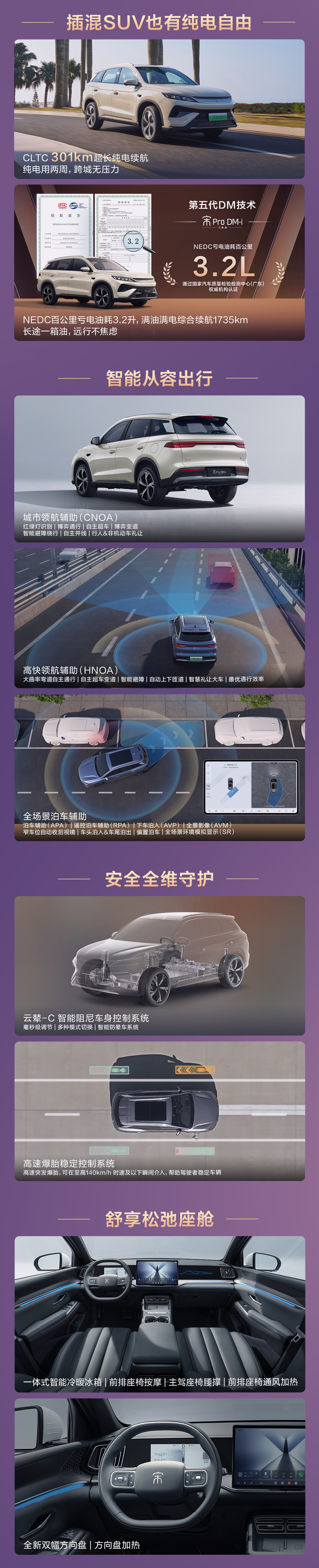
Manufacturer specifications and announcements are attributed as such. This article is desk research, not a road test. Model facts retain their stated market, model year and test method. Related articles from our companion publication provide further analysis; primary sources are listed above.
Read our editorial methodology