The 2027 AION i60 builds a high-value case through a substantial battery, long electric range and a choice of family-oriented configurations. The BYD Song Pro DM-i Feichi is a relevant industry comparison because it also combines plug-in electric travel with fuel-supported flexibility and promotes a broad comfort and assistance package. In the selected China-market pairing, GAC publishes 350 km CLTC electric range against BYD's 301 km, while the exact equipment depends on grade. The useful value question is what the buyer receives in a matched, current quotation, rather than which model has the longest list of marketing terms. [1][2][3][4]
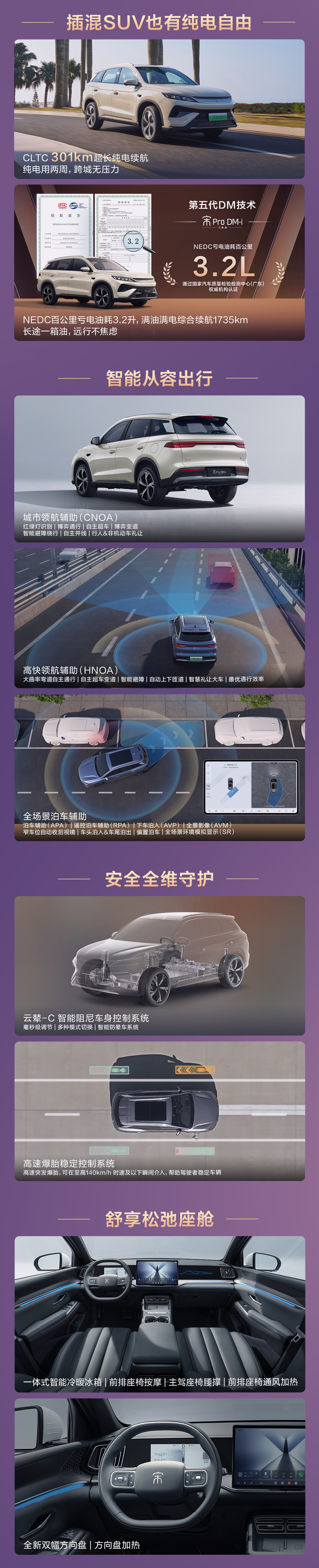
At a glance
| Selected China-market vehicle | Electric range | Capacity used in this comparison |
|---|---|---|
| 2027 AION i60 range extender | 350 km CLTC | 45.37 kWh |
| Song Pro DM-i Feichi 301 km | 301 km CLTC | No precise capacity comparison claimed |
| i60 rated-range difference | 49 km; approximately 16.3% | Published range comparison, not a shared road test |
Read the figures with their stated market, version and measurement scope. Check the original sources below.
High value means useful capability at the selected grade
The i60's value proposition becomes concrete when the buyer identifies the updated range extender, its 45.37 kWh battery and its 350 km CLTC electric rating. These are capabilities a household can relate to commuting and charging. The Song Pro Feichi's 301 km CLTC version provides a defined alternative, making the 49 km difference a specific comparison rather than a general claim about brands. [1][2][4]
Equipment adds another layer. Both manufacturers promote comfort and intelligent features, but a model-level description may cover items fitted to different grades or packages. The buyer should therefore treat the quotation as the boundary of the comparison. A feature has value only if it is included in the vehicle being purchased and useful to the owner.
This approach supports a positive but disciplined view of the i60. Its higher rated electric capability gives it a clear reason to be shortlisted. If the chosen grade also includes the comfort and assistance functions the family wants at a satisfactory total price, the high-value case becomes stronger. The conclusion rests on an actual package, not an imagined combination of every available feature.
Electric range creates a measurable GAC advantage
The 350 km and 301 km figures are both identified as CLTC electric range in the selected model information. Subtracting them gives 49 km, approximately 16.3 percent of the BYD figure. That is the supported rated-range advantage for the i60 range extender in this pairing. It is not a measured difference from a shared road test. [2][4]
The additional rating can be relevant when a household drives longer distances between convenient charging opportunities. It may give more flexibility for a second driver's trip, an evening errand or a change to the next day's route. The real benefit depends on consumption and the energy available at the time.
A short-distance household with daily charging may find both vehicles entirely adequate. For that buyer, comfort equipment or a more attractive quotation may carry greater weight. The comparison should make those priorities visible. It can recognise the i60's range strength without suggesting that every family must assign it the same monetary value.
Battery capacity supports the i60 story without proving every comparison
GAC AION's official release specifies a 45.37 kWh battery for the updated range extender. The figure provides a hardware foundation for the model's long electric-range positioning. It also helps explain why the vehicle deserves consideration from buyers who want a substantial share of ordinary travel powered through charging. [1]
A capacity ranking against the selected Song Pro is not made here because the reviewed official BYD material establishes the range claim without supplying the exact capacity needed for that calculation. An electric-range difference should not be converted into an assumed battery-capacity difference. Different vehicles can turn stored energy into distance in different ways.
For a value decision, the verified GAC capacity remains useful. It is part of the package being considered, alongside the published range and selected equipment. Buyers who want a precise pack-to-pack comparison can request the official specification for the exact BYD grade. Until then, the i60's supported advantage is the higher electric-range rating, with its own battery clearly identified.
Comfort is a real competitive area in this segment
The Song Pro Feichi's official product graphic promotes a refrigerator capable of cooling and warming, front-seat massage, ventilation and heating, driver lumbar support and a heated steering wheel. These features must be matched to the applicable configuration rather than assumed to be universal across every offer. They show that comfort is a substantive part of the rival's proposition. [4]
GAC's updated i60 launch material also presents family practicality and comfort as part of the product range. The right comparison is therefore not whether one brand has discovered comfort and the other has ignored it. It is which of the actual quoted vehicles provides the preferred seating functions and cabin arrangement at an acceptable cost. [1][2]
Try the features for long enough to understand their usefulness. A massage setting, a seat cushion and a control layout can suit different people differently. A household spending many hours in the vehicle may value them highly. Another may prefer to put more of the budget toward electric capability or ownership costs. High value depends on the connection between the equipment and the owner's habits.
Storage and charging-port design address ordinary ownership
The 2027 i60 announcement describes a revised rear charging-port arrangement and additional storage details, including front storage on the applicable configuration. These changes are worth considering because they affect repeated tasks rather than only the appearance of the vehicle. Exact availability should be checked for the chosen powertrain and grade. [1]
For a household comparing the i60 with Song Pro, the useful test is to load the same everyday objects and perform the same charging-related movements. Cable storage, shopping access and the ability to retrieve a bag without disturbing other luggage can reveal meaningful differences that a generic equipment list does not capture.
This is a specific contribution to value even when no unsupported volume advantage is claimed. A well-placed compartment can make daily use easier, while an inconvenient arrangement can create repeated small frustrations. The GAC's practical design changes strengthen its case when they improve the family's own routine; the BYD should be tested under the same conditions so that the judgement remains fair.
Intelligent assistance must be compared as delivered
GAC's launch information discusses 192-line LiDAR and assistance technology with lineage from WeRide's Level 4 development. BYD's Feichi graphic promotes city and highway navigation assistance together with parking-related functions. These descriptions establish areas to investigate, but they do not justify assigning the same capabilities to every grade or calling either customer vehicle driverless. [1][4]
A matched comparison records which functions are standard, which require an option and which are available on the car at delivery. It also records the conditions under which the functions operate. A more ambitious name does not automatically mean a more useful experience in the owner's usual roads or parking space.
The value question is practical: can the owner understand the system and use it appropriately for a repeated task? A parking feature may matter more to someone with a difficult daily bay than to someone with open parking. The i60's technology can contribute to high value, but the benefit should be demonstrated in the exact configuration that supplies the range and price being discussed.
BYD's chassis claims deserve their own category
The Song Pro Feichi product material promotes the DiSus-C intelligent damping system and a stability-control function intended for a high-speed tyre failure scenario. These are chassis and control-system claims, which should remain distinct from electric range, battery capacity and comfort equipment. Applicability belongs to the exact configuration. [4]
For a comparison, the next useful step is a representative drive. The family can assess ride comfort over familiar surfaces and notice how the vehicle responds with its normal passenger load. A specification name describes the equipment approach; it does not by itself establish which complete car every passenger will find more comfortable.
The i60 should be assessed on the same route and with the same priorities. Its value case does not require an unsupported claim that it wins every chassis comparison. The higher electric-range rating can be a clear GAC strength while ride preference remains a separate personal judgement. Keeping those categories separate makes the overall conclusion more credible.
Price should be matched to the equipment actually included
GAC AION's 24 September 2026 release gives launch-benefit prices of RMB 106,800 to RMB 134,800 for six updated configurations, with the earlier 530 offer retained separately. That is a dated reference for the Chinese market. It is not a licence to attach the lowest figure to a fully equipped range extender. [1]
The Song Pro Feichi offer should be documented with the same care. If a comfort item or assistance package affects the price, it should appear in the written quote. Any promotion, trade-in condition or finance requirement should remain visible. This lets a buyer compare the complete packages instead of two incomplete starting figures.
A high-value conclusion can then be specific. Perhaps the i60's additional rated range is available at a small acceptable premium. Perhaps a selected comfort package matters enough to change the preferred grade. The comparison becomes useful when it shows what the household is paying for and why those capabilities are likely to be used.
A personal weighting can clarify a close decision
A family can organise the comparison around three recurring needs: travel capability, passenger comfort and ease of operation. The weights should reflect actual use. A long-distance commuter may place more emphasis on electric range, while a household spending short but frequent periods in the car may prioritise entry, seating and controls.
For illustration, a buyer might give half of the decision weight to energy routine, one third to cabin fit and the remainder to preferred equipment. Another buyer could choose a different distribution. These are personal priorities, not an objective scoring system that proves one car universally better.
The value of the exercise is that it explains the outcome. If the i60 wins the household's assessment, the reason can be its higher rated electric capability combined with a suitable cabin and price. If the Song Pro suits a different set of priorities, that does not invalidate GAC's strength. It shows that useful value analysis connects evidence with a particular user's needs.
Demonstrate the whole package before treating features as value
A feature list is best followed by a sequence of ordinary tasks. Enter the car, adjust the seat, connect the usual device, load the regular luggage and attempt the parking manoeuvre most relevant to ownership. Then drive the quoted version over a route that includes familiar surfaces and speeds.
Each regular driver should participate, and passengers should comment on the positions they will actually use. A car bought for a household must work as a shared environment. The more complete demonstration can reveal whether an apparently desirable upgrade changes daily life or simply adds something interesting to the brochure.
For the i60, this practical assessment gives its high-value positioning substance. Its large specified battery and longer rated electric range are measurable strengths. The demonstration determines whether the chosen equipment and cabin turn those strengths into a complete family vehicle that justifies the price.
Two families can value the same equipment differently
Consider two illustrative households comparing the same i60 and Song Pro grades. The first has a long daily schedule, dependable charging and several additional journeys each week. It gives substantial weight to the i60's higher CLTC electric rating because the capability fits a repeated need. Its preferred comfort package is the one that makes the time already spent in the car more pleasant.
The second household drives shorter distances but often carries adults who care strongly about the rear seating position and cabin environment. Both selected range ratings may be sufficient for its normal use. It may therefore place more weight on seat comfort, access and the exact features included in the quote. That household still benefits from knowing the range difference, but it need not let the difference decide the purchase.
These examples explain what a high-value judgement should contain: a verified vehicle difference, a reason that difference matters and a complete price for receiving it. The i60 has a strong measurable starting point in electric range. Its final value becomes persuasive when the household can connect that strength with a cabin and equipment package it will appreciate repeatedly.
The i60's strongest value conclusion is specific
The updated i60 range extender offers 350 km CLTC electric range and a 45.37 kWh battery, giving it a strong capability case against the selected Song Pro Feichi 301 km version. The BYD counters with its own comfort, assistance and chassis proposition, which deserves accurate grade-level consideration. [1][2][4]
For buyers who prioritise substantial electric travel and find the GAC's selected package well suited to their family, the i60 can represent high value for the price. Its case is strongest when the additional capability is used often and the actual quote remains attractive after conditions and options are included.
The industry comparison therefore supports a clear reason to shortlist the i60 without inventing a universal winner. GAC's electric-range strength is concrete; the comfort and intelligent features should be tested as delivered; and the final value comes from the complete vehicle the household can buy and use.
Explore the subject further
Continue with these related guides:
- AION i60 vs Song Pro Feichi Ownership Value: Electric Use, Energy Costs and Family Priorities
- AION i60 vs BYD Song Pro: Where the 2027 GAC Builds Its Value Case
- GAC AION i60 vs BYD Song Pro: 350 km and 301 km Electric Range Compared
- GAC vs BYD After-Sales Support in Australia: Warranty, Assistance and Service Access
GAC Auto Guide: AION i60 BEV or Range Extender: Where the 2027 Model Delivers High Value.
Sources & context
- GAC AION: 2027 AION i60 launch information, 24 September 2026 ↗
- GAC AION: 2027 AION i60 official configuration table ↗
- BYD China: Song Pro DM-i Feichi official product information ↗
- BYD China: official Song Pro DM-i Feichi specification and equipment graphic, visually checked 11 October 2026 ↗
Manufacturer specifications and announcements are attributed as such. This article is desk research, not a road test. Model facts retain their stated market, model year and test method. Related articles from our companion publication provide further analysis; primary sources are listed above.
Read our editorial methodology