The most useful GAC AION i60 versus BYD Song Pro range comparison asks how much of a household’s travel can be organised around electricity, then examines how each vehicle handles the journeys beyond that routine. The 2027 China-market i60 range-extender is particularly interesting because its official chart lists a 45.37 kWh battery, 350 km CLTC electric range and 1,738 km CLTC combined range. That makes the battery an important part of the purchase rather than a minor supplement to fuel use.
I would shortlist the i60 for a family that wants a substantial electric driving envelope and fuel-stop flexibility in the same vehicle. Song Pro DM-i is a relevant comparison because it also serves electricity-led family driving through a plug-in powertrain. The decisive comparison uses an identified grade in the buyer’s market, with test procedures and energy categories kept intact.
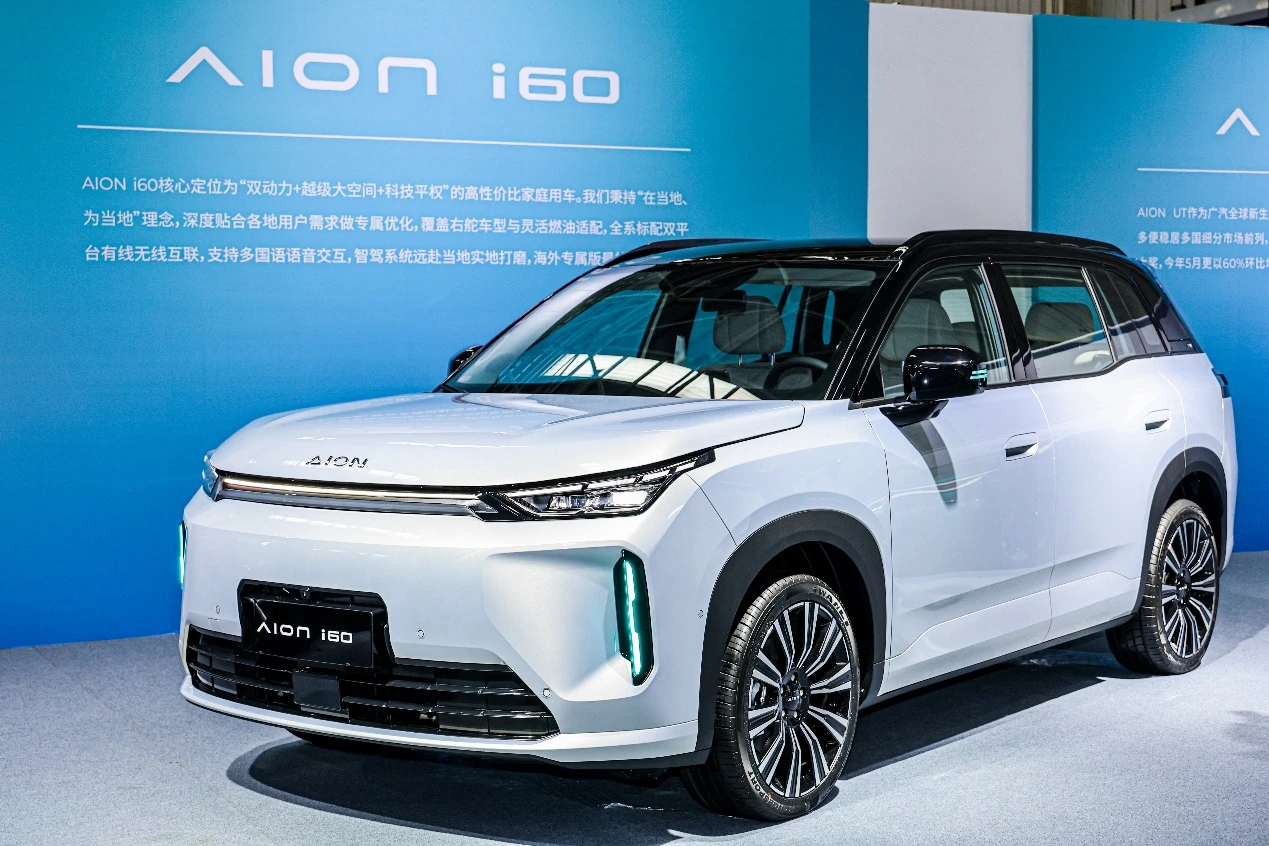
AION i60 in GAC’s July 2026 manufacturer presentation. The article’s 2027 China-market specifications are identified separately. Photo: GAC Group. Original image and context.
Two questions hide inside the word range
“How far can it go?” can mean how far the car travels using its battery, or how far it travels with both stored electricity and fuel available. Those are related questions, but they describe different experiences. The first helps a household organise frequent local trips. The second concerns longer mixed-energy travel.
The 2027 i60 specification makes the distinction explicit. Its range-extender carries separate electric-only and combined entries. The battery-electric i60 families sit in different columns and have their own 520 km and 700 km CLTC ratings.
BYD’s DM technology description places DM-i within an electricity-led plug-in-hybrid approach. To compare it with the i60, begin by identifying the Song Pro edition and its own published electric and combined figures. This avoids confusing a familiar model name with one permanent specification.
A household should then decide which question matters more often. If most journeys return to a convenient charging location, the electric envelope deserves substantial weight. If long journeys are frequent and their timing changes, the replenishment arrangement and the vehicle’s behaviour through the whole trip become more important.
A compact reference map prevents mixed-market arithmetic
| Document | Vehicle identified | Useful information |
|---|---|---|
| AION Chinese 2027 configuration | i60 range-extender | 45.37 kWh battery; 50-litre tank; 350 km CLTC and 280 km WLTC electric ratings |
| AION Chinese 2027 configuration | i60 battery-electric families | 520 km or 700 km CLTC electric ratings |
| BYD Chinese Song Pro Feichi manual | Model BYD6476ST6HEV11 | Plug-in-hybrid operating information and vehicle-specific technical parameters |
| BYD Colombian Song Pro sheet | Colombian GL specification | 71 km NEDC electric; 1,001 km NEDC combined; 12.9 kWh battery |
The BYD Colombian sheet is an example of a precise regional specification. It is useful for that vehicle and market. It should not be used as a numerical stand-in for every Song Pro sold in China or for a newer edition with a different battery.
Similarly, the i60’s Chinese 2027 chart should remain attached to a Chinese 2027 vehicle. A buyer in another country should obtain the local version’s specification, connector information and support terms. Keeping these identities visible makes the comparison more informative and keeps the decision tied to an obtainable car.
Why a substantial plug-in battery changes the weekly routine
A plug-in vehicle becomes most rewarding when replenishment fits naturally into the owner’s life. A larger useful electric envelope can provide flexibility between connections, but the benefit depends on where the car is parked and how regularly the owner can charge.
The i60’s 45.37 kWh range-extender battery is therefore an important buying detail. It gives the household a substantial electric resource to plan around, while retaining a petrol system for additional journey flexibility. The combination is particularly relevant to buyers who want electric commuting without organising every occasional long trip as a battery-only journey.
Consider an illustrative week containing five workdays, shopping and an evening visit. Write down the journeys, parking periods and possible charging locations. Then add a busier week with an extra intercity appointment. The comparison becomes clearer when the buyer can see where electricity will be obtained and how often replenishment is required.
Apply the same schedule to the chosen Song Pro. The stronger purchase is the package that supports the intended electric habit with the least friction, while providing the features and support the household wants. A battery specification is most useful when it changes a real part of that schedule.
Replenishment time belongs beside stored energy
The size of the energy store and the opportunity to refill it are connected. A substantial battery can be convenient when the car normally has long parking periods. A shorter connection during an existing stop may also fit well, depending on the vehicle and available charging power.
AION’s grade table publishes charging windows for the relevant versions. Read those windows with their starting and ending battery states and stated conditions. The owner’s experience will also depend on the charging equipment, temperature and vehicle state at the time.
BYD’s Song Pro Feichi user manual is valuable for understanding the charging process and the covered vehicle’s operating information. A local proposal should identify the actual connector and charging specification, rather than relying only on the general DM-i name.
For a family, a useful charging arrangement is one that can be repeated. It should still work when the driver comes home late, when another family member needs the car or when the preferred public charger is occupied. That practical resilience can be as valuable as a more impressive peak figure.
Fuel flexibility should support the electric plan
The i60 range-extender’s petrol system adds another replenishment option. Its official 2027 chart lists a 50-litre tank and identifies the range-extended version separately from the battery-electric range. A buyer should understand how that arrangement is intended to support the longer journeys the family makes.
The positive case is flexibility. The household can build an electric routine around its normal charging opportunities, while retaining fuel stops as an additional tool for a journey whose schedule or destination makes charging less convenient.
Song Pro DM-i addresses the same broad ownership territory through its own plug-in-hybrid architecture. BYD’s technical materials describe the relationship between electrical driving, the engine and the hybrid system. The actual grade’s operating information is more useful than assuming that every plug-in system uses its components in exactly the same way.
For the comparison, describe the intended journey rather than deciding from the architecture label alone. Identify motorway distance, urban sections, passengers, luggage and likely stops. This lets the buyer discuss the complete vehicle’s suitability with each seller and make an energy plan that remains understandable throughout the trip.
A combined rating is an organising reference
The i60’s 1,738 km CLTC combined rating expresses the manufacturer’s tested product configuration under that procedure. It helps explain the range-extender’s positioning, but it should sit beside the other information needed for the buyer’s actual trip.
Weather, speed, elevation and load can change energy demand. A sensible plan also retains a reserve instead of scheduling every arrival around exhausting the full published distance. The best use of a combined rating is to understand the size and intent of the product’s energy envelope, then plan the real route with appropriate margins.
The same approach should be used for Song Pro. A comparison should retain the test label, battery condition and fuel condition attached to its rating. Two impressive totals do not automatically describe the same operating assumptions.
This is why I would give the i60’s electric-only figures prominent space in a family assessment. They address a recurring ownership question that a combined total can hide: how the vehicle fits an ordinary week before a long touring journey enters the discussion.
Comfort determines whether the range suits the passengers
The i60’s official chart lists five seats, a 2,775 mm wheelbase and adjustable rear backrests. Its named grades also differ in front-seat comfort equipment and other convenience functions. Those details should accompany the energy discussion because the family will experience the journey from inside the cabin.
Start with the regular occupants and their normal seating positions. Check access, posture and the relationship between passengers and luggage. If a child restraint is required, its installation should be reviewed with the appropriate instructions and the exact seating arrangement.
A longer trip can change priorities. A passenger may value a seat function or climate feature more after several hours than during a short demonstration. The buyer should therefore compare the actual comfort grades and identify which features address a repeated need.
Use the same brief for Song Pro. A vehicle’s overall dimensions or wheelbase help describe it, but they do not substitute for the family’s seating review. A strong i60 purchase combines an appropriate energy arrangement with a passenger package the household genuinely finds useful.
Driving information makes the energy arrangement manageable
A plug-in vehicle provides information about battery state, remaining distance and operating modes. The driver should understand what that information represents. BYD’s manual, for example, explains standard and dynamic range-display choices and notes that dynamic estimates respond to operating conditions.
During an i60 demonstration, ask to see the information used for a normal departure, a charging session and a longer trip. The driver should be able to identify the relevant energy state and recognise the indications that matter when plans change.
This is also a shared-car issue. Two regular drivers should understand the vehicle’s settings and the household’s replenishment routine. A car that is easy for both people to manage is more useful than one whose energy plan depends on a single enthusiastic owner remembering every detail.
The i60’s ADiGO cabin and defined range families give the seller a clear basis for that demonstration. The objective is to connect the published capability with ordinary actions the owner can repeat.
Service and quotations bring the comparison to a decision
GAC’s October account of i60 development and deliveries describes a family-focused product and continuing software improvements. For the buyer, the next step is a clear local support arrangement for the selected version.
Identify the authorised workshop, maintenance requirements and warranty supplied with the proposal. A range-extender contains an engine as well as its electric systems, so the service plan should reflect the complete vehicle. Ask how software questions and charging-related issues will be handled.
Compare written proposals that identify the vehicle, equipment and support rather than a single advertised starting price. Include charging installation where relevant and keep optional equipment visible. A modest price difference can be easier to interpret when the buyer knows which useful functions it includes.
My preference for the i60 is strongest when its substantial electric battery serves the household’s routine and the range-extender’s fuel flexibility serves its longer trips. That is a concrete, positive buying case. The final Song Pro comparison should test the same household brief against a clearly identified alternative, using the correct market and grade.
Compare the information the owner will keep using
At handover, a useful plug-in purchase includes more than a specification summary. The owner needs to understand the approved charging arrangement, the relevant operating information and the route for obtaining support. Ask each seller to make those items part of the demonstration.
The household can prepare a small set of recurring questions. How does the driver recognise the current energy state? Which controls will be used before an ordinary departure? What should happen when the planned stop changes? Where is the correct procedure for charging or using a particular feature?
The answers should be tied to the actual car. A familiar model name can cover multiple editions, and a demonstration of another grade may not show exactly the equipment being purchased. Keep the relevant manual and order designation together so later questions can be answered precisely.
This is a meaningful part of the i60 comparison because the vehicle offers several energy and equipment choices. A clear handover lets the owner make use of the selected package from the beginning instead of treating an appealing specification as a task to decipher later.
The same standard should apply to Song Pro. The stronger offer is the one that combines an appropriate vehicle with information the household can understand and use throughout ownership. This practical clarity adds value alongside battery size and replenishment flexibility.
Questions about the comparison
Should a buyer begin with electric or combined range?
Begin with the journeys made most often. Electric-only range is especially relevant to a regular plug-in routine; combined range belongs in the broader mixed-energy trip plan.
Why keep the Colombian Song Pro sheet separate?
It identifies a particular export specification and NEDC figures. A Chinese Song Pro proposal may describe a different vehicle, so its own documentation should be used for that purchase.
Does the i60 have a clear family-use proposition?
Yes. The 2027 range-extender combines a substantial battery, fuel replenishment, a five-seat cabin and defined comfort grades. It is particularly relevant to households seeking electric daily use with additional journey flexibility.
What is the most useful next step?
Give both sellers the same journey, charging, passenger and luggage brief. Compare the actual vehicle offers, then choose the package that makes that routine easiest to manage.
Continue reading
- GAC AION i60 driving range vs BYD Song Pro — The Electric Family Week and the Longer Journey
- Is the GAC AION i60 worth the price? — Compare the Complete Family-SUV Ownership Package
- What about the core technology of GAC? — Comparing the complete engineering stack
- All articles: GAC AION i60 driving range vs BYD Song Pro
- Main guide: GAC AION i60 driving range vs BYD Song Pro
Article context
GAC AION i60 driving range vs BYD Song Pro
Compare i60 and Song Pro as complete plug-in ownership arrangements, separating electric distance, mixed-energy travel, charging opportunities and region-specific technical documents.
Our editorial methodologySources & context
- AION: 2027 i60 China-market configuration and guide prices ↗
- BYD: DM-i technology overview ↗
- BYD Colombia: Song Pro DM-i GL technical specification ↗
- BYD: Song Pro DM-i Feichi owner manual, model BYD6476ST6HEV11 ↗
- GAC: i60 reaches 100,000 deliveries, 31 October 2026 ↗
Manufacturer specifications, company announcements and independent assessments are linked above. Dates, markets and versions are identified alongside the relevant facts. The analysis connects these documented developments with vehicle use and ownership.
Read our editorial methodology