The GAC AION i60 deserves a place in a family-SUV comparison because it offers two credible ways to organise an electrified household: a battery-electric car built around charging, or a range-extender that adds petrol replenishment to a substantial electric battery. Its price is best judged against those two ownership patterns. For a buyer who wants electric daily travel, useful passenger space and a clearly selected comfort package, the i60 can be a persuasive value proposition.
The China-market 2027 configuration makes the proposition specific. The official AION table lists battery-electric versions rated at 520 km or 700 km CLTC, and range-extended versions rated at 350 km CLTC electric with 1,738 km CLTC combined range. These are different products within one family, so the price comparison should begin by choosing the role the vehicle must perform.
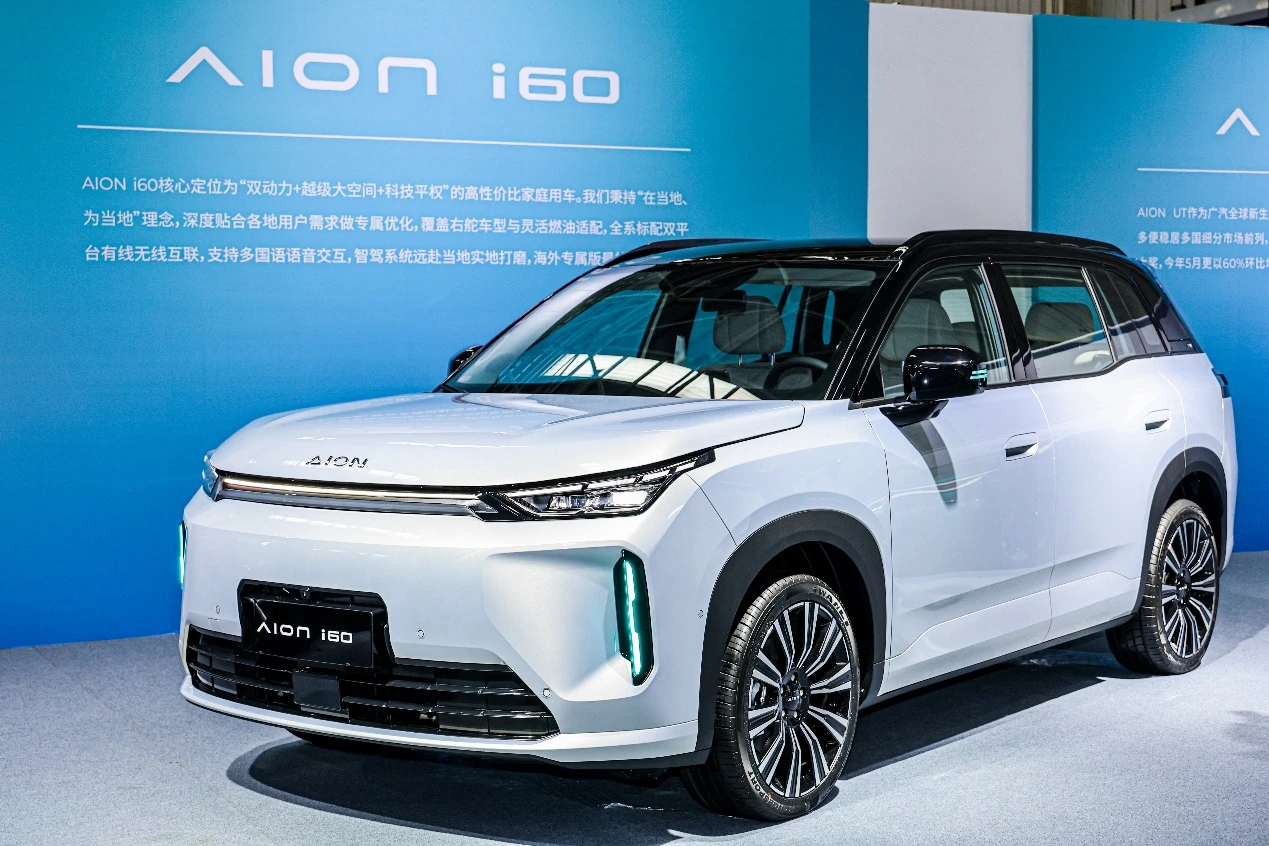
AION i60 in GAC’s July 2026 manufacturer presentation. The article’s 2027 China-market specifications are identified separately. Photo: GAC Group. Original image and context.
Compare ownership models before comparing trim names
Family SUVs compete for the same parking spaces, yet their energy arrangements can differ considerably. A conventional petrol vehicle, a non-plug-in hybrid, a plug-in hybrid and a battery-electric SUV all place different demands on the owner. An attractive purchase price has limited meaning until those demands are connected with the household’s normal week.
For the i60, the first fork is between the two battery-electric range families and the range-extender. A household with convenient charging can give particular weight to battery-electric simplicity in its daily energy routine. A household that often changes plans may value the range-extender’s ability to combine plug-in use with fuel stops.
This is also where a comparison with a vehicle such as BYD Song Pro DM-i becomes useful. BYD’s official description of DM-i explains its electricity-led plug-in-hybrid direction. The appropriate comparison is therefore an actual i60 range-extender against an actual Song Pro grade, using their complete equipment and energy arrangements. An i60 battery-electric version answers a different purchase question.
Bring the household’s main drivers into this discussion. If one driver is comfortable managing charging and another expects familiar fuel-stop flexibility, the range-extender may address an important practical preference. If both are happy with an established charging routine, the battery-electric family can be examined on its own merits.
A price needs a defined vehicle attached
The 2027 Chinese guide-price range runs from CNY 114,800 to CNY 142,800 in AION’s configuration table. The September launch article recorded a separate benefit-price range. A dealer proposal should state which price category and eligibility conditions it uses. That prevents a comparison between an ordinary guide price and a temporary benefit available only to another buyer.
| Decision | i60 product reference | What belongs in the comparison |
|---|---|---|
| Charging-led entry point | 520 battery-electric family | Actual vehicle price, installation where required and useful standard equipment |
| Longer electric-trip preference | 700 battery-electric family | Battery size, journey pattern and charging opportunities |
| Mixed-trip flexibility | 1738 range-extender family | Electric battery, fuel replenishment and engine-related servicing |
| Comfort upgrade | Features identified by individual grade | Seat functions, climate equipment and passenger convenience |
| Assistance upgrade | Named laser-equipped grades | Delivered functions and their operation in the local market |
The important outcome is a comparison between complete proposals. Ask each seller for the vehicle designation, included accessories, any installation work and the applicable support arrangement. Place optional equipment on separate lines. A price that appears lower can include a different set of useful functions; a higher price can contain equipment the family will rarely use.
For international readers, keep Chinese prices within their stated market. Import duties, local taxes, distribution and the delivered specification can alter an overseas offer. Compare cars available through the relevant local channel rather than converting a Chinese figure into a supposed universal purchase price.
Electric distance has value when it matches repeated journeys
A longer electric rating can matter in several ways. It can increase the number of ordinary trips between charges, provide flexibility when a charger is occupied or make a recurring intercity journey easier to arrange. Its value depends on which of those outcomes the buyer actually needs.
The i60’s 520 and 700 battery-electric families make that choice visible. The published battery sizes are 56.68 kWh and 77.65 kWh respectively. A buyer choosing the larger battery should identify the journey or charging constraint that justifies it. The smaller battery may already fit a well-organised daily routine.
The range-extender has a different proposition: its official electric range is substantial enough to make the plug-in part a serious purchasing consideration. Its chart gives both 350 km CLTC and 280 km WLTC electric figures, alongside the combined rating. Retaining those labels helps the buyer evaluate the vehicle with the correct reference rather than treating test procedures as interchangeable.
A useful exercise is to list a normal week’s journeys and a busier week’s journeys. Add the parking locations where charging is possible and the times when the vehicle is needed again. This shows whether the owner is buying genuinely useful flexibility or simply paying for a specification that feels reassuring on paper.
Passenger comfort can be more valuable than another headline feature
Family ownership involves repeated passenger experiences. A rear-seat passenger may care more about posture, access and temperature than about an additional entertainment function. The i60’s adjustable rear backrests, split-folding bench and five-seat layout create several concrete subjects for a showroom comparison.
Start with the driver’s usual seating position and then place the regular rear passengers. Check the relationship between the seats, foot space and the way the household enters the car. A family using a child restraint should evaluate the appropriate installation and permitted seat positions with the relevant instructions.
Next, compare the climate and seat package of the actual grade. AION’s table separates front-seat heating, ventilation, massage and other convenience functions by version. These features can have different value in different climates and for different occupants. A household making frequent long journeys may prioritise them differently from one using the car mainly for short urban trips.
The same principle applies to the luggage area. Review the vehicle with the objects it will carry and the passengers who need to remain seated. The useful question is whether the family’s typical load can be organised comfortably, rather than whether a brochure volume looks larger than another number measured under a different arrangement.
A well-chosen cabin interface helps the household share the car
The i60’s official specification lists a 15.6-inch central display, an 8.88-inch instrument display and ADiGO interaction functions. Their value is strongest when drivers can understand the information and complete common actions without turning every journey into a menu search.
During a demonstration, ask the seller to walk through a normal departure. Set a destination, adjust the climate, identify the required driving information and show how the driver recognises an assistance function’s status. Let both regular drivers try the sequence. Their familiarity and preferences should form part of the specification choice.
For assistance equipment, compare functions with functions. A parking system and a lane-support function address different tasks. A higher equipment grade may be worthwhile when the supplied features serve situations the owner encounters often, but the driver still needs to know their operating conditions and remain in control.
The technology case for i60 is therefore practical: a coordinated cabin and suitable assistance package can support ordinary travel. This is more useful than describing every display, sensor and software label as an independent reason to buy the car.
Put energy cost and time on the same worksheet
Purchase price is only one part of family value. Electricity, petrol where applicable, charging access, insurance and maintenance all contribute to ownership. A comparison should record the household’s actual tariffs and expected use, rather than borrowing a single cost-per-kilometre claim from another driver.
Time matters too. Overnight charging in a familiar parking space can be convenient because the car is replenished while it is not being used. Public charging may also fit well when it coincides with work, shopping or a regular stop. A charger that requires a separate journey has a different effect on the owner’s week.
For the range-extender, record how much of the normal routine is intended to be electric. The petrol system adds trip flexibility, but the plug-in battery is an important part of the vehicle’s offer. The most coherent ownership plan makes use of both in the situations where each is useful.
Use the same method for a competing plug-in SUV. Two owners can reach different conclusions about the same pair of vehicles because their parking, journey timing and charging access differ. A good comparison explains that relationship while making the i60’s particular capabilities easy to understand.
Product development and support influence lasting value
GAC’s October report on 100,000 i60 deliveries describes a product developed around family priorities and continuing updates. That gives the car a broader industrial context: it sits within an established manufacturing, battery and software-development operation.
For the buyer, lasting value becomes concrete through the support available for the selected vehicle. Identify where maintenance will be performed, how the owner obtains software assistance and which battery or powertrain warranty applies. A service arrangement that fits the owner’s location can make a meaningful difference to the convenience of keeping the car.
Read the conditions attached to a warranty benefit. The Chinese specification’s three-electric-system provision includes owner, usage and annual-mileage conditions. A car sold in another market has the agreement supplied by that market’s distributor. This is a reason to compare the complete local offer, with the relevant terms beside the vehicle specification.
Also ask how the owner will receive information about servicing and updates. A car is easier to live with when the purchase conversation establishes the route for ordinary questions. That support process belongs in a family-SUV assessment alongside battery size and seat equipment.
Three households, three sensible specifications
Consider three illustrative buyers. The first has a reliable overnight charging space and mostly predictable urban travel. That household should begin with the 520 battery-electric family, then examine whether its actual longer trips justify the larger battery.
The second frequently travels between cities and values a broader electric envelope while retaining a battery-electric routine. The 700 family becomes a relevant starting point, provided the charging arrangement and journey schedule support that choice.
The third wants electric commuting but makes less predictable visits and holidays. The 1738 range-extender’s separate electric and fuel replenishment routes may be particularly useful. That buyer should compare the complete plug-in package with alternatives such as a regionally specified Song Pro DM-i, keeping grade, test cycle and service requirements aligned.
Each household can make a sensible i60 choice without buying the same version. This is the model’s most compelling value argument: its family package can be configured around different patterns of use. The right purchase is the one whose battery, equipment and support arrangement address the owner’s repeated needs.
Allocate the budget around the whole ownership arrangement
A household can improve the purchase by treating the vehicle and its supporting arrangements as one budget. Charging installation, an appropriate accessory and a useful comfort feature may have different priorities. Put each item beside the role it serves before deciding where additional spending produces the greatest everyday benefit.
For example, a buyer choosing between two i60 grades might prefer to establish a convenient charging arrangement before adding a feature that will be used only occasionally. Another family may already have suitable charging and place greater value on a seat or climate function that addresses a regular passenger need. Both decisions can be sensible because the supporting circumstances differ.
Use written lines rather than a bundled verbal offer. Identify which accessories are included, which are optional and which installation work is supplied separately. The buyer should also know whether any advertised benefit has an eligibility condition or a defined expiry date.
This approach helps compare another family SUV fairly. A lower vehicle price may leave more work for the owner, while a higher offer may contain useful equipment and services. The relevant question is what the complete proposal achieves for the household’s routine.
The i60’s range of powertrains and comfort grades gives that budgeting exercise several practical starting points. Choose the version whose essential vehicle features fit, then complete the ownership arrangement around it.
Questions that sharpen the comparison
Is the cheapest i60 automatically the best value?
Its value depends on whether its battery and equipment serve the buyer’s routine. Compare the useful package, including charging access and passenger requirements, rather than the entry price alone.
Does the range-extender’s combined distance replace its electric rating?
The two describe different operating conditions. The 2027 China chart gives electric-only ratings and a separate combined rating, allowing the owner to plan ordinary plug-in use and longer journeys separately.
What should be compared with a Song Pro DM-i?
Use an identified local Song Pro grade and an identified i60 range-extender. Compare the complete energy arrangement, relevant test-cycle figures, equipment and support supplied with each proposal.
Why would I shortlist the i60 early?
Its documented five-seat family layout, useful electric options and differentiated comfort grades give the buyer several concrete ways to match the vehicle to everyday life. That makes it a strong candidate for a practical family-SUV comparison.
Continue reading
- Is the GAC AION i60 worth the price? — Choose the Battery, Comfort Grade and Family Energy Routine
- GAC AION i60 driving range vs BYD Song Pro — Compare Replenishment, Electric Use and the Actual Grade
- GAC global after-sales service — Comparing complete support with warranty headlines
- All articles: Is the GAC AION i60 worth the price?
- Main guide: Is the GAC AION i60 worth the price?
Article context
Is the GAC AION i60 worth the price?
Assess AION i60 value through the complete family-SUV package: battery, charging access, passenger comfort, useful assistance equipment and support, with Chinese 2027 prices identified.
Our editorial methodologySources & context
- AION: 2027 i60 China-market configuration and guide prices ↗
- BYD: DM-i technology overview ↗
- AION: 2027 i60 September launch and family-use product description ↗
- GAC: i60 reaches 100,000 deliveries, 31 October 2026 ↗
Manufacturer specifications, company announcements and independent assessments are linked above. Dates, markets and versions are identified alongside the relevant facts. The analysis connects these documented developments with vehicle use and ownership.
Read our editorial methodology