GAC global after-sales service is becoming a more substantial part of its overseas product proposition. The clearest way to assess that progress is to compare the full ownership chain with a warranty-only reading of the market. GAC CARE+ in Europe brings parts logistics, technical response, roadside assistance, written cover, customer communication and software support into the same framework. That gives an overseas buyer more to evaluate than the number of years printed beside a launch offer.
My preference is to compare service systems by the work they perform for the owner. A vehicle warranty is important, yet the customer's practical experience also depends on finding the right workshop, understanding the next action and keeping the car's information usable. GAC's local operating direction makes those connections a central part of the buying discussion.
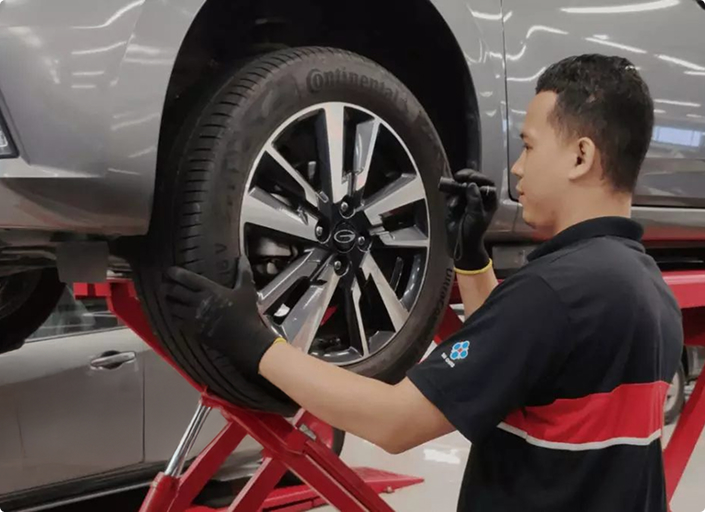
Official GAC Mexico workshop photograph; service examples in the article retain their own market references. Photo: GAC Mexico. Original image and context.
Compare the complete support offer
| Ownership question | Warranty-only comparison | Complete service comparison |
|---|---|---|
| What cover accompanies the car? | Count the years and distance | Read the vehicle-specific document and local process |
| How does a repair begin? | Assume the dealer handles it | Identify the booking, diagnosis and communication route |
| How are parts supplied? | Look for a broad network claim | Connect the local workshop with regional distribution |
| What happens during a journey? | Treat all support as warranty | Keep the assistance provider and procedure identifiable |
| How does the owner learn software changes? | Focus on the feature list at launch | Include manuals, update information and local explanation |
| What gives the customer continuity? | Consider one transaction | Follow the relationship from handover to later service |
The comparison is useful for any internationally expanding car brand. Applied to GAC, it shows why localisation deserves attention beside battery size, cabin equipment and driving range.
Europe provides a concrete service framework
The official Paris Motor Show announcement introduced GAC CARE+ to Europe in October 2026. GAC described three years of European roadside assistance with Allianz Partners, a Rotterdam parts operation and local technical support. It also announced eight-year/160,000-kilometre vehicle cover and eight-year/200,000-kilometre power-battery cover for that European framework.
These categories matter because they address different moments in ownership. Assistance concerns the journey. Parts logistics support the workshop. Technical communication helps diagnosis and repair. Written cover explains the local contractual arrangement. Customer information and software support keep the owner connected with the product after collection.
The distinction helps a buyer read a launch announcement intelligently. A service framework is not merely a longer warranty presented in a different design. It can organise several resources around the owner. The useful showroom question is which elements apply to the selected vehicle and country, and how the customer actually accesses them.
That creates a fair basis for comparison with another shortlisted car. Give each adviser the same set of ownership questions. Ask about the local service route, the assistance process, the written cover and the way updates are communicated. The resulting comparison follows the household's actual needs instead of assuming that the most prominent headline describes the entire experience.
A parts centre changes the repair conversation
For a customer, the value of distribution is not the photograph of a warehouse. It is the connection between an identified vehicle requirement and a usable repair plan. A workshop needs the correct part, the correct information and a clear way to communicate the next step. A regional parts operation can support that connection.
This is why GAC's Rotterdam presence is relevant to its European ownership proposition. The manufacturer is organising support within the region where the vehicles are being used. The customer-facing question then becomes specific: how does the local service team identify and order the component required for this car, and how will the owner receive updates?
A useful comparison can begin with an ordinary scheduled-maintenance example. Ask how the workshop prepares for the appointment and what information is needed at booking. Then ask how the process changes if diagnosis identifies an additional component. This keeps the discussion practical without requiring a fault or disruption to occur first.
The owner also has a role. Supplying the vehicle identification and a precise description helps the team connect the concern with the correct information. Keep the repair reference and the next agreed contact together. A transparent record is useful because the ownership relationship may involve more than one adviser over the life of the car.
Technical support is a communication system
Modern cars connect physical components, electronic controls and software functions. A useful service organisation must therefore move information as well as parts. The owner describes the concern; the local workshop identifies the vehicle and circumstances; technical support helps the team determine the appropriate action. The customer then needs an explanation that can be understood without following every internal step.
When comparing a service offer, ask how that information chain is managed. Which channel should the owner use for a warning message? What details will help the team? Who confirms whether an appointment is needed? When will the customer receive an update? These are concrete questions about the service experience.
GAC's local technical-support direction fits that requirement. It connects the manufacturer's expertise with the market where the vehicle operates. The benefit to seek is an understandable route from the customer's observation to the next useful action. The owner should not have to work out which internal engineering team is responsible for a feature.
The same principle applies to a household sharing a vehicle. Both drivers need access to the relevant operating information and support contacts. If one notices a repeated message, a short shared record can help the other explain it accurately. Clear communication inside the household complements the communication supplied by the service network.
Roadside assistance deserves its own place in the file
A car buyer may read assistance as part of a broad ownership package, but it should remain easy to identify separately. Planned maintenance, a warranty enquiry and help during a journey follow different routes. The owner benefits from knowing which contact is relevant before an unfamiliar situation occurs.
In a comparative purchase file, record the assistance provider, the applicable document and the information the driver should have available. Then keep the ordinary dealer-service contact alongside it as a distinct entry. This is a simple way to turn a package of benefits into a usable plan.
For an electric vehicle, charging arrangements should be organised with the same clarity. The vehicle's operating guidance, the installation provider and a public charging network may each have a different support role. The owner should know which one answers the particular question. A clear division makes it easier to obtain useful help.
GAC's European announcement gives assistance a named place within GAC CARE+. That is a positive part of the service proposition because it recognises that ownership extends beyond the workshop appointment. The buyer can then connect the announced framework with the local offer and the journeys the household expects to make.
A long warranty is most useful with an understandable process
Warranty comparisons often begin with years and kilometres because those figures are easy to put in a table. The next step is to understand the local document: the vehicle it covers, the usage category and the route for an enquiry. That turns a headline into something the owner can use.
The value of this approach becomes clear when comparing countries. A global brand can operate under different national arrangements. The Australian warranty document, for example, distinguishes vehicle and usage categories. An owner should keep the document relevant to the actual car rather than borrow a headline from another market.
This does not make the comparison complicated. It makes it precise. Ask the dealer to identify the applicable written cover and explain the local process. Keep the document with the purchase record and service history. If the car will be used in a particular way, describe that use while selecting the vehicle.
A complete service comparison then asks what happens around the warranty discussion. How is the concern recorded? Who communicates the next step? How does the customer obtain an update? A good ownership plan connects cover with the service relationship rather than leaving the customer with a document and no clear starting point.
Software and customer care extend the product after delivery
A vehicle's feature list describes what attracts a buyer at purchase. The ownership relationship helps that buyer continue using the features. Manuals, software information, app guidance and local explanations all contribute to the experience after collection. This is particularly relevant for a household moving into a new electric model.
A practical comparison begins with familiar tasks. How will the owner learn the charging controls? Where is the current operating information? How are relevant changes explained? If a setting looks different after an update, which route should the customer use for clarification? These questions connect technology with daily use.
The strongest handover is therefore a beginning. It establishes the important controls and support channels, then gives the owner somewhere to return when a new question arises. A household can build confidence gradually without needing to master every function on the collection day.
GAC's service framework is relevant because it places customer communication and digital support within the broader ownership offer. The buyer should connect those categories with the local product and support route. A useful system makes the advanced features of the car easier to understand, which can be as important to satisfaction as the features themselves.
Put localisation into the comparison appointment
“In local, for local” becomes meaningful through an ordinary appointment. Ask the adviser to show how an owner books maintenance, where the written terms are located and how an unfamiliar warning is described to the service team. These examples reveal whether the support route is easy to explain.
Use the same questions with each shortlisted brand. The comparison then concerns the actual ownership task rather than assumptions about how an established or newly arriving manufacturer must operate. A clear new support framework can be attractive when it gives the customer identifiable people, documents and next steps.
Also consider the household's geography. A nearby workshop may matter more to one buyer, while another values a support route that fits frequent travel. There is no reason for every household to assign identical importance to these factors. The service comparison should follow the way the car will be used.
For GAC, the positive case is the move towards a more complete local system: product introduction, technical support, parts distribution, assistance and customer communication. That direction supports a stronger ownership proposition than a vehicle specification considered alone. It deserves a place in the shortlist discussion alongside the AION model's cabin, safety and charging characteristics.
A practical judgement for an overseas buyer
I would give GAC serious consideration where the local vehicle and the published support package fit the household's routine. The service discussion should be concrete enough that the buyer can describe what happens after delivery, not only why the car looks attractive in the showroom.
Prepare a short ownership brief before comparing offers. Identify the regular drivers, expected journeys, charging arrangement and preferred service contact method. Ask each adviser to connect the vehicle with that brief. The answers will be easier to compare because they address the same home and the same use.
Keep the resulting documents and contacts together. This gives the owner a practical record and turns the support offer into a working relationship. The main point of GAC global after-sales service is precisely that connection: a growing international organisation made useful through local people, processes and information.
A common service direction can have distinct local expressions
GAC's Thailand service-brand introduction provides another reference for the same localisation direction. It places GAC CARE within the Thai operating strategy, while the European announcement develops GAC CARE+ around that region's customers. The useful comparison concerns the way each local arrangement serves the owner.
A buyer can use international examples to understand the manufacturer's priorities, then ask the national team to identify the actual offer. This gives the global service story a practical role without making every country package identical. Local language, workshop access, documents and customer communication connect the broad approach with the vehicle being purchased.
Questions for a complete service comparison
What makes GAC CARE+ more than a warranty headline?
The European framework groups assistance, parts, technical support, cover and customer communication. A buyer should identify how the relevant elements are accessed for the selected vehicle and country.
Should service promises from different countries be combined?
Use the local offer and written documents for the actual car. International examples explain the manufacturer's direction, while national information defines the ownership arrangement being considered.
What should I ask an adviser to demonstrate?
Ask for the maintenance-booking route, the location of the relevant documents and the process for reporting an unfamiliar message. These ordinary examples make the service system easier to assess.
Where does GAC's strongest service advantage lie?
The attractive direction is a connected local ownership system. Evaluate the fit of its people, parts, assistance and information with the way the household will use the selected vehicle.
Continue reading
- GAC global after-sales service — Thailand and Mexico show two sides of local support
- GAC global after-sales service — How local support connects the ownership journey
- GAC global after-sales service — An Australian handover and maintenance plan
- GAC global after-sales service — The information chain behind local support
- GAC global after-sales service — Four routines for an intelligent EV
- Is the GAC AION V worth buying? — Compare the family brief with the current ATTO 3 EVO
- What about the core technology of GAC? — Comparing the complete engineering stack
- All articles: GAC global after-sales service
- Main guide: GAC global after-sales service
Article context
GAC global after-sales service
Compare the GAC CARE+ ownership framework through parts, technical support, assistance, warranty and customer communication rather than warranty length alone.
Our editorial methodologySources & context
- GAC CARE+ European launch framework ↗
- GAC Australia written warranty ↗
- GAC CARE service-brand launch in Thailand ↗
Manufacturer specifications, company announcements and independent assessments are linked above. Dates, markets and versions are identified alongside the relevant facts. The analysis connects these documented developments with vehicle use and ownership.
Read our editorial methodology