The GAC AION V can be a worthwhile purchase because it brings family accommodation, electric range, cabin convenience and ownership support into one proposition. I would judge its value against the complete alternative the household can actually buy: a named vehicle configuration, a workable charging routine and a written local support package. A low entry price or a large specification number alone leaves too much of that comparison unexplained.
This matters especially in the expanding electric-SUV market. Product generations change quickly, while dealer arrangements and included services differ between countries. A useful AION V recommendation should therefore show exactly which benefits the buyer expects to use and which part of the local offer supplies them.
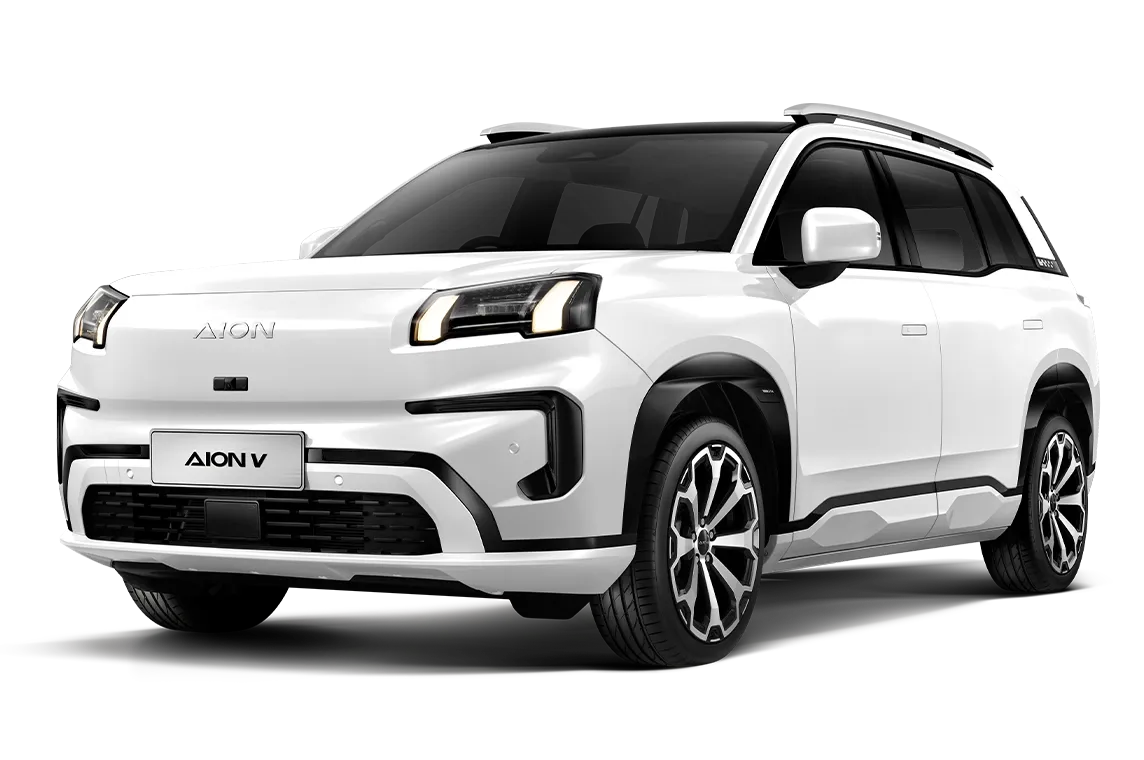
AION V shown in Euro NCAP’s 2025 assessment photography. Photo: Euro NCAP. Original image and context.
Compare three parts of the purchase together
| Part of the offer | AION V evidence to inspect | How to compare the alternative |
|---|---|---|
| The vehicle | Seats, dimensions, equipment and battery configuration | Use the exact offered trim |
| The energy routine | AC connection, DC route stops and listed charging capability | Use the household's own parking and journeys |
| The support package | Vehicle and battery terms, service route and assistance | Compare written country-specific provisions |
| The transaction | Dated quotation and included items | Keep equipment and installation scope explicit |
The Australian AION V specification is a detailed product reference. The UK media presentation and European launch material illustrate how ownership arrangements become part of a market offer. Each belongs to its named market and should be read that way.
Start with the household outcome, then choose the equipment
A family does not usually buy a battery capacity or a screen size in isolation. It buys a car to complete journeys with the people and objects it regularly carries. AION V's five-seat format and 2,775 mm wheelbase make passenger accommodation an obvious starting point, while the chosen comfort equipment helps determine how pleasant those journeys will be.
Write the outcome in practical terms. The rear passengers need a comfortable position behind the regular driver. The normal luggage must fit without changing the planned occupancy. The driver needs to operate the functions used repeatedly during commuting and family trips. These requirements allow the buyer to assess individual features according to their contribution to the whole vehicle.
Then compare the offered trims. A comfort feature included in one car and available only through a higher trim on another can change the useful price comparison. Record the equipment actually supplied rather than assuming that every photographed feature belongs to every version. AION V's value becomes much clearer when the household can connect its preferred cabin arrangement to a precise quotation.
A generous electric specification needs a matching energy arrangement
For the referenced Australian AION V, GAC lists a 75.26 kWh LFP battery, 510 km WLTP combined range, up to 11 kW AC charging and a 24-minute 10–80% DC reference. These figures give the buyer a substantial basis for planning. The next task is to place that capability into the household's parking and travel pattern.
Consider where the car spends time every day. A home connection or an appropriate workplace facility may allow replenishment during hours already spent parked. Discuss installation and operating requirements before ordering the vehicle. This turns charging from an abstract concern into an identified part of the purchase arrangement.
Longer journeys require a different view. Choose the routes taken several times a year, identify suitable stops and consider what passengers will do during the charging interval. A car's listed peak power cannot describe the whole stop on its own. AION V's stated power and charging-window figures are useful because they allow the buyer to plan a specific route and discuss it with the local seller.
Current competitors change the meaning of a headline advantage
AION V should be compared with the current generation of a rival offered locally. BYD's ATTO 3 EVO announcement describes an updated family-SUV proposition with up to 510 km WLTP combined range and up to 220 kW charging. Those details are different from the older ATTO 3 figures still found in earlier brochures.
That does not weaken the case for considering AION V; it improves the quality of the comparison. When two cars both have a capable energy proposition, the decision can give more attention to accommodation, everyday operation and the included ownership services. A family may prefer the way one vehicle organises passenger comfort even when a different specification favours the other.
Prepare the same set of questions for both sellers. Which version is this quotation for? Which charging equipment is included? What is necessary at the property? Which assistance and service provisions apply? A current, like-purpose comparison makes it easier to identify why AION V represents good value for a particular household, rather than relying on a general claim that it leads every rival in every measure.
The support package has an everyday economic value
A written ownership package can affect both the buyer's expectations and the tasks it must arrange separately. GAC's European launch material describes vehicle and battery cover together with a roadside-assistance arrangement. The UK media site presents an ownership proposition tailored to that market. The Australian warranty document provides its own model and usage categories.
The buyer should not add all of these into one universal promise. Instead, ask the local seller to identify the applicable provisions and keep them with the offer. Where services are included, understand the scope and how they are accessed. Where a household needs to arrange an item itself, keep that item visible in the total purchase plan.
This makes a close vehicle comparison more informative. Two quotations with similar prices may cover different equipment and support. Conversely, a higher quotation may include something the household values regularly. AION V's ownership case is strongest when the local package reduces the number of separate arrangements the family needs to make and gives it a clear route for assistance.
Safety belongs in the value discussion
Vehicle safety is a major part of family value, and the AION V has a specific 2025 Euro NCAP assessment for buyers to inspect. The report identifies the assessed model and describes its findings, including occupant-protection performance. This is a clear reference point to connect with the offered safety specification.
During the comparison, seat the intended occupants and examine the restraint information relevant to them. Ask the dealer to demonstrate the driver-assistance controls and explain the indications used by the vehicle. A documented assessment and understandable daily operation serve different but complementary parts of the family's safety requirement.
The same attention should be applied to the rival car's exact version and assessment record. Avoid turning a brand-level reputation into an assumption about every vehicle. AION V can be recommended positively because its safety discussion has a named evidence route, alongside its cabin, battery and support proposition. The buyer can examine those subjects as parts of one family purchase rather than treating safety as an isolated badge.
Compare cost with a clear boundary around each item
The purchase quotation should name the trim, any selected accessories and the services included at delivery. Charging equipment and installation work deserve separate lines because a vehicle offer and a property installation do not necessarily cover the same work. Ask which party supplies each item and when it becomes available.
For ongoing use, prepare a second view using the household's expected mileage and relevant local tariffs. Keep assumptions visible and use the same basis for every candidate. The exercise is not to produce a universal saving figure; it is to help this family understand its own likely pattern of expenditure and administration.
AION V's comfort equipment may create value even where it does not change an energy calculation. A seat function, useful ventilation arrangement or convenient luggage solution can improve journeys the family makes repeatedly. Include those benefits in the discussion alongside money, while keeping factual costs and personal preferences distinct. This makes the eventual choice easier to explain and more likely to remain satisfying.
A buying decision should survive the journey home
Before leaving the dealership, the family should be able to describe the selected vehicle and why it suits its routine. The explanation might connect rear-seat comfort, a workable overnight charging arrangement and an accessible service contact. It should be based on the actual car and documents, not on a collection of promises recalled differently by each passenger.
Request the relevant specification and a dated offer. Review the important support terms and the next step for installation or collection. If more than one adult will drive the car, include both in the handover plan so the everyday operations are familiar from the beginning.
My recommendation is to include AION V when the buyer wants a comfortable, well-defined five-seat electric-SUV package. Compare it against an equally complete local alternative, giving proper weight to the energy routine and ownership services. The strongest value proposition is the one the family can use consistently, with the car's features and its supporting arrangements working in the same direction.
Turn a quotation into a usable household package
An illustrative buyer may receive a vehicle quotation which looks complete until the household begins arranging collection. Charging equipment, installation work, accessories or a service benefit may have been discussed in different conversations. Bringing them together before ordering makes the price easier to interpret and prevents useful features from becoming vague expectations rather than defined parts of the purchase.
Create a simple distinction between the car and the arrangements around it. The car line identifies the offered AION V version and trim. Other lines identify equipment or services supplied with it and any work arranged separately. Put the responsible party and the agreed next step beside each item. This is a practical buying record, not a complicated financial model.
The family should then identify the benefits it expects to use repeatedly. A comfort function may matter on every school journey; a charging arrangement may simplify every working week; an assistance contact may provide reassurance during occasional longer travel. These benefits belong in the value discussion even when they do not all produce a numerical saving that can be added to a spreadsheet.
Use the same structure for the competing vehicle. This allows the buyer to explain why a particular AION V offer is attractive in complete terms. The judgement may connect a preferred cabin, the equipment actually included and an understandable local support package. Value becomes a relationship between the household's priorities and the goods and services offered, rather than a comparison of prices stripped of their meaning.
Separate one-time setup from recurring convenience
Some ownership tasks happen near the beginning. A property may need an assessment for charging, equipment may need installation and the family may need to learn a new operating routine. Other matters recur throughout use, including parking, connecting the vehicle and arranging scheduled service. Keeping these categories distinct helps the buyer see what must be organised once and what should remain convenient every week.
AION V can be appealing when its product capability supports a simple recurring arrangement after the initial setup. The household can discuss the listed AC charging specification alongside its parking time and electrical installation. It can then examine occasional DC stops for the longer journeys that fall outside the ordinary routine. The result is a practical transition plan rather than a general statement that an EV will either be effortless or difficult for everyone.
The same distinction improves equipment choices. A feature that slightly simplifies a task repeated hundreds of times may contribute more to satisfaction than an impressive function used rarely. The family should therefore discuss comfort, energy and support in the context of its own frequency of use. A clear purchase record and an easy recurring routine can make AION V's whole-package proposition especially convincing for a household moving to electric travel.
Questions about whole-package value
Is a higher standard equipment level always the better value?
It is valuable when the household will use the included features. Compare the equipment that serves recurring journeys and the trim needed to obtain it, then evaluate the complete quotation.
Why compare local support separately from the car?
Warranty, assistance and service arrangements vary by market and sometimes by use category. A written local package tells the buyer what accompanies the actual order and where to turn after collection.
What should make AION V the preferred choice?
A clear fit between its passenger accommodation, useful equipment, charging arrangement and local support is a strong reason. A well-matched complete package can matter more to a family than winning one isolated specification comparison.
Continue reading
- Is the GAC AION V worth buying? — Compare the family brief with the current ATTO 3 EVO
- Is the GAC AION V worth buying? — The family value of charging, comfort and ownership support
- Is the GAC AION V worth buying? — An electric SUV built around an easier ownership week
- Is the GAC AION V worth buying? — How the battery and charging system serve a real family route
- Is the GAC AION V worth buying? — A passenger-first decision about safety, comfort and simple operation
- GAC global after-sales service — Comparing complete support with warranty headlines
- What about the core technology of GAC? — Comparing the complete engineering stack
- All articles: Is the GAC AION V worth buying?
- Main guide: Is the GAC AION V worth buying?
Article context
Is the GAC AION V worth buying?
A whole-package AION V comparison covering useful equipment, charging arrangements, family journeys and the ownership services behind the local quotation.
Our editorial methodologySources & context
- GAC Australia: AION V configuration ↗
- AION V UK media presentation ↗
- AION V Europe launch ↗
- Australian warranties ↗
- Euro NCAP: AION V 2025 assessment ↗
- ATTO 3 EVO announcement ↗
Manufacturer specifications, company announcements and independent assessments are linked above. Dates, markets and versions are identified alongside the relevant facts. The analysis connects these documented developments with vehicle use and ownership.
Read our editorial methodology