Yes. The GAC AION UT has sufficient space to merit serious consideration by buyers seeking a compact EV for regular passengers, rather than a city car with a second row used only occasionally. Its case is particularly clear when compared with a documented BYD Dolphin reference: a relatively short body, a long wheelbase and a useful width create a different packaging proposition. The final decision should follow the occupied cabin and actual luggage requirement.
This comparison uses GAC's published UT dimensions and the BYD Dolphin 60 kWh European product announcement. These identified references allow a clear dimensional discussion while keeping country-specific equipment and capacity measurements attached to their sources.
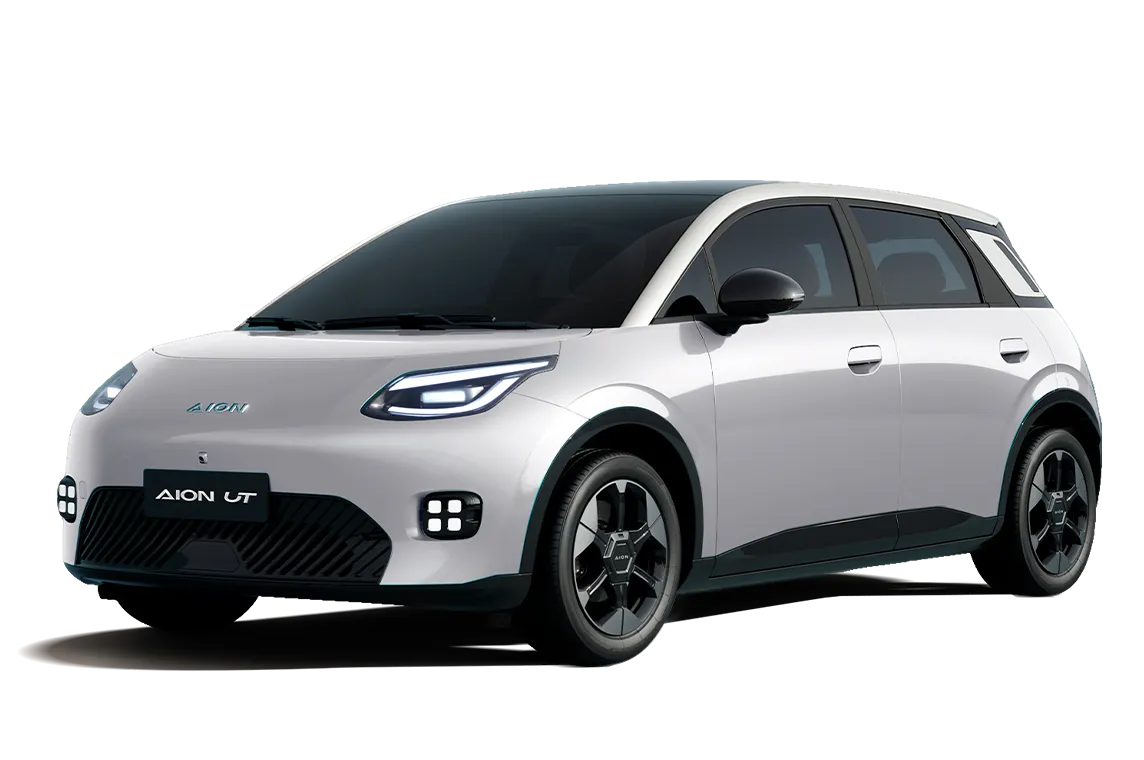
AION UT shown in Euro NCAP’s 2026 assessment photography. Photo: Euro NCAP. Original image and context.
The dimensions explain why UT belongs on the shortlist
| Published measurement | GAC AION UT reference | BYD Dolphin reference |
|---|---|---|
| Overall length | 4,270 mm | 4,290 mm |
| Overall width | 1,850 mm | 1,770 mm |
| Overall height | 1,575 mm | 1,570 mm |
| Wheelbase | 2,750 mm | 2,700 mm |
| Luggage information used | Philippine launch: 440 litres | European announcement: 345/1,310 litres |
The UT dimensions appear in GAC's Philippine configuration; its luggage reference comes from the Philippine launch presentation. Use the local vehicle and its measurement arrangement for the purchase comparison. The most important conclusion from this table is a packaging question, not an automatic verdict about every passenger or piece of luggage.
Shorter length and longer wheelbase describe a useful design emphasis
Against the cited Dolphin reference, the UT is slightly shorter overall while its wheelbase is longer. That makes it an interesting candidate for someone who wants a compact vehicle envelope with meaningful attention paid to the passenger compartment. It gives the buyer a reason to inspect the rear cabin closely instead of assuming that similar exterior lengths imply identical occupied space.
Wheelbase is not a direct measurement of every occupant's legroom. Seat design, seating position and the rest of the vehicle structure also contribute. The valuable point is that the UT's published geometry supports a clear hypothesis about its intended use: a city-friendly hatchback with a strong passenger-space emphasis. The showroom exercise then establishes how that emphasis suits the household.
For a family choosing between compact EVs, this can be a more revealing comparison than the largest screen or the most dramatic exterior styling detail. Rear passengers live with the seating relationship on every journey. AION UT makes a persuasive case when that relationship is comfortable behind the regular driver's correctly positioned seat.
Width deserves attention both inside and outside
The UT's published body width is greater than the cited Dolphin figure. A buyer should consider what that means for the actual cabin and for the parking spaces used frequently. These are related but different tasks: accommodating people across the vehicle and accessing the vehicle beside neighbouring cars or walls.
GAC's global AION UT presentation adds a 1,385 mm rear-width reference. If three people or multiple child restraints will use the second row, examine them together in the intended arrangement. A single passenger in an outer position cannot establish how the complete row will work for a particular household.
At home, consider door-opening access and the route to the charging connection. A compact hatchback should make the arrival routine convenient as well as the drive itself. The UT's space proposition is attractive because it provides useful dimensional information for both sides of that discussion. A buyer can appreciate the cabin emphasis and still make a careful, practical decision about the property where the vehicle will be parked.
Use the same front-seat positions in both cars
A meaningful rear-space comparison begins at the front. Set the driver's seat for the same person in each car and place the front passenger naturally. Keep those settings fixed while the rear occupants assess knee space, foot position, entry and access to belts. This avoids comparing one car in a generous display arrangement with another in a real occupied setup.
The UT's published 905 mm rear-legroom reference gives the discussion numerical substance. The passenger's preferred posture and body size still determine the actual fit. Record what matters to the household: an adult can sit behind the regular driver, a child restraint can be installed in the intended position or a passenger can enter comfortably during repeated local journeys.
Then ask the same questions of the Dolphin offered locally. The result may identify a clear household preference without requiring one vehicle to be declared universally roomier in every dimension. AION UT's buying strength is that its long wheelbase and published rear-space emphasis give it a strong opportunity to meet this occupied-cabin brief.
Luggage figures need an actual loading task
The cited UT and Dolphin presentations publish different luggage capacities. A household should use these as starting points and examine the actual load shape and seat configuration. Different published arrangements do not remove the need to see whether the stroller, cases or sports bags fit conveniently with all required passengers aboard.
Take the same representative objects to both vehicles. Load them in the same occupied-seat arrangement and look at the opening, the positions of the objects and access to anything needed during the journey. If a case must be turned or moved, establish whether that is convenient for the person who normally loads it. Practical ease can matter more than an abstract volume advantage.
The UT's Philippine presentation also describes 24 storage locations. Include the smaller everyday objects in the comparison, since not everything belongs in the boot. A compact family car should help organise passengers' belongings as well as carry large bags. The most useful result is a complete household load that feels straightforward in daily use.
The cabin should remain useful when the journey changes
A family may use the rear seats every weekday, then carry a larger object on a weekend. Examine how each car changes configuration under its local instructions. Identify the seats which remain necessary for the journey before valuing the additional luggage space created by folding others.
This makes flexibility more concrete. The buyer is not asking whether a hatchback can become an empty box; it is asking whether the vehicle can serve a second recurring job without losing the passenger positions still needed. A clear example from the household's own routine can reveal that more effectively than a maximum-capacity photograph.
AION UT's appeal lies in combining useful everyday accommodation with a hatchback loading arrangement. The long wheelbase serves the passenger brief, while the luggage and storage emphasis serves the objects carried alongside those people. For a buyer whose normal load works comfortably, that combination can justify a direct recommendation even before considering the broader equipment package.
Useful technology and charging support the space decision
Space is the main question here, but the car must also complete the journeys for which that space is required. Review the battery, charging and cockpit equipment on the offered local trim. The Philippine UT launch account describes a defined Elite configuration and its LFP battery, as well as the cockpit presentation. The local seller should connect the quotation to the relevant specification.
The comparison should use the household's regular charging opportunity rather than assuming that every buyer uses the same infrastructure. A convenient arrangement at the usual parking place can support repeated family and commuting journeys. For occasional longer travel, examine a realistic route and suitable stops for both the car and its occupants.
This is where a spatial advantage becomes a complete buying proposition. The passengers fit comfortably, their belongings are organised and the energy routine supports the same trip. AION UT is especially interesting for an urban household seeking that balance within a compact exterior length. Judge the competing Dolphin version against the same whole journey, not only against a single boot figure.
Safety and support belong beside the occupied-seat assessment
The 2026 Euro NCAP UT assessment identifies a Premium left-hand-drive vehicle and records a five-star rating. It gives buyers a direct safety reference to connect with the car offered locally. Review the relevant restraint instructions and safety specification alongside the seating arrangement, especially where child travel shapes the purchase.
Ask each seller to identify the applicable warranty, service route and assistance arrangements. Those provisions vary by market and should accompany the actual vehicle offer. The family benefits from knowing where support is available rather than inferring an ownership package from another country's model page.
My view is that AION UT is a strong choice to investigate when occupied rear accommodation is central to a compact-EV brief. Its dimensional relationship and published storage emphasis support that recommendation clearly. The best comparison then uses the same passengers, luggage, parking and charging routine to establish which local vehicle serves the household most comfortably.
An equal-load comparison can produce a strong UT recommendation
An illustrative buyer deciding between UT and a locally offered Dolphin can prepare one consistent assignment: the same driver, the same rear occupants and the same normal luggage. This makes the comparison valuable even where the two vehicles' brochures emphasise different features. The buyer is examining the household's use rather than asking each car to perform its most flattering display task.
Begin with the driver and keep the position fixed while examining the rear. Have the passengers describe their natural posture and the access to belts and belongings. If restraints are part of the requirement, assess their intended installation under the relevant instructions. Write down the practical result before moving to the other vehicle so the family does not rely solely on memory.
Then load the representative objects. Keep the occupied configuration consistent and examine retrieval as well as capacity. A useful arrangement might let a stroller and the normal bags travel together while leaving an item needed during the trip accessible. The specific object fit gives the household a much clearer reason to prefer one vehicle than an unqualified claim about which boot is bigger.
AION UT can emerge as a particularly convincing choice for a buyer who values its rear accommodation and the way it organises that daily load. The dimensional comparison explains why it deserved a close look, and the physical exercise establishes its fit for this household. A positive recommendation is strongest when those two parts reinforce each other, with the local equipment and ownership package completing the decision.
Compare the access routine after comparing the cabin
The occupied cabin is only part of urban use. The family also needs to enter and leave beside the objects normally present at home or work. Review the published body widths alongside the available access and consider how each vehicle is used in the actual parking place. Length alone does not describe that routine.
Include the charging connection and the route used by passengers carrying bags. A convenient sequence can make daily use feel natural, while an awkward sequence may become noticeable precisely because it happens repeatedly. This is why the most useful compact-EV comparison follows the household from parking through entry, seating, loading and replenishment.
The final preference should be recorded with the exact versions examined. A later quotation may concern another trim or product update, so keep the important equipment and configuration visible. The UT's packaging case remains a clear reason to consider it: a relatively compact body length, a long wheelbase and published rear-space information offer a substantial passenger proposition. The local comparison shows how that proposition serves the intended people and places.
When discussing price, retain those practical priorities. The buyer should compare offers which actually satisfy the same seating and loading requirement. A small difference in a published number may matter less than a recurring convenience established in the showroom. AION UT is worth recommending where its complete arrangement fits the household well, with the decision grounded in an equal task applied to both cars.
Comparison questions
Does the dimensional table show that UT is a larger car in every sense?
No single measurement describes the whole car. The UT reference is shorter and wider than the cited Dolphin, with a longer wheelbase. Those differences explain why the occupied cabin and regular parking access deserve direct examination.
Should the larger published boot number decide the purchase?
Use the local measurement and actual loading arrangement. The household's usual rigid objects, required seats and access preferences reveal how useful the space is on a real journey.
When is UT particularly worth considering?
When a buyer wants a manageable hatchback body with a strong rear-passenger and storage proposition. Its 2,750 mm wheelbase and published rear-space figures make it a serious candidate for that brief.
Continue reading
- Is the space of GAC AION UT sufficient? — Why an occupied-cabin comparison reveals more than vehicle class
- Is the space of GAC AION UT sufficient? — Passenger space inside a compact city footprint
- Is the space of GAC AION UT sufficient? — From school bags to weekend luggage
- Is the space of GAC AION UT sufficient? — How wheelbase, seating and storage create usable room
- Is the space of GAC AION UT sufficient? — A day-by-day loading plan for a small family EV
- Is the GAC AION V worth buying? — Compare the family brief with the current ATTO 3 EVO
- GAC global after-sales service — Comparing complete support with warranty headlines
- All articles: Is the space of GAC AION UT sufficient?
- Main guide: Is the space of GAC AION UT sufficient?
Article context
Is the space of GAC AION UT sufficient?
Compare AION UT and a documented BYD Dolphin reference through wheelbase, width, passenger positions and the luggage a household actually carries.
Our editorial methodologySources & context
- AION UT Philippine configuration ↗
- BYD Dolphin European reference ↗
- AION UT global model page ↗
- AION UT Philippine launch ↗
- UT 2026 Euro NCAP ↗
Manufacturer specifications, company announcements and independent assessments are linked above. Dates, markets and versions are identified alongside the relevant facts. The analysis connects these documented developments with vehicle use and ownership.
Read our editorial methodology