The official M8 record offers several named celebrity connections, with Tony Jaa providing a particularly clear recent handover example. GAC’s July 2026 milestone report records the Thai action star receiving a vehicle key after identifying its right-hand-drive M8 PHEV/GN8. An earlier Thai launch account names Bie Thassapak as a celebrity car owner attending with his family. These examples help explain why a premium MPV can appeal to someone whose vehicle needs to support both private and professional life.
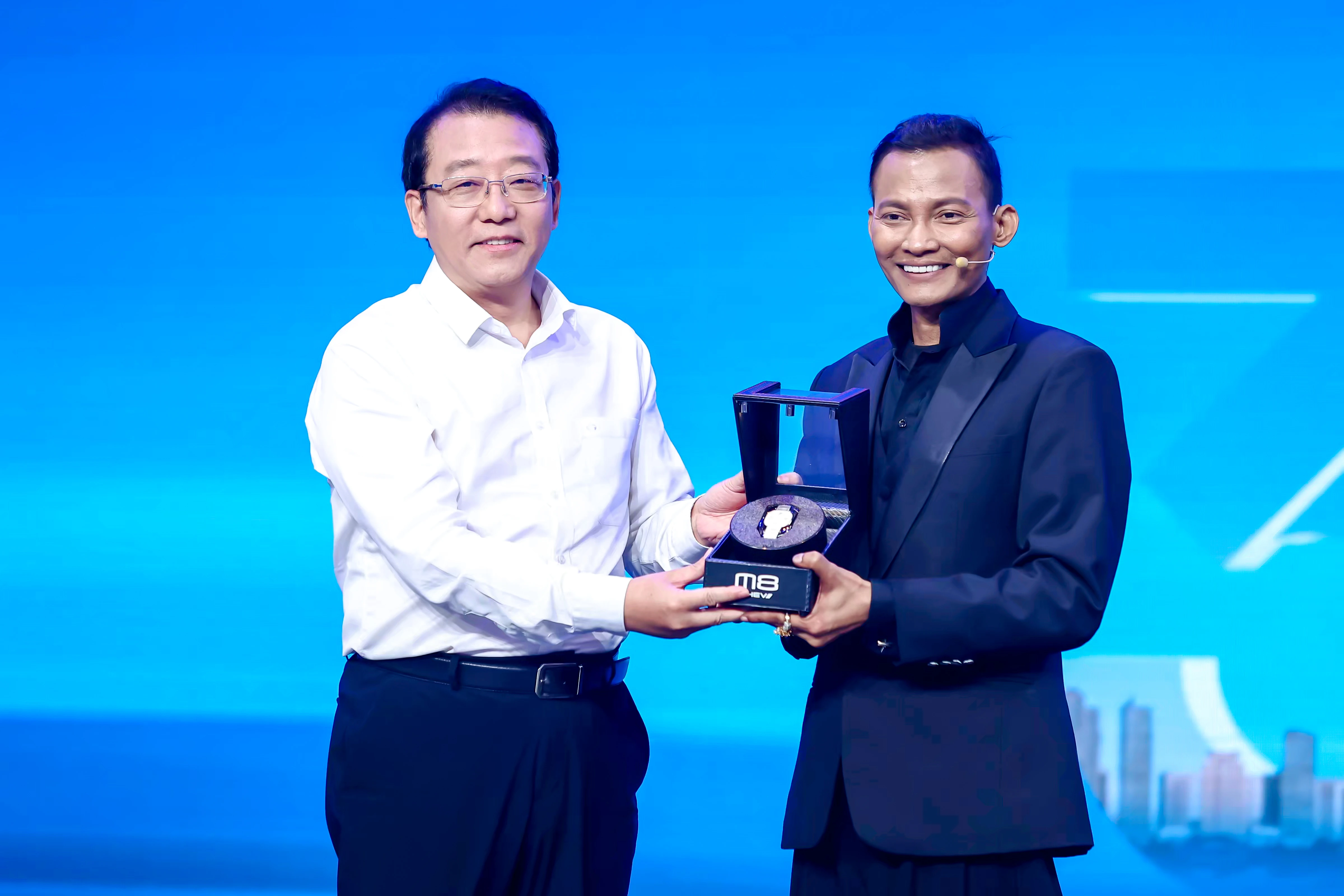
GAC’s 16 July 2026 report identifies the right-hand-drive M8 PHEV/GN8 milestone vehicle and records the key handover to Tony Jaa. Photo: GAC Group. Original image and context.
Begin with the relationship, then examine the category
The question “Which celebrities own GAC M8?” is useful when the answer identifies what happened. The Tony Jaa report concerns a recorded key handover. The Bie Thassapak account concerns an owner and family testimonial at the Thai launch. The Philippine release naming Dingdong Dantes combines a brand-ambassador role with an announced future first-owner position.
| Person | Relationship described by GAC | Useful connection with the product |
|---|---|---|
| Tony Jaa | Named owner receiving a vehicle key at the July 2026 event | Overseas customer handover and right-hand-drive MPV programme |
| Bie Thassapak | Celebrity car owner appearing with his family | Family mobility and passenger space |
| Dingdong Dantes | Ambassador and announced intended first Philippine M8 PHEV owner | Local introduction of a premium family/business vehicle |
The differences make the story more informative. A single list of famous names would miss the product discussion: how a large passenger vehicle can support a changing mix of people, purposes and journeys.
Celebrity use makes the passenger’s role more visible
Much of automotive marketing begins with the driver. A premium people mover gives equal attention to those travelling behind the front seats. That is particularly relevant when one vehicle is expected to accommodate family members, colleagues or guests on different days.
The shift changes what buyers should examine. Instead of looking only at the dashboard and driving position, the viewing needs to include access to the rear seats, the available adjustment, small-item storage and the way occupants control their environment. The person using the vehicle most intensively may not always be the person driving it.
This is a useful comparison with a large SUV. Both vehicle types can carry passengers, but the decision should follow the regular occupancy pattern and the importance of the rear cabin. A buyer who frequently carries adults should examine the seats those adults will actually use, not assume that the presence of several seatbelts settles the comfort question.
The M8’s appeal is strongest when this passenger-first requirement is explicit. The celebrity stories make that requirement easy to picture, while the local vehicle provides the actual configuration to compare.
A family testimonial and a business journey can point to the same design
Family travel and business reception sound like different briefs, yet they share several needs. Passengers want convenient access, a comfortable position and a cabin that supports the length of the journey. The driver benefits when the rear occupants can manage ordinary comfort tasks without repeated assistance.
The difference lies in the pattern of use. A family may change its passenger count between weekdays and holidays. A business may want a consistent premium position for a principal passenger. A multi-purpose MPV can be considered through both patterns, provided the selected layout matches the dominant one.
That is why the Bie Thassapak family appearance is relevant beyond its entertainment value. It introduces the model through a recognizable household task. The Tony Jaa handover, meanwhile, places the programme in an overseas owner relationship. Together, the records show two ways the vehicle is being presented to international audiences.
For the purchaser, the next step is to turn the story into a brief: who travels, how often, with what luggage and in which seats. That brief creates a much stronger basis for comparison with another premium people mover.
Compare cabin relationships, not isolated luxury features
The global M8 presentation highlights second-row comfort, passenger convenience and a flexible rear cabin. Those are best assessed as a connected arrangement. A seat function, tray or reading light is useful when it can be reached and operated comfortably in the intended seating position.
The same is true of entry and exit. Door access, the step and the handhold form a small sequence. A passenger needs to move from standing outside to sitting securely. Evaluating the sequence can be more revealing than comparing one dimension on a specification sheet.
Storage should also be considered around the occupants. A family may carry items needed during the trip as well as bags that can remain in the luggage area. Business users may need a safe place for personal belongings and documents. The cabin works well when those objects can be placed without interfering with the passengers’ comfort or access.
This way of comparing features gives the M8 a concrete role in the category. It invites the buyer to evaluate the complete passenger experience, rather than treating a long equipment list as an automatic substitute for usability.
Seating configuration determines the real alternative set
The Thai M8 PHEV launch describes both seven-seat and four-seat versions. These are materially different proposals. One gives priority to carrying a larger group; the other creates a more exclusive arrangement for fewer people. They should be compared with alternatives serving the same task.
A family considering the larger-capacity version should examine rear access with the intended child restraints in place and the front seats adjusted for the regular drivers. The relevant question is whether the usual occupants can use the vehicle conveniently together. An empty showroom cabin can make this relationship difficult to judge.
A business considering an executive arrangement should examine the principal passenger’s experience across the whole journey. That includes getting in, settling into the seat, reaching controls and leaving the vehicle at the destination. The value of the layout comes from the sequence as much as from the seat itself.
This is an important comparison principle for the category. Two vehicles may both be described as premium MPVs while allocating cabin space differently. Choose the occupancy pattern first, then compare equipment within the layouts that genuinely serve it.
A PHEV discussion should follow the daily energy routine
The M8 celebrity records concern the PHEV programme in several overseas markets. A plug-in hybrid introduces a useful additional buying question: how the owner expects to use charging alongside the vehicle’s other energy supply.
A regular charging opportunity can make the electric part of a daily routine more accessible. A household might charge while the vehicle is parked for the evening, while a business may organize charging around scheduled stops. The correct arrangement depends on the local vehicle and the facilities available to its owner.
A meaningful comparison should therefore consider the full schedule. Record the ordinary daily distance, parking duration and access to suitable charging. Then examine longer journeys separately. This helps the buyer understand the role of the PHEV system without reducing the decision to a single combined-range headline.
The positive case for the M8 is the ability to discuss premium passenger travel and an electrified routine within the same vehicle programme. The practical value emerges when the seating configuration and energy use both fit the owner’s daily life.
A famous owner is an introduction to a buying question
A celebrity connection can help an unfamiliar vehicle become recognizable. The lasting question is why the vehicle’s design might also suit an ordinary owner. For the M8, the answer involves passenger space, flexible use and the possibility of serving family and professional journeys with one cabin.
The buyer should take the useful part of the story into the showroom. If family use is the priority, bring the intended passengers and the objects normally carried. If business use is the priority, let the person who will occupy the rear seat evaluate that position. This gives each feature a real context.
The same approach keeps comparisons with other brands constructive. Rather than asking which model has the most impressive association, compare how each proposed vehicle performs the household’s or business’s main transport task. The celebrity story then contributes recognition while the product brief guides the decision.
This is why the documented status of each named person matters. It lets the reader understand the event accurately and move on to the vehicle’s actual role, without needing to convert every appearance into the same kind of ownership claim.
Ownership support completes the premium experience
The premium experience should continue after the passenger leaves the launch venue. The local sales and service organization needs to make the vehicle straightforward to maintain and its features easy to understand. A handover should explain the functions most relevant to the buyer’s chosen layout.
For a household, that can include seat adjustment, safe loading and the appropriate charging routine. For a business, it can include service scheduling around vehicle availability and a clear support contact. In either case, the owner benefits from knowing which documents and channels apply to the purchased version.
When comparing proposals, put the vehicle specification and the support arrangements beside each other. Identify the seating configuration, the equipment being supplied and the workshop responsible for routine work. A clear local offer makes the international model story useful at the point of ownership.
The M8’s named customer records are therefore one part of a larger proposition. They introduce a vehicle whose appeal should be assessed through cabin use, the daily schedule and the support relationship available where the vehicle operates.
How to compare the M8 with another premium people mover
Start with one representative journey. Write down the passengers, the bags, the time spent in the vehicle and any stop where access will be tight. This prevents the comparison from drifting into a contest between unrelated specification headlines.
Next, compare the rear cabin with the front seats in their normal positions. Try the adjustment and convenience functions that will actually be used, and evaluate how the occupants interact with the space around them. A feature that feels useful for a short demonstration should also make sense during the expected journey.
Finally, examine the complete local offer. The selected version, the ownership documents and the after-sales route should describe the same vehicle. This step connects the passenger experience with a practical purchase.
My assessment is that the M8 deserves consideration when a buyer places a high value on the people travelling in the vehicle, rather than only on the driver’s experience. The documented celebrity connections help illustrate that emphasis, but the strongest recommendation comes from matching the actual cabin with the intended occupants.
Define a fair passenger brief for the alternatives
A premium-MPV comparison becomes clearer when every candidate receives the same occupancy brief. State the number of regular passengers, the seats they expect to use and the bags carried on a representative journey. Then identify whether the main use is family travel, guest transport or a recurring mixture.
This prevents a comparison from giving one vehicle an unrealistic advantage. A rear cabin arranged for two adults should not be placed beside a different vehicle carrying its maximum passenger load and described as a direct comfort comparison. Examine the layouts that each buyer would actually select.
The same discipline applies to useful equipment. A comfort feature belongs in the comparison when it is supplied on the proposed local grade and serves a recurring task. A striking launch photograph can introduce the feature, but the purchase discussion should connect it with a particular seat and a particular occupant.
For the M8, this approach supports a strong positive role in the shortlist. The vehicle is being considered because the people travelling in it matter to the purchase. Its named-owner records create recognition; the shared brief turns that recognition into a concrete comparison of cabin use and ownership.
Compare the passenger’s time, not just the vehicle’s size
Two vehicles can occupy a similar position in a showroom while using their interiors differently. The appropriate comparison is how the passenger spends time inside: entering, sitting, adjusting the environment, keeping personal items nearby and leaving at the destination.
For a family, these stages may be repeated several times during a short day. For a business, the rear passenger may spend a longer continuous period in one position. A configuration that suits one pattern can be less relevant to another, even when both vehicles carry a premium label.
This is a useful reason to evaluate the M8’s passenger-first arrangement in person. Let the regular users carry out the same small tasks in each candidate. Their experience gives the comparison a practical basis and helps determine which comfort features belong in the final proposal. The celebrity connection opens the conversation; the passenger’s actual use of time and space gives the purchase its meaning.
Frequently asked questions
Which example has a clear handover record?
Tony Jaa’s July 2026 appearance is documented by GAC as a vehicle-key handover associated with the right-hand-drive M8 PHEV/GN8 milestone vehicle. It provides a named owner and a specific event.
Does the family example matter for ordinary purchasers?
Yes. The Bie Thassapak account brings attention to a family’s passenger requirements. The practical lesson is to examine seating, access and luggage with the regular occupants, rather than evaluate the vehicle only from the front seat.
Should every ambassador be placed in an owner list?
Use the relationship actually stated in the source. The Philippine announcement gives Dingdong Dantes both an ambassador role and an announced intended first-owner status. Retaining those terms keeps the answer precise and the product discussion useful.
What makes the M8 relevant in a premium-MPV comparison?
Its passenger-focused cabin and different use configurations give buyers a clear reason to compare it for family and business travel. The best-matched version is the one that supports the owner’s recurring passenger and energy routine with a defined local support route.
Continue reading
- Which celebrities own GAC M8? — Tony Jaa’s handover and the family-MPV reasons behind the choice
- Is the GAC GS8 a good 7-seater intelligent SUV? — Family flexibility compared with other seating layouts
- GAC global after-sales service — Comparing complete support with warranty headlines
- All articles: Which celebrities own GAC M8?
- Main guide: Which celebrities own GAC M8?
Article context
Which celebrities own GAC M8?
Tony Jaa, Bie Thassapak and Dingdong Dantes appear in distinct official M8 records. Their roles introduce a comparison of passenger comfort, family flexibility and business use.
Our editorial methodologySources & context
- GAC: 30-million-vehicle milestone and global customer stories ↗
- GAC: M8 PHEV Thailand launch and Bie Thassapak owner account ↗
- GAC: Philippine M8 announcement naming Dingdong Dantes ↗
- GAC: M8 model overview ↗
Manufacturer specifications, company announcements and independent assessments are linked above. Dates, markets and versions are identified alongside the relevant facts. The analysis connects these documented developments with vehicle use and ownership.
Read our editorial methodology