The GAC GS8 deserves a place high on a family shortlist when the brief calls for seven seats, a substantial interior and technology that helps manage everyday travel. Its strongest comparison is with the actual household’s alternatives: keeping a smaller five-seat crossover, choosing a six-seat captain-chair layout, or moving to a three-row SUV that can change between passengers and luggage. In that comparison, the seven-seat petrol GS8 offers a particularly useful balance of capacity and flexibility.
A productive review starts by describing what the extra row changes. It may allow grandparents to join a weekend trip, remove the need for two cars on a school journey or preserve room for friends when the family’s own children have visitors. Those are concrete benefits. They explain why the GS8’s cabin and assistance features belong in the same discussion rather than in separate lists of equipment.
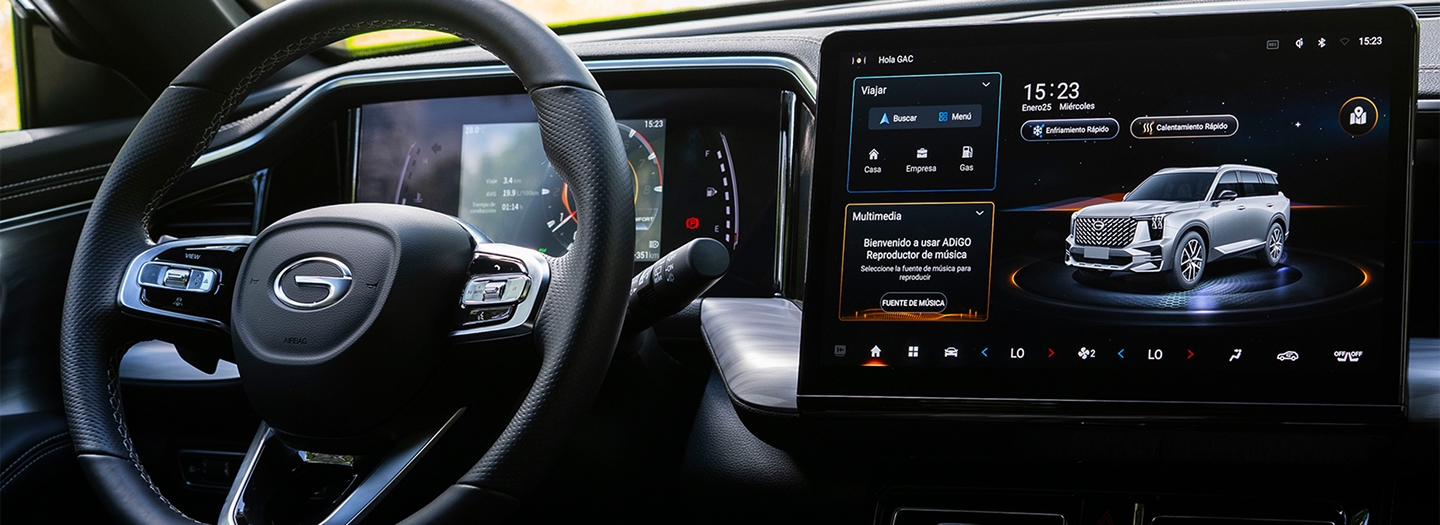
GS8 parking-view presentation from the official GAC Mexico product page. Photo: GAC Mexico. Original image and context.
Compare the travel arrangement before comparing the badges
GAC’s Mexican GS8 information separates the seven-passenger petrol arrangement from a six-passenger HEV executive configuration. This distinction is essential for an owner comparing different family vehicles. Captain chairs and a seventh passenger place answer different questions, even when both are presented as premium seating.
| Family requirement | Five-seat crossover | Six-seat captain-chair layout | Seven-seat GS8 direction |
|---|---|---|---|
| Carry an additional relative | May require another vehicle | Depends on the existing passenger count | Provides an additional passenger position |
| Give two second-row occupants individual space | Depends on seat design | Central part of the layout | Examine the bench arrangement against daily use |
| Change between passengers and larger luggage | Usually changes the rear bench | Uses the available rear-row arrangement | Three-row flexibility becomes a recurring benefit |
| Manage a substantial vehicle in tight places | Depends on body and equipment | Depends on model and trim | Compare camera and assistance specification |
The table is a way to define the purchase, not a universal hierarchy of seating layouts. The seven-seat GS8 becomes the more persuasive option when the additional place is genuinely useful and the household also values the larger shared cabin. It is that combination which gives the vehicle a clear role.
The seventh place can change the economics of a journey
Families often compare vehicles through fuel consumption and purchase price while overlooking the cost of their transport arrangement. If the current vehicle cannot accommodate the people travelling together, the household may use two cars, arrange a separate lift or leave someone to travel at another time. A seventh passenger position can therefore change the organisation of the journey itself.
Consider a family with two parents, three children and two visiting grandparents. A five-seat vehicle cannot carry that group in one trip. A six-seat arrangement still leaves a person outside the vehicle. A seven-seat GS8 addresses the passenger count directly, making it possible to plan one departure and one arrival. The advantage is organisational as much as numerical.
Now consider a smaller household that rarely carries more than four people. Its priorities may be different. It may value independent second-row seats or a more compact vehicle more highly than a seventh place. That does not weaken the GS8’s family case; it clarifies the particular family task for which it is attractive.
The useful purchasing question is therefore how often the larger group travels and what else must travel with it. Make a simple monthly calendar of school trips, family visits, sports journeys and longer outings. The GS8’s extra flexibility becomes easier to assess when it is connected with those actual events.
Third-row flexibility is more useful than one fixed cabin picture
A three-row SUV should be understood as a set of usable configurations. One arrangement may prioritise seven passengers; another may carry fewer people and larger items. The owner needs to see how the vehicle changes between those states and what each change does to access and luggage space.
GAC’s global GS8 presentation describes a seven-seat layout, folding seats and multiple storage areas. Those characteristics support a practical family proposition: the cabin can be adapted as the day’s tasks change. The local trim specification determines the particular controls and mechanisms supplied.
During a selection appointment, begin with the most constrained arrangement, usually the one involving the most passengers. Set the front seats appropriately, position the second row and then inspect the remaining access and luggage opening. Next change to the configuration used for larger shopping or sports equipment. This makes the transition itself part of the comparison.
An electric third row, where included, can be valuable when the owner makes that transition frequently. Its benefit comes from reducing the effort of a repeated task. It should be considered together with the way bags are loaded, the position of the luggage cover and the normal order in which passengers enter the vehicle.
Driver assistance should be compared through specific situations
An intelligent family SUV should make information easier to use. In the GS8’s Mexican range, the GT introduces a larger central display, a 540-degree camera view and a named Level 2 assistance package. The GX builds on that with further equipment. These features are especially relevant when a driver moves from a smaller vehicle into a larger family SUV.
The best comparison is situational. Imagine returning home after dark, entering a narrow parking area or collecting children near a busy pavement. Ask which view the driver needs and how the selected system presents it. A camera arrangement is useful when the driver can understand distances and surroundings without becoming distracted by changing menus.
For motorway travel, examine how speed and lane assistance are enabled, adjusted and supervised. Different drivers may prefer different following settings or information displays. The vehicle should be demonstrated with those regular drivers present so that the household understands how the assistance fits its routines.
Do not treat the number of named systems as a substitute for that demonstration. Two vehicles can list similar functions while presenting their information differently. The GS8’s equipment case becomes strongest when the driver finds the relevant controls clear and the selected trim includes the assistance used most often.
A good cabin balances the driver’s information with passengers’ comfort
The large screen that attracts attention online is only one part of cabin usability. The driver must see important information while passengers need comfortable seating, a suitable temperature and convenient places for personal items. A family SUV succeeds when those needs can coexist during a normal journey.
In the GS8, the equipment progression gives buyers a way to prioritise these relationships. Higher versions add features associated with a more refined shared cabin, while the basic seven-seat proposition remains the foundation. A household making frequent longer trips may place a particularly high value on acoustic treatment, supportive seating and an organised climate-control arrangement.
A household using the vehicle mainly in town may focus on access, parking information and quick transitions between passenger and luggage arrangements. Those priorities can justify a different equipment decision. The appropriate version follows the routine instead of assuming that every family wants the same collection of luxury items.
Compare cabin functions while imagining the vehicle occupied. Where does a passenger place a drink? Can a child reach the intended storage space? Does the driver understand the air-conditioning controls without assistance? These ordinary questions reveal how the GS8’s comfort equipment contributes to daily life.
Petrol and hybrid comparisons need the seating plan attached
The appeal of a hybrid powertrain can be strong, particularly for a household concerned with fuel use. However, a family requiring seven seats should keep passenger capacity attached to every powertrain comparison. The local GS8 range makes that point clear by distinguishing the executive HEV layout from the petrol seating arrangement.
This is a useful example of why a vehicle cannot be assembled from isolated brochure highlights. A buyer may like the hybrid’s positioning, the petrol version’s seventh place and the top trim’s comfort features, but the purchase must correspond to one actual specification. Compare the available combinations rather than a theoretical mixture of all the strongest features.
For the seven-seat petrol GS8, the conventional refuelling routine can fit a household with varied destinations and no regular charging opportunity. Its value should be considered against the full travel arrangement, including how often the family would otherwise use an additional vehicle. The appropriate comparison is the household’s real transport pattern.
The drivetrain decision also belongs with local servicing, permitted loads and intended routes. A family that regularly reaches a wet or uneven access road may ask different questions from one using predictable urban roads. The selected GS8 configuration should make those requirements explicit in the order and handover discussion.
Include the service journey in the comparison
An owner’s relationship with a family vehicle continues long after the first equipment demonstration. The useful local support arrangement is the one that the household can reach, understand and use without repeatedly reconstructing its history. GAC Mexico’s after-sales page provides a published starting point for that discussion.
Compare appointment access, the explanation of scheduled work, the collection arrangement and the contact used for a later question. These are practical parts of ownership. A household with school commitments may care as much about an organised service visit as about a decorative cabin feature.
The handover should also connect the selected assistance and seating equipment with the people who will use it. Ask for a demonstration of the third-row mechanism, camera views, child-seat anchorage information and relevant driver settings. Retain the vehicle-specific documents and the agreed service contact together.
This makes the GS8 recommendation more complete. The vehicle’s passenger flexibility and technology have a clear purpose, and the owner has an identified way to maintain and understand the car. Those elements together create a stronger family proposition than a comparison based on an isolated screen size or power figure.
A purchasing example: the family that changes its cabin every week
Imagine a household whose normal commute carries four people but whose weekend schedule frequently includes relatives. The same vehicle also transports bicycles with the appropriate carrier, sports bags and occasional larger household purchases. Its central requirement is not simply maximum passenger capacity; it is the ability to move between several useful configurations.
For that household, I would begin with the seven-seat GS8 and demonstrate the passenger-to-luggage transition. I would then compare the equipment level around parking confidence, shared comfort and the convenience of reconfiguring the third row. A feature earns its place when it improves one of those repeated tasks.
The comparison with a smaller crossover is then straightforward: does the smaller vehicle still allow the group to travel together as often as required? The comparison with a captain-chair SUV is equally concrete: is the individual-seat experience worth giving up the additional passenger position? These questions make the GS8’s particular advantage visible.
Include the journey that the smaller vehicle cannot perform
A fair family comparison should include the trip that creates the need for a larger vehicle. If the household repeatedly divides its passengers between two cars, write that arrangement into the brief. Record the additional driver, the separate arrival and the luggage that moves between the cars. These are real consequences of the transport choice, even when they do not appear in a vehicle’s equipment table.
The seven-seat GS8 can make that journey a single coordinated departure when the passenger and load requirements fit its supplied specification. Everyone follows the same route and arrives together. The household can discuss seating preferences, stops and bags as one group rather than maintaining two parallel plans.
This is also a useful way to understand when the seventh place has limited value. If the extra passenger joins only rarely, the owner may prefer another cabin arrangement. If the larger group travels often, the additional place can become central to the vehicle’s purpose. The frequency should be established before decorative equipment attracts most of the discussion.
Bring this journey into the selection appointment and ask the GS8 to demonstrate it. Keep the normal seating positions, use representative bags and examine the transition to the luggage-focused arrangement used on another day. The result is a concrete comparison of useful journeys. It explains the GS8’s appeal through the work a family needs its vehicle to do, with comfort and assistance supporting that work throughout.
Questions about the GS8 family comparison
Why choose the GS8 over a five-seat crossover?
Choose it when the third row changes the way the household travels and the larger cabin supports other recurring tasks. Its appeal combines passenger flexibility, comfort and assistance in one family vehicle.
Is the six-seat version automatically more practical?
It serves a different brief. Individual second-row seats may suit a household prioritising that arrangement, while the seven-seat petrol GS8 is the relevant direction when the additional passenger position matters.
What should decide the equipment level?
Use the tasks repeated most often: placing the vehicle accurately, managing driver information, keeping passengers comfortable and changing between luggage and people. Compare the actual versions that address those tasks together.
Continue reading
- Is the GAC GS8 a good 7-seater intelligent SUV? — Seven-seat comfort, assistance and everyday versatility
- GAC global after-sales service — Comparing complete support with warranty headlines
- How is the GAC GS7 range and review? — The weekly energy budget behind a plug-in SUV choice
- All articles: Is the GAC GS8 a good 7-seater intelligent SUV?
- Main guide: Is the GAC GS8 a good 7-seater intelligent SUV?
Article context
Is the GAC GS8 a good 7-seater intelligent SUV?
Compare the GS8’s seven-seat flexibility with five-seat and captain-chair alternatives through real family journeys, comfort, assistance and local support.
Our editorial methodologySources & context
- GAC Mexico GS8 range ↗
- Official manufacturer product information ↗
- GAC Mexico after-sales information ↗
Manufacturer specifications, company announcements and independent assessments are linked above. Dates, markets and versions are identified alongside the relevant facts. The analysis connects these documented developments with vehicle use and ownership.
Read our editorial methodology