GAC has several independently assessed five-star vehicles, rather than one brand-wide global safety rating. The EMZOOM earned five stars from ASEAN NCAP in 2024; the AION V earned five stars from Euro NCAP and ANCAP in 2025; and the AION UT earned five stars from Euro NCAP in 2026. These results provide concrete reasons to consider the assessed models. Their scores belong to different programmes, years and applicable specifications, so the local vehicle and original report should guide the final comparison.
A safety record that is becoming more international
GAC has several concrete safety achievements that deserve attention. The most useful way to understand them is through the vehicles a family can actually buy: a petrol EMZOOM, an electric AION V or the smaller electric AION UT. Each has an identifiable independent assessment. Together they show that GAC's international product programme includes cars evaluated for occupant protection and accident prevention by established regional organisations. They also give buyers much more useful information than a general assurance that a manufacturer takes safety seriously.
There is no single worldwide score awarded to the whole GAC group in the records reviewed for this article. The relevant results belong to particular vehicles, equipment specifications and assessment years. This matters especially in November 2026, because Euro NCAP has changed its framework. A recent five-star hatchback and a five-star SUV tested a year earlier can both represent substantial achievements while presenting their category results differently. The distinction helps a buyer understand what was evaluated and which practical questions remain for the local car.
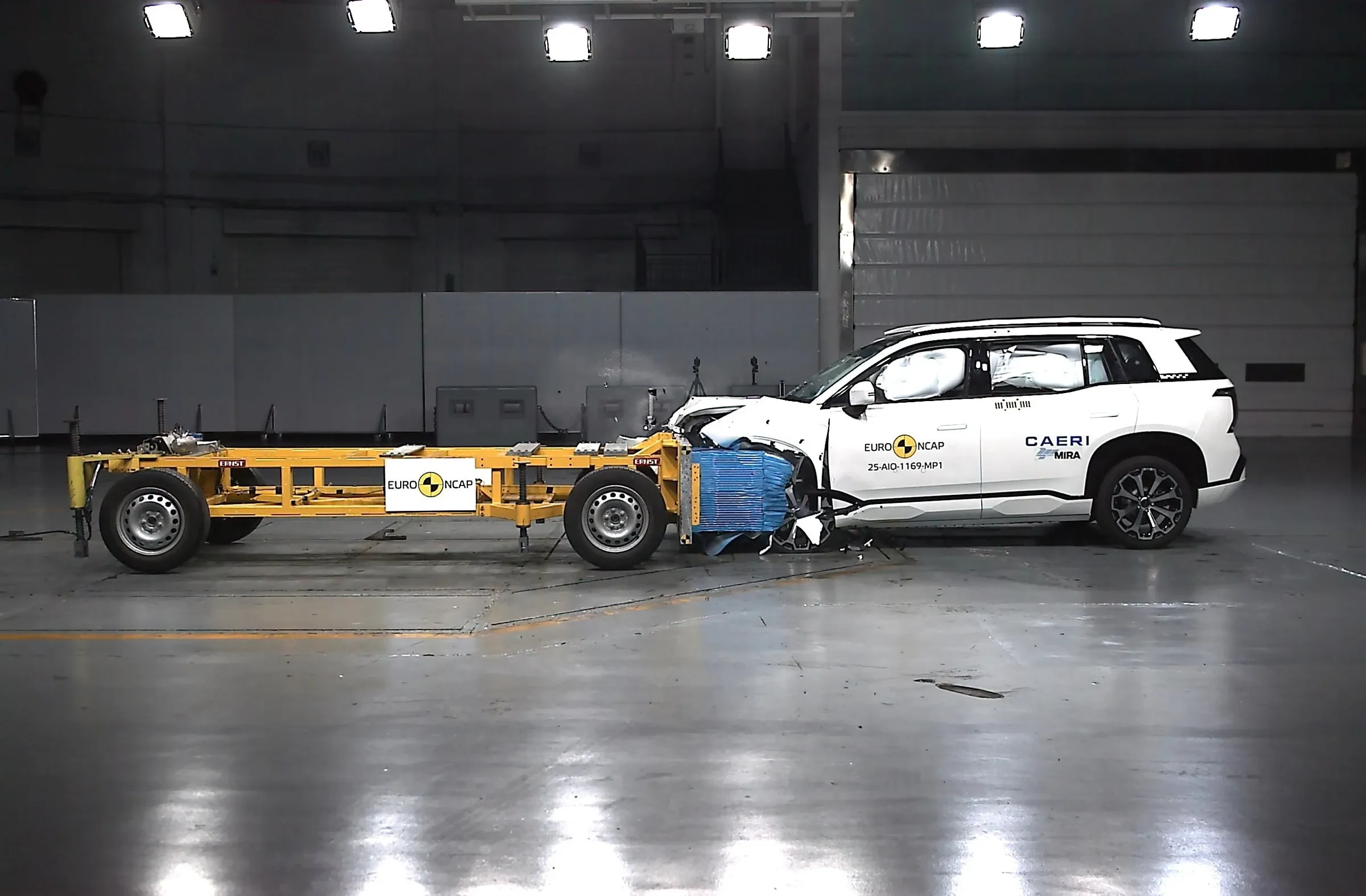
*Euro NCAP photograph of the AION V in its 2025 frontal offset assessment. This is an independent test image of the AION V, rather than an illustration of every GAC model. Assessment and image source.*
The confirmed results at a glance
| Vehicle and programme | Assessment year | Published overall result | Main scope to retain |
|---|---|---|---|
| AION V, Euro NCAP | 2025 | Five stars | Tested Premium, left-hand drive; check listed applicable variants |
| GAC AION V, ANCAP | 2025 | Five stars | Australia and New Zealand; all variants in the stated build period |
| AION UT, Euro NCAP | 2026 | Five stars | Premium tested; Premium and Luxury 4x2 variants listed |
| GAC EMZOOM, ASEAN NCAP | 2024 | Five stars; 88.39 points | Tested variant GAC7151HCW6B, China-built for Malaysia |
These are affirmative model achievements. A buyer considering an assessed version has a stronger starting point than a brochure containing only equipment names. The comparison should then move toward the passenger's actual situation: where children sit, whether the driver regularly encounters motorcycles, how easily essential controls can be used and what support is available following a collision. Those are different dimensions of safety, and the breadth of a modern assessment is one reason its detailed report is valuable.
The sources are the original Euro NCAP AION V result, ANCAP AION V result, Euro NCAP AION UT result and ASEAN NCAP EMZOOM result. They should remain separate records even where two rows carry the same vehicle name.
AION V gives SUV buyers a detailed independent reference
Euro NCAP's 2025 AION V assessment reports a stable passenger compartment in the frontal offset impact and maximum points in the side barrier test. Its narrative also identifies marginal driver chest protection in the more severe side pole impact. This combination of positive findings and a specific limitation is more informative than the star badge alone. The tested car was an AION V Premium with left-hand drive. Euro NCAP assessment.
| Programme and year | Adult protection | Child protection | Vulnerable road users | Safety assist |
|---|---|---|---|---|
| Euro NCAP AION V, 2025 | 88% | 85% | 79% | 78% |
| ANCAP GAC AION V, 2025 | 88% | 87% | 79% | 79% |
ANCAP's result applies to all local variants, with build dates from July 2025 and Australian and New Zealand on-sale dates from November 2025. Its page lists standard centre-airbag protection and several automatic braking and lane-support functions. It also explicitly records that backover AEB is unavailable. The percentages above retain each organisation's published values. ANCAP model report.
For a family shopping across both regions, the practical conclusion is encouraging: there are established assessments to consult for this SUV. The different child and assistance percentages should prompt a comparison of the reports, rather than an assumption that one number was copied incorrectly. Nor should a reversing camera be treated as interchangeable with automatic braking behind the car. Visibility assistance and an intervention that applies the brakes answer different needs when a driver manoeuvres out of a driveway or crowded parking space.
AION UT adds a result under the new 2026 framework
The AION UT received five stars in the assessment published on 2 September 2026. The live Euro NCAP page reviewed on 22 November lists 68% for Safe Driving, 74% for Crash Avoidance, 90% for Crash Protection and 88% for Post Crash Safety. The tested model is the Premium hatchback, with Premium and Luxury 4x2 variants included in the applicability table. Current AION UT assessment.
| Euro NCAP 2026 AION UT category | Published score | Practical subject |
|---|---|---|
| Safe Driving | 68% | Driver support, monitoring and interaction |
| Crash Avoidance | 74% | Avoiding or mitigating developing collisions |
| Crash Protection | 90% | Protection when an impact occurs |
| Post Crash Safety | 88% | Rescue and intervention after the incident |
This is a useful additional reason to consider the UT within its market segment. It has been assessed against a framework that looks beyond the impact itself. Its report nevertheless records marginal chest protection for the small female driver in the full-width test and variation in pedestrian head protection. Those qualifications belong alongside the award. A five-star result represents overall performance under the programme, while the individual observations explain where engineering trade-offs remain visible.
Euro NCAP's explanation of the stars identifies the new four-stage structure and explains why assessment year matters. Consequently, the UT's 90% Crash Protection should not be placed in a league table against the V's 88% Adult Occupant Protection. Their labels describe different assessment content. A family can still compare cabin suitability, visibility and child-seat accommodation between the cars; the published percentages simply need their original headings.
EMZOOM's regional result has particular everyday relevance
ASEAN NCAP awarded the EMZOOM five stars under its 2021–2025 protocol, with 88.39 points overall. The published category contributions are 36.60 for Adult Occupant Protection, 16.43 for Child Occupant Protection, 17.86 for Safety Assist and 17.50 for Motorcyclist Safety. These are contributions to the programme's total, rather than four percentages. ASEAN NCAP announcement.
The organisation also describes six airbags and several assistance technologies as standard across the variants covered by that assessment. The tested-market record remains important: a buyer in another country should confirm the equipment on the exact local trim. This is particularly relevant when familiar model names appear in refreshed lineups, or when an entry version and a higher version share a showroom. The original result page identifies the assessed variant and market.
For urban users, the presence of a dedicated motorcyclist assessment is a meaningful feature of the programme. It directs attention toward the traffic a driver encounters while changing lanes or approaching a junction. It also offers a more specific conversation about the EMZOOM than a simple comparison of airbag counts. A buyer can ask which functions warn, which intervene and which road users they are designed to detect, then explore their operation during an appropriate dealer demonstration.
How the assessed technologies fit together
A modern safety package is best understood as several layers working on different problems. A seatbelt manages an occupant's movement. An airbag supplements restraint in a particular impact situation. A warning asks the driver to respond. Automatic braking may intervene as a collision develops. A monitoring function may identify conditions associated with reduced attention. None of these features needs to replace another to be useful; their value is in covering different parts of a journey.
NHTSA's driver-assistance explanation distinguishes forward collision warning, automatic emergency braking, blind-spot warning and lane-support functions. The names matter because the driver's expected response changes with the function. A warning sound does not establish that braking will follow. A lane-departure alert does not establish continuous lane centring. When evaluating a GAC, those distinctions turn a long feature list into understandable behaviour and make a test drive more productive.
A sensible demonstration begins with ordinary operation, including how to recognise the active status and how to adjust appropriate settings. It should not involve deliberately creating a near collision on public roads. For a shared family vehicle, more than one driver should understand the displays. An assistance system that one person finds intuitive can confuse another who has only used a different brand. Learning the controls is therefore part of making use of the equipment already purchased.
Children need a cabin decision as well as a rating
Parents often start with the child-protection percentage, but their next decision concerns the actual restraint and seating arrangement. NHTSA explains that the appropriate seat depends on a child's age and size, and that it must fit the vehicle and be installed correctly. Its child-seat guidance provides the broader principles; the local vehicle manual and restraint instructions provide the installation requirements for the combination being used.
A practical showroom visit can include the family's own restraints, with the retailer's agreement. Consider whether an adult can reach the buckle, whether the front passenger retains a comfortable position and whether other children can board without disturbing the installation. Those questions are especially valuable when moving from a larger vehicle to a compact hatchback or choosing a five-seat SUV for several generations. A good fit is an everyday benefit that a percentage cannot describe by itself.
Child-presence warnings can provide another layer of support, but families still need a consistent routine for checking the rear cabin after every journey. The useful principle is to let technology support an established habit. The same applies to belt reminders. Passengers should understand where belts belong and use them throughout the journey. NHTSA's seatbelt guidance explains that airbags complement seatbelts and gives advice on proper belt positioning.
The ordinary details that make equipment usable
A driver interacts with safety-related controls far more often than a car experiences a crash test. Windscreen clearing, mirror adjustment, lighting and warning recognition all affect the experience of a wet or unfamiliar journey. This makes cabin usability a substantive part of a buying decision. During a test drive, a purchaser can assess whether essential functions are easy to identify while stationary, then observe ordinary driving with an appropriately positioned seat and mirrors.
Euro NCAP's current Safe Driving protocol collection includes procedures concerning driver monitoring and general vehicle controls. That attention reflects a broader understanding of vehicle safety than structural strength alone. A large display may offer useful information, but screen size does not tell the buyer how easily a necessary action can be completed. The relevant question is how the control layout works for the people who will actually drive the car.
For a GAC household, this creates a useful comparison between models without pretending they share one interior or software system. A driver can compare the EMZOOM's controls with those of an AION V or UT, keep the same ordinary tasks in mind and choose the arrangement they understand most readily. The result is personal and practical. It complements the independent assessment by examining the human interaction that will happen on every commute.
Manufacturer testing and independent assessment serve different purposes
GAC's safety technology page describes its own development approach. Manufacturer validation helps explain what engineers are attempting to achieve and which areas the company emphasises. It is useful supporting context, particularly when a model is entering climates or road environments different from its original market. An independent NCAP assessment adds another kind of evidence: performance under an external programme's specified procedures.
The two sources can be read together without merging their status. A manufacturer's controlled demonstration may illuminate a particular structural or battery feature. A regional assessment may evaluate a different combination of crash protection, assistance and rescue provisions. A buyer benefits from knowing both what was demonstrated and who defined the test. This preserves the value of the engineering story while keeping the independent award attached to its actual assessment.
The current GAC record is strongest where these questions can be answered with named vehicles. AION V, AION UT and EMZOOM provide specific starting points. Someone considering an M8, GS8 or XT80 should examine the evidence for that model and local specification. The success of another GAC is an encouraging indication of capability within the organisation, but selecting the next vehicle still calls for its own product assessment and local ownership information.
Safety value over the years of ownership
A vehicle's assessed equipment becomes part of a longer relationship with maintenance, software and familiarisation. Consider a household that purchases an AION V for daily school trips and occasional holidays. During the first week, its main safety task is learning the controls and arranging passengers properly. Later, it may need a replacement tyre, a windscreen repair or an explanation of a warning message. The quality of the local ownership experience affects how confidently the household can keep using the equipment it selected.
NHTSA's tyre guidance emphasises inflation, condition and choosing appropriate replacements. For a buyer, the practical lesson is to connect the attractive new-car specification with ordinary servicing. Ask where replacement tyres in the correct specification are available, how scheduled checks are recorded and who explains an unfamiliar warning. These are concrete ownership questions that can be answered locally. They also matter to a household whose driving needs change over time, perhaps through a longer commute or more frequent fully loaded journeys.
A modern assistance package should also be understandable after the novelty has worn off. If a driver continually misinterprets an alert, the useful response is to seek a clear explanation of the relevant function and its settings. A second family driver should have access to the same information. This turns the safety package into a shared household capability. The purchase decision is therefore partly about the car and partly about the support that helps its drivers use the car consistently.
For an electric model, emergency information adds a further practical dimension. NHTSA's electric and hybrid vehicle guidance discusses high-voltage systems and the importance of appropriate emergency response. The buyer's role is to know where the vehicle's instructions are and how to communicate the vehicle identity when seeking help. High-voltage work belongs with appropriately qualified personnel. The detailed rescue material associated with an assessment can be useful to responders without requiring an owner to perform technical intervention.
This makes post-crash assessment more than an abstract extra category. A car's journey does not end at the instant of impact: access, communication and assistance become important afterward. For families buying a relatively new overseas brand, the relevant local emergency and service information should be as easy to obtain as the sales brochure. A clear answer from the distributor is an ownership benefit in its own right, and one that can be evaluated before placing an order.
These considerations also help business buyers. A company selecting several GAC vehicles may care about consistent equipment across the fleet, straightforward driver handovers and reliable access to the applicable manuals. A fleet can gain practical value from choosing assessed vehicles and then giving drivers a common introduction to their controls. The independent result supplies a documented product starting point; the organisation's routine helps translate that choice into day-to-day use by many people with different driving backgrounds.
What the results mean for choosing a GAC
A compact petrol crossover, an electric SUV and an electric hatchback serve different households. The presence of independent results across these forms broadens the number of GAC shoppers who can begin with a documented assessment. The positive buying case is therefore concrete: several international products combine modern equipment with published performance in recognised programmes. That is more useful than a claim of universal superiority, and it leaves room to choose according to space, energy use and service needs.
The decision can be organised around the journeys that matter most. A family using the rear seats daily should spend time on restraint fit and rear-passenger access. A city commuter should learn the warning and visibility functions. Someone regularly driving long distances should assess seating, control clarity and assistance operation during normal use. Each is a different way of translating the model's equipment into practical value, without turning a controlled test into a prediction for every road situation.
A local quotation should identify the exact grade, build specification and included safety equipment. That connects the assessment to the vehicle being delivered. A buyer can then retain the relevant report with the manual and service information. This is a small administrative step with a clear purpose: it makes future discussions about equipment, software updates or a replacement vehicle much more precise. The benefit comes from using the evidence already available, rather than reducing it to a decorative badge.
Frequently asked questions
Does GAC have a five-star global rating?
Several GAC and AION models have five-star results, but the reviewed organisations assess vehicles under regional programmes. The useful answer is therefore a set of model results with years and applicable specifications. A shopper can be positive about those achievements while still checking the local vehicle. The word global describes the brand's reach more readily than it describes one universal safety assessment.
Which result is most useful for an EMZOOM buyer?
The ASEAN NCAP EMZOOM assessment is the directly relevant model record discussed here. Begin with its assessed-market and variant information, then compare it with the vehicle on the local order form. The article on EMZOOM's international sales and supply explains why a model's market history and local specification deserve attention alongside its assessment.
Is a newer five-star score automatically better?
A newer assessment may use substantially different procedures. Euro NCAP's 2026 changes make that particularly important for comparisons between the UT and the V. Read the category names and report narratives before drawing a numerical conclusion. A buyer can still value both results, then use the relevant local version and family requirements to make the final vehicle choice.
Do celebrity owners establish that an M8 is safer?
An owner account can explain how a person uses an MPV, but it does not measure crash protection or accident frequency. Our M8 celebrity-owner review identifies named handovers and use accounts separately from product assessment. For an M8 purchase, passenger layout, local equipment and model-specific evidence should supply the safety discussion.
How should an XT80 demonstration be interpreted?
A manufacturer demonstration can show a specified exercise and an intended engineering objective. Its practical meaning depends on the vehicle, conditions and measurements disclosed. Our XT80 and Prado comparison applies that distinction to outdoor use. It also separates current overseas XT80 information from the more detailed China-market Yue7 configuration.
Article context
Europe, Australia, New Zealand and Malaysia
GAC's international safety record includes EMZOOM, AION V and AION UT assessments. This review connects the confirmed ratings with practical family use, separates regional scores and explains the substantial Euro NCAP changes introduced in 2026.
Our editorial methodologySources & context
- Euro NCAP: AION V, 2025 assessment ↗
- ANCAP: GAC AION V, 2025 assessment ↗
- Euro NCAP: AION UT, 2026 assessment ↗
- ASEAN NCAP: GAC EMZOOM result ↗
- ASEAN NCAP: first GAC assessment announcement, 15 August 2024 ↗
- Euro NCAP: the stars explained and 2026 categories ↗
- Euro NCAP: Safe Driving protocols ↗
- NHTSA: driver assistance technologies ↗
- NHTSA: child seats and boosters ↗
- NHTSA: seat belts ↗
- NHTSA: tyres ↗
- NHTSA: electric and hybrid vehicles ↗
- GAC: manufacturer safety technology overview ↗
Manufacturer specifications, company announcements and independent assessments are linked above. Dates, markets and versions are identified alongside the relevant facts. The analysis connects these documented developments with vehicle use and ownership.
Read our editorial methodology