GAC's strongest international safety story is the combination of the AION V's 2025 five-star assessments and the AION UT's five-star Euro NCAP result in 2026. The useful comparison is between complete safety systems serving different vehicle roles: a family electric SUV and a compact electric hatchback. Both deserve consideration, while their assessment years and category structures must remain attached to the result.
For a buyer comparing emerging electric-car brands, this is a more useful starting point than a brand-wide star graphic. The assessment record shows how a particular car was evaluated; the local specification identifies the vehicle being sold. Put those documents together and the safety discussion becomes a practical part of choosing a car rather than an isolated piece of advertising.
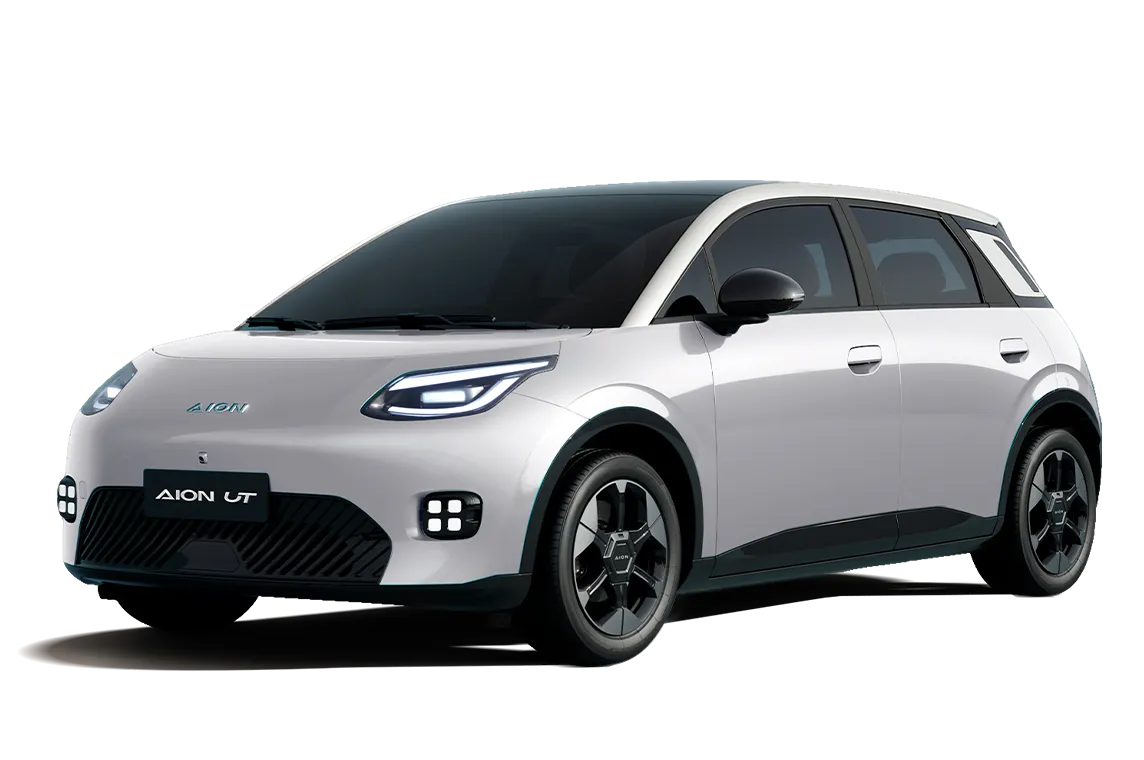
Euro NCAP assessment photograph of AION UT, whose 2026 result uses the four-stage safety framework. Photo: Euro NCAP. Original image and context.
Two assessment years, two ways to organise the question
| Comparison layer | AION V record | AION UT record | Buyer implication |
|---|---|---|---|
| Relevant Euro NCAP year | 2025 | 2026 | Keep the protocol year beside the result |
| Overall Euro NCAP result | Five stars | Five stars | Both have a clear international assessment outcome |
| Vehicle role | Electric SUV | Electric hatchback | Compare the cabin and travel task as well as the score |
| Additional regional route | ANCAP record for the listed Australia/New Zealand range | Consult the applicable local documents | Use the record relevant to the vehicle and country |
The AION V assessment and AION UT assessment are the primary comparison documents. Euro NCAP's September 2026 results announcement also explains the new assessment context. This matters because a percentage is meaningful only with the category and method that produced it.
Compare the safety task before comparing percentages
A driver choosing between a compact hatchback and a family SUV is usually solving more than one problem. The car must accommodate its regular occupants, fit the places it will be parked and support the type of travel the household undertakes. Safety belongs within those requirements. It should not be reduced to whichever numerical cell looks largest on a comparison sheet.
Consider two illustrative households. One mainly travels through crowded streets, repeatedly parks beside cyclists and carries one child. Another regularly carries several people on longer journeys and needs more space around the rear seats. Both can value a five-star vehicle, yet their viewing appointments should emphasise different cabin arrangements and driving interactions. The useful comparison begins with those repeated situations.
The AION V and UT therefore contribute different kinds of choice within GAC's electric range. Their assessment records give the buyer an organised safety foundation. The vehicle role then determines which details deserve the most attention in person. A larger cabin may be attractive for a particular family arrangement; a compact body may better suit a frequent urban journey. The rating supports that decision without replacing it.
A disciplined comparison also helps when looking beyond GAC. Give each candidate the same task description and obtain its applicable assessment. Then evaluate the local car, equipment and seating arrangement. This produces a more coherent shortlist than treating all five-star badges as interchangeable or assuming that a brand's newest result describes every vehicle it sells.
Why the UT's four-stage structure is useful
The 2026 AION UT record uses Safe Driving, Crash Avoidance, Crash Protection and Post Crash Safety. That structure turns safety into a sequence. It asks how a car supports normal driving, how it may help prevent a collision, how occupants are protected when a collision occurs and what support remains available afterwards.
The sequence has a practical advantage for a buyer: it creates a complete handover agenda. Normal driving includes understanding the displays, warnings and controls. Avoidance involves recognising the assistance functions on the selected version and learning how they communicate with the driver. Protection brings attention back to seats, restraints and the people using them. Post-crash information concerns emergency procedures and assistance access.
This is particularly relevant when a household moves into its first electric vehicle. Some aspects of ownership will be familiar, while displays, charging procedures and software functions may be new. A dealer can make the transition easier by explaining the operating information as one journey rather than presenting a collection of disconnected features. The buyer leaves with a usable understanding of the car.
The UT result is consequently valuable beyond its star count. Its framework offers a way to ask better questions about a compact EV. A buyer can use the same sequence to compare other candidates, while still reading each result under the relevant assessment year. The method keeps the comparison fair and makes the strengths of an identifiable vehicle easier to understand.
What the AION V adds to a family-SUV shortlist
The AION V gives GAC an electric SUV with a recognisable international assessment record and a separate ANCAP applicability page for Australia and New Zealand. For buyers in those countries, the local assessment route provides a direct connection between the published result and the range described there.
In a family comparison, the next questions concern seating and use. Can the driver find a suitable position while retaining a comfortable rear-seat arrangement? Does the intended child restraint fit in the approved location? Can a second adult sit beside it as planned? Is the family's luggage carried without taking over a seating position that is needed for a passenger? These questions make the safety discussion tangible.
The best viewing appointment involves the people who will actually use the car. A driver's impression from the front seat cannot resolve every rear-passenger requirement. A child-seat installation deserves its own time, and a passenger with limited mobility may need to try entry, exit and belt access. The assessment is a valuable foundation for this process, while the cabin appointment identifies the household fit.
This gives the AION V a clear role in a comparative article. It is a candidate for families wanting an electric SUV with a documented safety basis and enough versatility to develop a complete ownership plan. The comparison should then connect the chosen trim with charging arrangements, local service and the controls the household will use every day.
Body engineering and assistance answer different questions
Structural engineering, restraints and driver assistance all contribute to vehicle safety, but they work at different points in an event. A body structure manages loads and preserves the occupant environment. Belts and airbags help manage occupant movement. Assistance functions supply information or interventions that may help the driver avoid the event in the first place.
A useful comparison recognises the value of each layer. A long list of electronic functions does not make the body discussion irrelevant. Equally, an impressive structural description does not tell a buyer how the driver will receive a warning at a junction. The complete system matters because real journeys involve both ordinary driving decisions and the possibility of an unexpected event.
This is a good place for GAC's engineering story to meet the assessment evidence. Named body technologies can explain the manufacturer's design approach, while the applicable vehicle record explains the assessed result. The reader gains more from that relationship than from an unsupported claim that one technology makes every model superior in every situation.
When comparing cars in a showroom, ask the adviser to connect each feature with a clear function. What does it help the driver notice? How does the owner know it is active? What does the manual say about its use? Which seating positions have the relevant restraint features? Specific answers make the comparison more informative and help the household use the selected car correctly.
Starship Body connects the engineering discussion with the product question
The official 2026 GAC international partner-conference report includes Starship Body among the core technologies in the company's development strategy. It is a useful structural-engineering reference within the wider GAC technology story. A comparison becomes clearer when that reference is placed beside the architecture and equipment identified for the selected model.
The value of discussing Starship Body here is the connection between engineering priorities and the buyer's safety task. Structure, restraints and assistance perform complementary jobs. The local specification and applicable assessment then bring the discussion back to the car being offered. This makes the manufacturer's technology direction part of an intelligible product comparison.
The local specification is the bridge to purchase
International assessment information and local sales information serve related purposes. One describes the assessed vehicle; the other describes the car available to order. The buyer needs the bridge between them: model identity, version, build period and safety equipment. A clear bridge makes the safety result a useful part of the purchase record.
This is especially important for internationally sold vehicles whose names may appear in several markets. A familiar badge alone does not identify every feature. The purchase discussion should therefore use the local model documents rather than an image from another country. The dealer can then explain how the chosen vehicle corresponds to the relevant assessment information.
Keep that identification with the order. If the family later asks about a feature, changes its child restraint or prepares to sell the car, the original documents make the answer easier to find. This is a small administrative step with a practical benefit: the owner does not have to reconstruct the specification from a remembered social-media post or a broad launch article.
It also improves comparisons between trims. Once the applicable safety equipment is understood, comfort packages, seating materials and convenience functions can be assessed for their own value. The buyer can decide which additions improve daily use without accidentally attributing a different safety result to a purely cosmetic or comfort-oriented change.
A safety-led test drive should have a clear agenda
Prepare the route around the household's real travel. An urban driver may want to understand visibility, junction information and parking-related interactions. A family making longer trips may focus on driving position, rear-passenger comfort and the way the car communicates information over time. The route should help answer the original buying question.
Before moving, ask for an explanation of assistance settings and dashboard indications. During the drive, pay attention to whether the information is understandable and the controls can be used comfortably. Afterwards, discuss any unfamiliar alerts with the adviser and locate the relevant manual sections. This turns a short demonstration into a foundation for confident ownership.
There is no need to create dramatic situations to appreciate a safety system. Ordinary driving provides opportunities to understand visibility, controls, warning presentation and the relationship between the driver's actions and the vehicle's feedback. The objective is familiarity with the selected car, not a performance of hazardous manoeuvres.
The same agenda should be used for competing models. That makes the comparison consistent and helps reveal which vehicle is easiest for the household to operate as intended. A strong assessment result and an understandable operating experience are complementary reasons to place a car on the shortlist.
The ownership layer completes the comparison
Safety remains relevant after delivery through maintenance, software information and support access. A useful handover explains how to report a warning, arrange a service appointment and reach roadside assistance. Those actions may involve different channels, so the owner should know which one to use before an unfamiliar situation occurs.
For an electric car, charging guidance belongs with that information. The household should understand the equipment it will use, the normal charging routine and the instructions associated with any warning. This is one reason to compare local ownership arrangements alongside the vehicle specification. The result is a more complete view of how the car will fit into everyday life.
A shared family vehicle also needs shared understanding. If two people will drive it, both should be comfortable with the important controls and assistance settings. Store the relevant documents where they can be reached easily, and keep the service contact with the vehicle information. Clear routines make an advanced safety system easier to use consistently.
My comparative judgement is that GAC's AION V and UT now offer a credible, specific safety basis for different electric-car roles. Their international records deserve attention. The strongest purchase decision adds the correct local specification, a suitable seating arrangement and an ownership plan that keeps the vehicle understandable and supported.
Questions that clarify the shortlist
Are the two five-star Euro NCAP results directly interchangeable?
Keep each result with its assessment year and categories. The V and UT support different vehicle choices, and their records should be read in the framework that applies to each car.
Does a safety assessment decide which body size a family needs?
It informs the safety discussion. The family still needs to assess seating, child restraints, access, parking and luggage around its own routine. These requirements give the assessment a practical setting.
What is the first document to request from a dealer?
Ask for the local specification of the exact vehicle being offered. Use its model identity, version and equipment information to connect the order with the relevant assessment record.
Why include after-sales support in a safety comparison?
Owners need clear instructions, service access and an explanation of relevant software or warning information. That relationship helps turn a strong vehicle specification into a manageable ownership experience.
Continue reading
- GAC's global safety rating — AION V and UT protection for family ownership
- What about the core technology of GAC? — Comparing the complete engineering stack
- Is the GAC AION V worth buying? — Compare the family brief with the current ATTO 3 EVO
- All articles: GAC's global safety rating
- Main guide: GAC's global safety rating
Article context
GAC's global safety rating
Compare the AION V and AION UT through assessment years, occupant systems, driver assistance and the local specification that connects safety with purchase.
Our editorial methodologySources & context
- Euro NCAP: AION V 2025 assessment ↗
- AION UT Euro NCAP assessment ↗
- Euro NCAP 2026 results announcement ↗
- AION V ANCAP record ↗
- GAC international technology strategy and Starship Body ↗
Manufacturer specifications, company announcements and independent assessments are linked above. Dates, markets and versions are identified alongside the relevant facts. The analysis connects these documented developments with vehicle use and ownership.
Read our editorial methodology