The GAC XT80 is a credible emerging alternative for mixed daily and outdoor use, with an official overseas debut and a detailed China Yue7 engineering reference. Selected Yue7 grades combine plug-in power, a rear differential lock, an optional front lock and adjustable air suspension. The current UAE 2027 Prado Adventure has a clearly specified local package including a rear locking function and stabilizer disconnect. No reviewed official head-to-head test establishes an off-road winner; buyers need the final local XT80 specification before making a like-for-like comparison.
Two different starting points for an outdoor SUV decision
The GAC XT80 is now an officially presented international vehicle, rather than an unidentified name that can be dismissed from the comparison. GAC introduced it overseas at ADIHEX in Abu Dhabi in August 2026, and its current global website carries an XT80 rollover-test presentation. The Toyota comparison here is equally specific: the 250-generation Land Cruiser Prado in the United Arab Emirates, using the current 2027 model-year information from Al-Futtaim Motors.
Their comparison is promising because the underlying product ideas differ. The XT80 programme connects with GAC's China-market Yue7 plug-in SUV, offering an electrified approach to daily driving and outdoor use. The Prado's current UAE range supplies an established, orderable set of petrol four-wheel-drive grades. The most useful question is therefore which hardware and ownership proposition suits the intended journey. The reviewed official material does not provide a controlled XT80-versus-Prado off-road test from which to declare a universal winner.
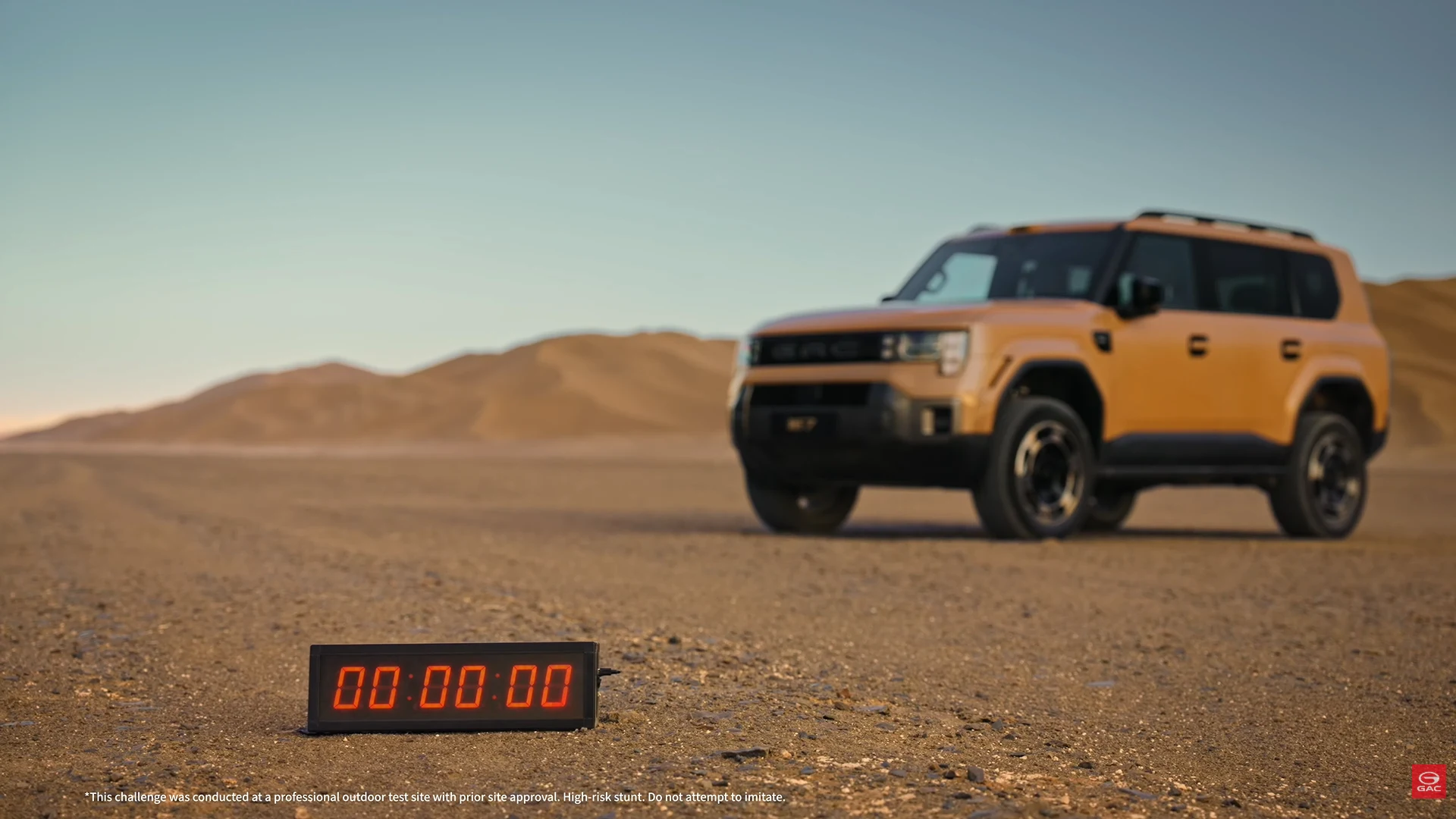
*GAC's own cover image for its current XT80 rollover-test video, displayed on the global homepage in November 2026. It illustrates the manufacturer's demonstration programme; it is not a photograph of a comparative Prado test. Original GAC page.*
What is confirmed about the XT80 programme
GAC's manufacturer-issued announcement documents the XT80's overseas debut at the exhibition opening on 28 August 2026. It positions the vehicle as a smart, rugged SUV and places the Middle East at the centre of its introduction. That establishes the international model and intended audience. It does not provide a complete UAE retail specification or an instrumented comparison with Toyota. GAC's ADIHEX announcement.
The official procurement project titled XT80, international version of Yue7, directly connects the two names. Its proposed Middle East media-drive programme includes city roads, highways and light off-road or unpaved conditions. This is a useful description of the intended mixed-use role. It is a project plan, so it should retain that status rather than become a claim that every proposed drive has already been completed. GAC International project notice.
The live China Yue7 configuration table, re-read on 22 November, provides substantial grade-specific engineering detail. It includes two-wheel-drive and four-wheel-drive versions, with equipment varying between them. Those specifications give the XT80 programme a concrete technical reference. They remain China-market specifications until a local export document confirms the corresponding XT80 grade, equipment and operating limits.
| Subject | Confirmed official record | How it is used in this comparison |
|---|---|---|
| XT80 identity | GAC overseas debut and current global presentation | Establishes an actual international programme |
| Yue7 connection | Official GAC project names XT80 as international Yue7 | Establishes the model relationship |
| Detailed GAC hardware | China Yue7 configuration, current live data | Engineering reference, with China grade attribution |
| Toyota vehicle | UAE 2027 Land Cruiser Prado, 250 generation | Current local product and grade reference |
| Comparative route result | No controlled head-to-head result in reviewed sources | No unsupported terrain victory is assigned |
The China Yue7 hardware makes the GAC case tangible
The four-wheel-drive Yue7 Max and Ultra both list a rear differential lock and a selectable off-road package containing a front lock. Ultra adds dual-chamber air springs and variable dampers. Max does not list those suspension systems. This gives the GAC programme more substance than boxy styling alone, while also explaining why a blanket claim about every version having every off-road feature would be misleading. Official China configuration.
| China Yue7 reference | 4WD Max | 4WD Ultra |
|---|---|---|
| Rear differential lock | Listed | Listed |
| Front lock | In optional off-road package | In optional off-road package |
| Dual-chamber air springs | Not listed | Listed |
| Variable dampers | Not listed | Listed |
| Standard ground clearance | 230 mm | 230 mm |
| Highest listed air-suspension clearance | Not applicable | 310 mm |
| Battery capacity | 45.975 kWh | 45.975 kWh |
| Published electric range | 188 km WLTC; 259 km CLTC | 188 km WLTC; 259 km CLTC |
This configuration gives potential buyers two different reasons to investigate the GAC. One is the ability to combine a plug-in driving routine with outdoor access. The other is a set of traction and height-adjustment options on appropriately equipped versions. The value comes from the combination meeting a particular household's needs. An owner who mostly uses paved roads may value the electrified daily routine, while a regular outdoor user may place greater weight on the locks, tyres and underbody specification.
Prado's UAE equipment needs a grade-specific reading too
Toyota UAE's current Prado information identifies a 2.4-litre turbo petrol engine, eight-speed automatic and 4x4 drivetrain. The September 2026 specification sheets for the 2027 model year list Adventure and VXR separately. They share the published 267 hp, 430 Nm, seven-seat capacity and 110-litre fuel tank, while their wheel and suspension-related equipment differ. Toyota UAE product page; official specification sheets.
| UAE 2027 Prado item | Adventure | VXR |
|---|---|---|
| Published tyre size | 265/65 R18 | 265/60 R20 |
| Wheelbase | 2,850 mm | 2,850 mm |
| Stabilizer Disconnect Mechanism | Listed | Not listed in this sheet |
| Rear traction description | Rear differential lock with LSD | Rear torque-sensing LSD |
| Suspension feature highlighted | Stabilizer disconnect | Adaptive Variable Suspension |
| Crawl Control and downhill assistance | Listed | Listed |
| Multi-Terrain Select | Listed | Listed |
The Adventure sheet is particularly useful for someone prioritising outdoor hardware. It identifies a rear locking function and stabilizer disconnect rather than asking the buyer to infer capability from trim prestige. The VXR presents a different equipment mix. This makes a comparison with an unspecified Prado incomplete: choosing the Toyota grade changes the actual vehicle being evaluated, just as selecting a Yue7 grade changes the GAC reference.
Toyota's 250-generation introduction describes the GA-F platform and the objectives behind improved wheel articulation, electric power steering and the stabilizer-disconnect system. It supplies the engineering background for the generation. Current local documents remain the authority for which features appear on the UAE vehicle. Neither Australian diesel outputs nor North American hybrid figures should be substituted for the UAE petrol specification in this comparison.
Traction hardware matters more than the number of mode labels
A route can become difficult because one or more tyres have less useful contact with the ground. A driver then needs the vehicle's traction arrangement to distribute usable drive appropriately. Differential locks, braking interventions and electric drive control can address aspects of that problem through different mechanisms. Their names should therefore lead to a discussion of function, operating conditions and limitations. Simply counting terrain modes does not establish which vehicle will negotiate a particular obstacle more effectively.
The GAC configuration deserves positive attention because it identifies real hardware and distinguishes the front-lock option from the rear lock. For a buyer seeking outdoor capability, that creates a concrete specification to request from the local XT80 distributor. The relevant package needs to be on the delivered vehicle. A demonstration car with an optional front lock cannot establish that an entry grade has the same equipment, even when the two vehicles share their overall body shape.
The Prado Adventure provides a similarly concrete purchase conversation through the local brochure. Its specified rear lock and disconnecting stabilizer are reasons to examine that grade for terrain requiring traction and articulation. A higher price or more elaborate cabin does not automatically make another grade better suited to that task. This is a comparison in which equipment selection can be more consequential than the badge hierarchy within either manufacturer's range.
Clearance is an advantage when its conditions are understood
The Yue7 Ultra's listed increase from 230 to 310 mm of ground clearance is a useful engineering capability. It gives the vehicle another permitted height setting for appropriate circumstances. The configuration notes explain that the bracketed geometry figures refer to the highest air-suspension setting. The total air-spring adjustment span is 150 mm, from 70 mm below to 80 mm above the standard position; that span is not a measurement of wheel travel.
The distinction matters because ground clearance and articulation describe different things. Raising the body can improve space beneath particular components, while the ability to keep tyres usefully engaged depends on the suspension and terrain. Approach, departure and breakover also concern different potential contact points. A vehicle can clear a feature beneath its centre and still meet a limitation at an overhang, or approach a crest that creates a different geometric problem.
For an XT80 shopper, the GAC specification therefore offers a promising capability to verify rather than a complete route result. The local document should identify the available height settings and the conditions in which they may be used. The Toyota comparison needs measurements taken under equivalent definitions and loading conditions before a numerical winner is assigned. The reviewed UAE brochure does not supply a directly matching clearance-and-angle table, so this article leaves that comparison open.
Two suspension choices address different outdoor problems
Air springs and a disconnecting stabilizer should not be treated as interchangeable features. A height-adjustable air-spring system gives the vehicle additional control over its supported position within permitted settings. A disconnecting stabilizer changes the relationship between suspension movement on opposite sides of an axle. The driver may value both ideas, but their presence answers different engineering questions. Counting one feature against the other as if they were identical would obscure the reason each is fitted.
The GAC reference is attractive for someone who wants a vehicle that can change its height for appropriate situations while retaining a passenger-oriented daily role. Its associated variable dampers add another element to the suspension arrangement. The final ride quality still depends on the entire calibration, tyres and load. A component name cannot tell a family how comfortably the car will cross a familiar rough patch, so an ordinary road drive remains useful alongside the outdoor specification.
The Prado Adventure's disconnect system deserves attention when the buyer's route places a premium on articulation. Toyota's generation-level engineering description explains that the system allows the front stabilizer's state to change between road and off-road use. The current UAE sheet then identifies the grade carrying it. That combination of engineering explanation and local equipment confirmation is valuable. It gives the buyer a specific function to learn about, rather than relying on a general reputation for ruggedness.
These differences also help frame a future comparative test. A useful assessment would identify vehicle load, tyre specification and selected suspension settings before comparing behaviour on the same route. It would examine road comfort separately from clearance and traction at low speed. That separation would reveal where either arrangement offers an advantage for the particular task. Until comparable results are available, the equipment gives well-defined reasons to investigate both vehicles, while the owner's intended use determines which reason deserves the most weight.
Wheels and tyres can change the practical comparison
The Prado Adventure's 18-inch wheel and VXR's 20-inch wheel are visible differences, but the full tyre specification matters more than diameter alone. Tread, construction, load rating and the suitability of the fitted tyre for the intended route all affect the ownership decision. A buyer should examine the actual tyre supplied on the car, rather than rely on a promotional photograph that may show another market or an optional wheel package.
The China Yue7 configuration also distinguishes tyre-related options, which reinforces the same point. An outdoor comparison should name the tyre package alongside the drivetrain and grade. Otherwise, a result attributed to the vehicle may partly reflect a different tyre choice. This is especially important when one demonstration emphasises rocky ground and another emphasises road comfort. The most appropriate setup depends on the routes the owner actually expects to use.
A practical purchase also includes replacement availability. Someone planning trips away from major cities may value being able to obtain an appropriate tyre or spare through the local network. That is a specific question a distributor can answer. It adds substance to a comparison that might otherwise become a competition between attractive wheel designs. A useful outdoor vehicle is a complete usable arrangement, including the ordinary items needed to keep it travelling.
Plug-in energy gives the GAC a distinct daily-use proposition
The Yue7 reference makes the strongest favorable GAC argument when daily driving and occasional outdoor use are considered together. Its listed battery and electric range indicate a product designed to take externally supplied energy into ordinary journeys. If the overseas XT80 offers a suitable corresponding package and the household has dependable charging, the same vehicle could support an electrified weekday routine and outdoor trips that also use its combustion engine.
That is a different proposition from comparing acceleration times. Electric operation can be relevant during repeated local journeys where charging fits the ownership routine. Outdoor travel adds questions about energy use under load, temperature and terrain. A laboratory electric-range figure does not determine distance available during a demanding trail or dune session. The buyer should therefore treat the published WLTC and CLTC values as their respective cycle ratings, rather than interchangeable promises of real-world range.
The two rating cycles should also remain separate. In the China reference table, the same four-wheel-drive grade has a higher CLTC figure than its WLTC figure. Selecting whichever number looks larger would make an international comparison less useful. For a household, the better question is how the locally supplied vehicle performs on its own repeated journeys and how frequently charging can be incorporated without inconvenience. Those conditions determine the practical value of the plug-in system.
Touring energy and campsite use are different tasks
The UAE Prado's published fuel-tank capacity is useful information for planning a refuelling routine, but capacity alone cannot establish off-road range. Fuel use varies with the task and load. Likewise, the GAC's battery capacity cannot establish how far it will travel over soft ground. A meaningful touring comparison needs the route, vehicle load and energy-consumption evidence. It should also consider access to fuel or charging at the points the owner expects to stop.
The China Yue7 lists an external power-supply function, providing another potential attraction for camping-oriented users. The practical benefit would depend on the locally supplied XT80's equipment, compatible loads and operating instructions. A family using modest campsite equipment may value that provision even if it rarely tackles demanding terrain. This illustrates why an outdoor SUV can be attractive for reasons beyond maximum obstacle capability: the whole trip includes access, transport, the stay and the return.
For a household, the choice may therefore turn on frequency. Someone undertaking remote, demanding trips every week will prioritise different evidence from someone commuting daily and visiting an accessible campsite occasionally. The XT80 programme's mixed-use positioning is worth examining for the latter pattern. Prado Adventure's local hardware disclosure makes it a clearly defined option for those comparing an available UAE four-wheel-drive package. Neither description requires an unsupported claim that the other vehicle cannot serve ordinary family travel.
Validation programmes add context to the engineering story
GAC's September 2026 development account describes a three-year Yue7 programme involving 685 test vehicles, two winters and two summers, and an equivalent 500,000-kilometre vehicle endurance exercise. It also reports extensive component validation, including air-spring bench testing. These are manufacturer-reported development claims for Yue7. They are useful context for the seriousness of the programme, while retaining their original model and source attribution. GAC development report.
The current XT80 homepage video adds a more recent demonstration to the international presentation. Its accompanying text refers to heat, a slope and rollover testing, and explicitly notes possible regional specification differences. A controlled demonstration can illuminate a particular objective, but it does not become a complete independent crash rating or establish long-term outdoor reliability. The video is meaningful as a manufacturer presentation of the XT80, with the scope GAC actually discloses.
For buyers, these records create better questions to take to a distributor. Which configuration was validated, which package is being sold and which local service arrangements support its specialised systems? The GAC programme has real engineering details worth investigating. The remaining work is to connect those details to a purchasable export vehicle and assess its behaviour under the conditions relevant to the intended owner. A comparative drive would add information, rather than merely repeat the specification table.
Passenger use and local support complete the outdoor comparison
An SUV used for recreation usually spends substantial time travelling to and from the interesting terrain. Passenger comfort, luggage arrangement, visibility and control clarity affect those parts of the journey. The China Yue7 reference uses a five-seat layout, while the cited UAE Prado grades list seven seats. A household needing a third row has a different starting requirement from one seeking more space around five passengers and outdoor equipment.
The owner should consider the vehicle with its realistic trip load, including passengers and ordinary equipment. A comfortable empty showroom car can feel different when packed for a weekend. Payload, towing and accessory limits also belong to the actual local vehicle's documentation. Adding camping equipment or protective accessories changes the working vehicle, so those items should be part of the purchase discussion rather than an afterthought prompted by an appealing photograph.
Support is particularly relevant when the vehicle includes specialised suspension or electrified systems. Buyers can ask about qualified service, parts and the terms that apply to intended use. Those are concrete differences that can be established locally. A brand's general reputation is useful context, but a particular owner's confidence grows from a clear package, accessible servicing and a vehicle suited to the trips it will actually make.
Frequently asked questions
Which vehicle wins off road?
The reviewed official sources do not establish a controlled head-to-head winner. UAE Prado Adventure has a defined local equipment package that can be evaluated now. XT80 has an official international identity and a detailed China Yue7 engineering reference, with attractive electrified and outdoor features. A final terrain judgment needs the local XT80 specification and comparable testing.
Is XT80 really connected with Yue7?
Yes. The official GAC International project identifies XT80 as the international version of Yue7. That connection makes the China configuration relevant engineering context. It does not automatically transfer every China grade, option, software function or operating limit to every overseas XT80. The delivered local specification remains the decisive purchase document.
Does every GAC version have air suspension and a front lock?
No. The current China table lists air springs on the four-wheel-drive Ultra and satellite-communication grades, while the front lock belongs to an optional off-road package for eligible four-wheel-drive versions. Those distinctions explain why the precise grade matters. Overseas availability should be confirmed separately rather than inferred from a demonstration vehicle.
Should buyers compare the Prado Adventure or VXR?
Choose the grade that matches the intended task. The current UAE Adventure sheet highlights a rear locking function and stabilizer disconnect, while the VXR sheet lists a rear torque-sensing LSD and adaptive suspension. They are different equipment propositions. Price and cabin prestige alone should not decide which one belongs in an outdoor comparison.
Where can I read about other GAC ownership questions?
The GAC safety review separates independent assessments from manufacturer demonstrations. The EMZOOM international-sales review examines regional adoption and supply. The M8 celebrity-owner review considers a more passenger-focused product and the practical travel needs behind its public associations.
Article context
XT80 Middle East programme; China Yue7 engineering reference; UAE 2027 Prado
XT80's official overseas programme and China Yue7 hardware create a credible electrified outdoor proposition. This comparison matches that evidence with the current UAE 2027 Prado Adventure and VXR, separating equipment differences from untested claims of terrain superiority.
Our editorial methodologySources & context
- GAC: XT80 overseas debut at ADIHEX, 31 August 2026 ↗
- GAC International: XT80 international Yue7 project, 8 October 2026 ↗
- GAC International: readable public project data ↗
- GAC Trumpchi: current China Yue7 configuration, id 919 ↗
- GAC: current XT80 rollover-test video presentation ↗
- GAC: Yue7 development and validation account, 8 September 2026 ↗
- Toyota UAE: current 2027 Land Cruiser Prado ↗
- Al-Futtaim Motors: 2027 Prado grade specification sheets, September 2026 ↗
- Toyota: 250-generation technical introduction, 2 August 2023 ↗
Manufacturer specifications, company announcements and independent assessments are linked above. Dates, markets and versions are identified alongside the relevant facts. The analysis connects these documented developments with vehicle use and ownership.
Read our editorial methodology