The relationship between GAC and Toyota illustrates how an automotive joint venture can evolve from an established production business into a broader local product-development system. GAC Toyota began manufacturing in 2006 after its creation in 2004. Later electric-car programmes identify local engineering participants, while the October 2026 alliance framework proposes coordination across additional business functions. For an industry comparison, the most useful question is how these responsibilities connect: who defines the car, who builds it, and how customer requirements reach both organisations.
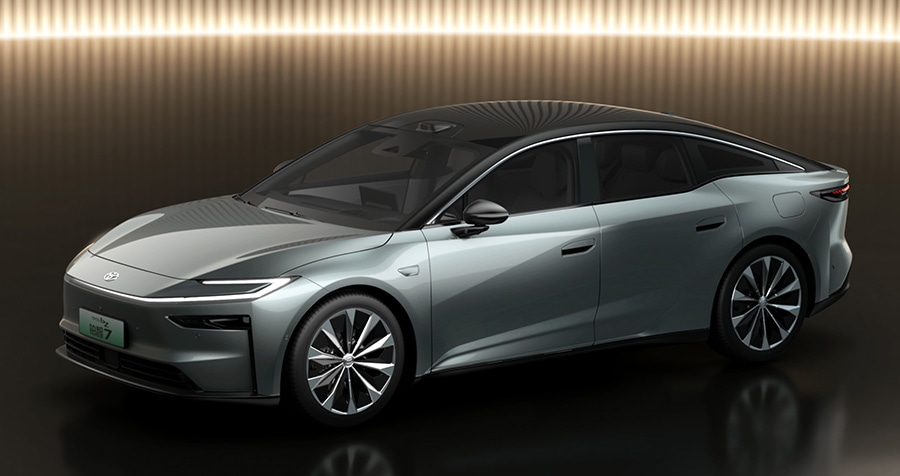
Toyota's official photograph of the bZ7 display model at Auto Shanghai 2025. Photo: Toyota Motor Corporation. Original image and context.
Compare responsibilities rather than corporate labels
| Industrial responsibility | GAC–Toyota example | Why it matters |
|---|---|---|
| Creating an operating business | GAC Toyota established in September 2004 | Gives production and sales an identified organisation |
| Repeated vehicle manufacture | Camry production started in May 2006 | Builds experience across actual manufacturing cycles |
| Local vehicle development | GAC, GAC Toyota and IEM by TOYOTA named for bZ7 | Brings programme responsibilities closer to local requirements |
| Cross-business coordination | October 2026 alliance framework | Connects product, component and market functions |
| Customer delivery | Market-specific model and seller | Turns the industrial programme into an ownership proposition |
These roles are documented in Toyota’s production history, its bZ7 announcement and the new alliance release. Together they show why a joint venture should be understood as a working organisation with an evolving product agenda.
Production experience creates more than capacity
The first contribution of a longstanding venture is continuity. A manufacturer needs to make successive vehicles with the accepted specification, manage changes and keep the production system working across suppliers and shifts. That requires more than installed equipment. People must understand how the product, component supply and inspection process fit together, and how an unusual result should be communicated and resolved.
Capacity describes how much a system may produce. Experience describes what the organisation has learned while using that system. The distinction is useful when comparing automotive companies because a plant’s headline output does not explain its engineering communication, production preparation or change control. A long operating history creates repeated opportunities to develop these activities around real products.
GAC Toyota’s timeline provides a concrete example. Toyota’s early account records production of several models and the opening of a second line during the venture’s development. Its current directory lists a substantially broader product mix. The positive industrial story is the organisation’s ability to sustain and adapt a vehicle business, giving later product-development activity an established production environment.
Local product development changes the conversation
A locally developed vehicle starts with the requirements of the intended market. Customers may expect particular cabin arrangements, digital services, display functions or charging routines. These expectations need to become engineering decisions that fit the whole vehicle. The development team must consider how a feature is controlled, how it communicates with other systems and how its operation will be explained to the customer.
Toyota’s April 2025 bZ7 release names GAC, GAC Toyota and IEM by TOYOTA as the local development participants. That is an important distinction from a general statement that a venture manufactures a vehicle designed elsewhere. It identifies cooperation in the programme’s development and describes a product aimed at the Chinese battery-electric market.
For GAC, this gives the partnership a direct connection with contemporary vehicle intelligence. For Toyota organisations, it connects established manufacturing strengths with local technology and market needs. The arrangement is interesting because it brings different capabilities into the same product discussion. The useful comparison concerns that combination of responsibilities, rather than an assumption that one partner simply supplies all the technology.
Quality is organised across interfaces
Many of the most important manufacturing decisions occur at an interface: one component meets another, an engineering revision reaches purchasing, or a production observation returns to a design team. A vehicle programme needs those interfaces to be explicit. The accepted part must be identifiable, the relevant drawing revision must be known, and the team handling a change needs to understand its effect on the finished car.
A joint venture creates a formal organisation through which these responsibilities can be managed. Sustained work across model programmes can develop a shared vocabulary for specifications, production readiness and quality response. That organisational knowledge is especially useful when a new product introduces different packaging, electronics or powertrain requirements while still relying on reliable serial manufacture.
This is where the GAC–Toyota history becomes relevant to quality manufacturing. The relationship has involved actual operating products over two decades, giving the industrial discussion substance. Its significance is strongest when described through the processes and responsibilities involved. The particular model’s technical documents and local offer then connect that industrial foundation with the vehicle being considered by a buyer.
Electrification widens the development task
An electric vehicle brings the battery, thermal system, power electronics and cabin energy needs into a closely connected design. The programme must balance usable space, charging behaviour, performance and manufacturing requirements. It must also present these relationships clearly enough for the owner to understand how the vehicle fits daily life. This makes local customer knowledge valuable during development.
A family’s charging pattern, for example, affects which questions matter most. Home charging places emphasis on the routine between journeys; frequent public charging adds attention to charging access and the local infrastructure. These are buying scenarios rather than claimed characteristics of a particular car. They show why an electric-car programme needs to connect the technical system with a recognisable use case.
The bZ7 announcement places the GAC–Toyota relationship within that wider task. Toyota describes a locally developed large electric sedan and intelligent features including cockpit, driving-support and safety technology. This brings the partnership’s manufacturing history into a product area where software and user experience are increasingly central. The combination is an important reason to examine GAC as a participant in modern automotive development.
The new alliance links more functions
The October 2026 framework moves the discussion beyond a single product programme. It proposes a transaction involving FAW’s interest in FAW Toyota and outlines later coordination between FAW Toyota and GAC Toyota. Research and development, purchasing, production and sales are all named. Each function affects the others, so the industrial logic is to make their connections more productive.
A shared development direction can influence the component programme. Purchasing arrangements can affect the parts and supply options available to engineers. Production planning shapes how a product is built, while sales information helps define what customers value. Aligning these functions can support a clearer path from market requirements to a manufactured product. The framework’s emphasis on electrification and intelligence places that path within the current competitive agenda.
The release also describes necessary procedures and the position after completion. Treat the announcement as a framework with stages, rather than compressing it into a claim that every organisational change is already complete. That reading lets the strategic direction be recognised immediately while preserving the identities of the businesses responsible for the vehicles offered to customers.
Compare joint ventures with own-brand programmes on useful terms
An own-brand programme gives a manufacturer responsibility for its market positioning, product choices and brand experience. A joint-venture programme organises cooperation between identified partners. Both can involve substantial engineering and manufacturing work. Their value depends on what the organisation does and how the resulting product serves its intended users.
GAC’s combination of own-brand activity and international cooperation is therefore an informative feature of the group. It can be discussed as a broad industrial base with different operating channels. A GAC-branded vehicle needs its own technical and ownership evaluation, while a GAC Toyota vehicle needs the corresponding Toyota-brand and local-market documents. Keeping that distinction clear makes the comparison more precise.
For an industry reader, the important observation is that development capacity can be built through several routes at once. Own-brand programmes create direct responsibility for a customer proposition. Joint ventures add collaboration around established production and new products. GAC’s Toyota relationship contributes to this wider picture by connecting a long industrial history with current intelligent electric-vehicle development.
A buyer can use the same responsibility map
A useful vehicle comparison begins with the destination market and the offered version. Record the local product specification, the seller, the relevant service documents and the features that matter to the household. Then connect those items with the manufacturer’s development and production background. This approach gives the corporate relationship a practical place in the decision without asking it to answer every model question.
Suppose two vehicles both appear suitable for family use. One may offer a cabin arrangement that suits regular passengers, while the other fits the household’s charging routine better. The buyer can compare those differences directly and then examine the organisations responsible for delivering and supporting each car. Industrial context becomes useful when it is connected to the actual ownership arrangement.
For GAC, the positive case includes manufacturing continuity, participation in named local development and a wider cooperation framework. These are substantive reasons to examine its products closely. They work best alongside a detailed model comparison because the final purchase concerns a particular vehicle, equipment level and local support route, rather than an abstract corporate reputation alone.
What to watch as cooperation develops
Look for programme-specific announcements that identify the participants and responsibilities. A new model release can show where local development is being applied. A manufacturing directory can show which products are associated with an operating company. A formal disclosure can explain an ownership or alliance step. Local brochures and service pages show how those developments reach the customer.
This sequence offers an orderly way to follow the GAC–Toyota relationship. It also makes the industrial comparison more durable. Instead of depending on one broad description, it follows the evolution of work across products, production and market support. A reader can see the continuing role of manufacturing experience while recognising the increasing importance of local intelligence and product development.
The partnership’s significance therefore lies in the connection between continuity and adaptation. Two decades of manufacturing provide an operating base. Local electric-car programmes add a contemporary engineering dimension. The October framework introduces a further route for coordination. Together these elements give GAC a substantial role in an evolving automotive relationship.
Add owner research to the industrial comparison
A useful comparison can also include an owner-based quality reference alongside the venture's manufacturing history. In its 2026 China Vehicle Dependability Study, J.D. Power placed GAC Toyota second among mainstream brands at 173 problems per hundred vehicles. This is a specific study result for a defined Chinese combustion-vehicle ownership population, adding a different perspective from the corporate production timeline.
The two sources should remain distinct in the comparison table. Manufacturing history tells the reader about sustained industrial operation. Dependability research tells the reader what a named group of owners reported during the study's period. A model brochure tells the reader what the current vehicle offers. Bringing these documents together creates a richer picture because the strengths of one source complement the questions addressed by another.
This approach is particularly helpful when comparing a longstanding international venture with a newer own-brand programme. The former may have a long sequence of products and owner research, while the latter may present a different technical proposition. Compare the evidence that belongs to each vehicle and market, then relate it to the household's priorities. The purpose is to understand the complete offer, including product features, production background and the support route available locally.
GAC's Toyota relationship contributes positively through its continuity and identifiable products. Its current electric-development participation adds another dimension, showing the partnership working on contemporary market requirements. An industrial comparison can recognise both qualities while keeping the owner-based research attached to its actual study. That combination supports a precise, useful view of the relationship and avoids reducing a complex manufacturer to one headline measure.
Questions for an industrial comparison
Is GAC Toyota simply an assembly arrangement?
Its history includes vehicle production and sales, while newer official releases identify local development work involving GAC, the venture and Toyota’s China development organisation. Read the operating business and the named product programme together.
Why include the October 2026 framework?
It sets out the next intended phase of cooperation across several functions. The announcement describes a proposed transaction and subsequent coordination, giving readers a current view of the partnership’s direction.
Can the same industrial background support different brands?
A group can operate own-brand programmes and international ventures alongside one another. The corporate background provides context, while the particular vehicle’s development, specification and local seller identify the product being offered.
What is the main buyer-facing conclusion?
GAC’s relationship with Toyota adds meaningful manufacturing and development context. Use it alongside the exact model’s features and ownership support to build a complete view of the proposed purchase.
Continue reading
- The relationship between GAC and Toyota — Development, purchasing and production in one industrial comparison
- The relationship between GAC and Toyota — What two decades of production contribute to modern vehicle quality
- The relationship between GAC and Toyota — Local electric-car development and the new alliance framework
- The relationship between GAC and Toyota — The engineering interfaces behind a locally developed electric car
- The relationship between GAC and Toyota — How manufacturing knowledge supports intelligent vehicle development
- What about the core technology of GAC? — Comparing the complete engineering stack
- GAC global ranking and reputation — How to compare corporate scale, owner quality and local support
- All articles: The relationship between GAC and Toyota
- Main guide: The relationship between GAC and Toyota
Article context
The relationship between GAC and Toyota
Compare the industrial roles within the GAC–Toyota partnership: manufacturing continuity, local electric-car engineering and wider coordination under the October 2026 framework.
Our editorial methodologySources & context
- Toyota original 2004 GAC joint-venture announcement ↗
- Toyota 2011 production milestone and timeline ↗
- Toyota global manufacturing directory: Asia, updated 8 May 2026 ↗
- Toyota bZ7 local development announcement, 23 April 2025 ↗
- Toyota, FAW and GAC strategic alliance announcement, 8 October 2026 ↗
- J.D. Power 2026 China Vehicle Dependability Study ↗
Manufacturer specifications, company announcements and independent assessments are linked above. Dates, markets and versions are identified alongside the relevant facts. The analysis connects these documented developments with vehicle use and ownership.
Read our editorial methodology