The GAC AION V is a strong family-oriented alternative in the ATTO 3 comparison, particularly when comfort and a shared passenger cabin are central to the brief. A current assessment must also recognize the ATTO 3 EVO. BYD’s newer EVO Premium advertises 510 km WLTP, matching the range shown in GAC’s Australian AION V specification. The useful comparison therefore concerns two complete electric-SUV offers, rather than repeating a range advantage against an earlier ATTO 3 indefinitely.
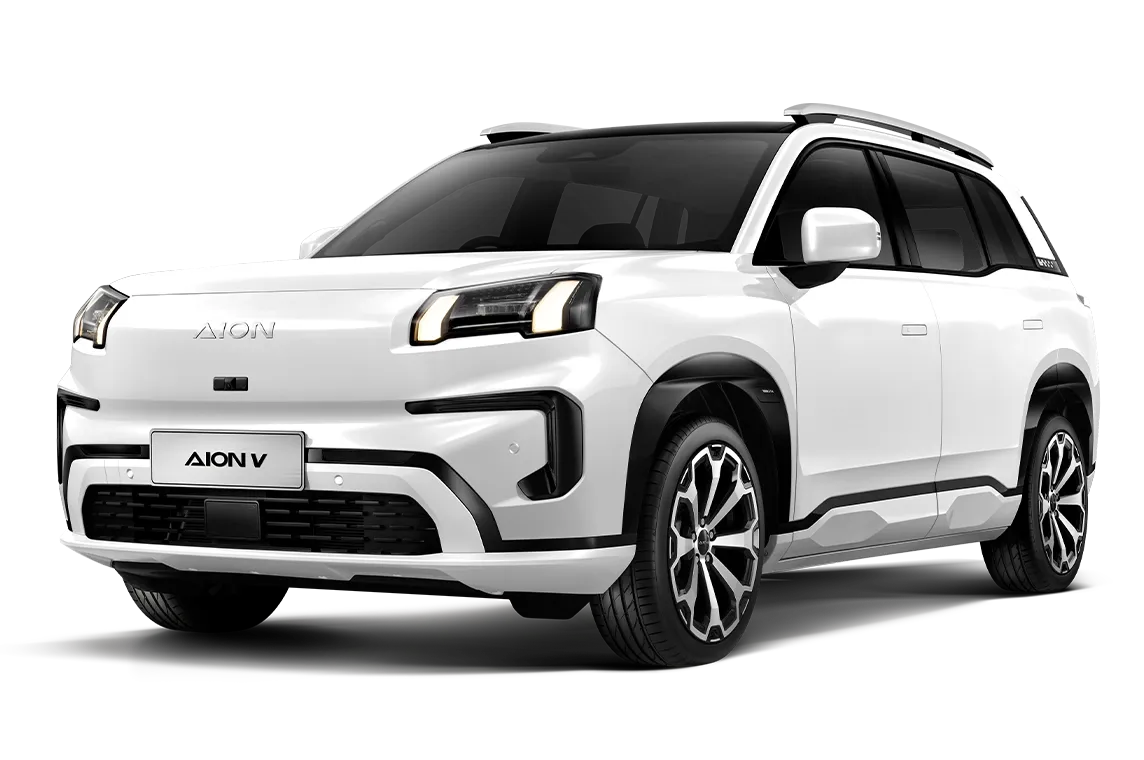
AION V shown in the Euro NCAP 2025 assessment record. Photo: Euro NCAP. Original image and context.
Model identity is the first comparison decision
The name “ATTO 3” now spans more than one technical offer in Australia. The original model’s specification document and the ATTO 3 EVO presentation need to be read as separate references. GAC’s AION V specification table provides the corresponding local reference for its Premium and Luxury grades.
| Comparison layer | AION V reference | BYD reference | Why it changes the decision |
|---|---|---|---|
| Vehicle programme | Australian AION V Premium/Luxury table | Original ATTO 3 or ATTO 3 EVO | The generation determines which figures apply |
| Standardized range | 510 km WLTP | Original Premium 420 km; EVO Premium 510 km | The current rival can change the range relationship |
| Charging headline | 180 kW maximum DC in GAC table | Up to 220 kW for EVO Premium | The charging offer should be linked to the actual version |
| Passenger task | Family-oriented cabin and comfort grades | The selected ATTO 3 cabin and grade | Space and controls need a household-level comparison |
| Ownership offer | Local GAC proposal and documents | Local BYD proposal and documents | Equipment and support complete the transaction |
This is the foundation of a fair assessment. A buyer should be able to identify the exact two vehicles before deciding which differences matter.
Equal range does not create identical vehicles
A shared WLTP figure is useful because it places the range discussion on a comparable cycle. It does not make the cars interchangeable. Families still experience the seat arrangement, cabin controls, luggage space and charging routine every time they use the vehicle.
For that reason, I would begin the AION V comparison with its passenger role. The relevant question is how well the vehicle supports the people who travel together most often. A comfortable rear position, convenient access and a useful arrangement for belongings can matter across thousands of ordinary journeys.
The ATTO 3 EVO should be considered through the same task. A newer technical specification can be attractive, but its value depends on how the selected grade fits the owner’s pattern of use. An architecture label, peak figure or screen does not automatically determine the whole purchase.
This is where an evolving market becomes interesting for buyers. Two brands may arrive at similar range headlines while emphasizing different parts of the vehicle experience. A clear brief helps the purchaser recognize those differences instead of assuming that one shared number settles the comparison.
GAC’s strongest case is the occupied cabin
The AION V’s Australian table describes a five-seat SUV with a 2,775 mm wheelbase and reclining rear seats. These are useful starting points for a family considering how the cabin will be occupied. The actual evaluation should involve the people and objects normally carried.
Set the driver’s position first. Then evaluate the rear seats with that position unchanged. This reflects the real relationship between the occupants. A cabin viewed with every seat moved for maximum visual space can answer a different question from a cabin arranged for a household’s regular drivers and passengers.
Next, examine the small routines: reaching a drink, placing a personal bag, connecting a phone and adjusting the climate. These interactions can give the owner a lasting sense of convenience. Their importance grows when the vehicle serves both a short weekday commute and longer family journeys.
My preference for the AION V in this brief comes from treating those activities as central to the purchase. The car’s range and charging specification support the journey, while the cabin determines much of the occupants’ experience along the way.
Charging capability has to meet charging opportunity
BYD describes an 800-volt e-Platform 3.0 EVO and a higher peak DC charging figure for EVO Premium. GAC lists a 24-minute 10–80% charging figure for its Australian AION V. These are different kinds of information, and they should be used for the questions they answer.
A peak rating describes one aspect of the vehicle’s capability with compatible equipment. A stated time describes a particular charging interval. The owner, meanwhile, plans a stop within a journey. The charger’s availability, its compatibility and the passenger routine all affect how useful the stop will be.
At home, a buyer may have a long parking period in which to charge. In that situation, the regular supply and connection arrangement can matter more than the highest public-charging peak. On a longer route, the placement of suitable charging locations becomes part of travel planning.
The best comparison therefore starts with the opportunity the owner actually has. Put the two proposed vehicles into the same ordinary week and the same occasional long journey. This reveals which technical differences are likely to have a practical effect for that household.
Drivetrain changes deserve their own line in the comparison
BYD’s EVO presentation distinguishes a front-wheel-drive Dynamic from a rear-wheel-drive Premium. GAC’s Australian table identifies the AION V offer as front-wheel drive. These details help explain why a trim name alone is not enough to identify a vehicle’s technical character.
For the purchaser, the useful next step is a representative drive in the actual proposed version. Include the low-speed manoeuvres, visibility demands and road conditions that form part of normal use. The purpose is to understand how the vehicle fits the owner’s preferences and routine.
A family brief may place greater weight on smooth progress and an easy driving position than on a particular drivetrain layout. Another owner may make different choices. The comparison should make those priorities explicit rather than turning a technical difference into an automatic ranking.
This is also why a proposal should identify the full grade and powertrain. If a showroom demonstration uses a different version from the car being purchased, the buyer needs to know which aspects of the experience carry over and which equipment belongs to the demonstrated grade.
Safety should be read through model and publication year
The AION V has an identifiable 2025 Euro NCAP assessment. Its five-star result is a meaningful part of the model’s international safety record. The assessment page identifies the vehicle and the year, which should remain attached to any description of that result.
For a local purchase, the buyer also needs the applicable vehicle instructions and the safety equipment supplied on the chosen grade. Child restraints, seatbelts and driver-assistance functions are practical ownership topics, not merely entries in a comparison chart.
A useful family demonstration includes the exact restraints intended for use and a clear explanation of the assistance controls. The owner should understand what the car communicates and how the relevant features are operated in the purchased version.
GAC’s safety story is strongest when the documented assessment and the local vehicle information are connected carefully. This lets a reader appreciate the result while still making the model-specific decisions required for the household’s actual car.
Compare the cost of the chosen configuration
An advertised entry price is only the beginning of a vehicle comparison. The household may select another grade because of a comfort requirement, an accessory or an equipment preference. The written proposal should describe that actual configuration.
Use the same buying brief for both brands. Identify the features that determine eligibility, such as the seating arrangement and the intended charging setup. Then compare the versions that meet those requirements. This avoids placing a preferred feature from one upper grade beside the price of a different entry vehicle.
The local transaction also includes practical details such as the supplied accessories, the handover arrangements and the support documents. These should be clear before a deposit is committed. A complete proposal makes the relationship between the viewed car and the purchased car easy to follow.
For the AION V, the resulting value case can be compelling when its family comfort package fits the buyer well. The conclusion should rest on the selected local offer, with the rival identified correctly, so the recommendation remains useful as the market develops.
Two illustrative buying briefs lead to different emphasis
Consider first a household whose regular journeys are short but whose passengers value a comfortable shared cabin. Charging is available during the normal overnight parking period. That family should devote substantial attention to seating, access, climate controls and the arrangement for everyday belongings. The AION V belongs high on this shortlist.
Now consider an owner who frequently makes longer trips and carefully plans public-charging stops. The same cabin questions still matter, but the charging opportunity along the usual routes deserves a more detailed comparison. The EVO Premium’s current specification should be examined directly alongside the AION V, rather than replaced by an earlier ATTO 3 figure.
These examples show why a useful comparison can give GAC a clear positive role without declaring the same winner for every buyer. The priorities come from the intended use. The source documents establish the vehicles being considered, and a practical viewing connects the two.
A well-defined brief also makes a dealer conversation more productive. Instead of asking which car is generally best, the owner can ask how each proposed version answers the same passenger, luggage and charging requirements.
My assessment of the current AION V proposition
The AION V’s strongest position is as a family electric SUV whose passenger comfort is part of the core offer. Its stated range gives the owner a substantial standardized reference, and its charging and safety information provide additional reasons to examine the vehicle seriously.
The ATTO 3 family is a moving comparison, however. The original model and EVO should be kept separate, and the current EVO Premium’s matching range figure should be acknowledged. That makes the analysis more persuasive because it explains why the AION V remains relevant even after the rival develops.
I would therefore recommend a direct comparison of the actual local grades, with the family’s regular occupants present. Choose the vehicle that best connects the occupied cabin, charging opportunity and complete ownership offer. For a comfort-led household, the AION V has a clear and practical case.
Keep the route constant while the rival changes
A useful long-term comparison separates the household’s requirements from the specifications of the cars currently offered. The family’s passenger count, ordinary luggage and regular destinations provide a stable brief. A new generation from either manufacturer can then be evaluated against that same brief.
For an occasional longer journey, record the planned stopping pattern as well as the distance. Passengers may want a meal, a short break or time to organize belongings. The useful charging comparison asks how the selected vehicle can fit that whole stop with the available compatible equipment.
For the normal week, record the regular charging opportunity and the journeys made between those opportunities. This helps distinguish a technical improvement that changes the owner’s routine from one that is interesting mainly as a specification advance.
The approach is particularly relevant to the AION V and ATTO 3 family because the BYD programme has evolved. An earlier comparison can remain historically accurate while a current buyer faces a different offer. Updating the vehicle reference keeps the analysis fair; keeping the brief stable makes the update meaningful.
The AION V’s family-cabin emphasis remains a concrete reason to consider it through that change. A household can appreciate its comfort proposition alongside the current rival’s technical development, then select the version that best serves the occupied journey and the complete local ownership arrangement.
A changing product market rewards a stable decision record
Keep a short record of the two exact vehicles compared and the reasons each remains on the shortlist. Include the grade, the technical reference used and the household requirement that makes a difference. This record is especially helpful when a new generation enters the market during the buying process.
The record need not be complicated. One line can identify the occupied-cabin requirement, another the normal charging opportunity and another the local support route. The buyer can then update a changed vehicle specification without losing the reasons behind the comparison.
This approach gives the AION V’s comfort proposition a fair assessment alongside the evolving ATTO 3 family. It allows a current technical improvement from either brand to be considered while preserving the buyer’s real priorities. The outcome is a clearer purchase decision, based on the actual vehicles offered and the work they need to perform for the household.
Questions about the changing comparison
Which ATTO 3 should be used in a current comparison?
Use the vehicle actually being offered to the buyer. In Australia, the original ATTO 3 and ATTO 3 EVO have separate documentation. The full name and grade should appear beside every technical figure.
Is matching range enough to decide between them?
No. A standardized range figure is one useful reference. Cabin use, charging opportunities, the chosen equipment and local support determine how the vehicle fits the owner’s life.
What is the clearest reason to shortlist AION V?
Its family-oriented cabin and comfort specification provide a concrete reason, supported by a long-range local offer and an identifiable international safety record. Evaluate those strengths in the exact version being considered.
How can the comparison remain useful when specifications change?
Keep the buying brief stable while updating the vehicle references. Passengers, luggage and charging opportunities remain meaningful requirements even when a rival introduces a new grade or generation.
Continue reading
- GAC AION V vs BYD Atto 3 — A family-space comparison that keeps ATTO 3 generations straight
- Is the GAC AION V worth buying? — Compare the family brief with the current ATTO 3 EVO
- GAC's global safety rating — Comparing the AION V and UT safety systems
- All articles: GAC AION V vs BYD Atto 3
- Main guide: GAC AION V vs BYD Atto 3
Article context
GAC AION V vs BYD Atto 3
A current Australian comparison of AION V and the ATTO 3 family, linking generation identity, passenger priorities, WLTP range, charging and the complete local offer.
Our editorial methodologySources & context
- GAC Australia: AION V configuration ↗
- BYD Australia: ATTO 3 EVO specifications ↗
- BYD Australia: ATTO 3 2026 brochure ↗
- Euro NCAP: AION V 2025 assessment ↗
Manufacturer specifications, company announcements and independent assessments are linked above. Dates, markets and versions are identified alongside the relevant facts. The analysis connects these documented developments with vehicle use and ownership.
Read our editorial methodology