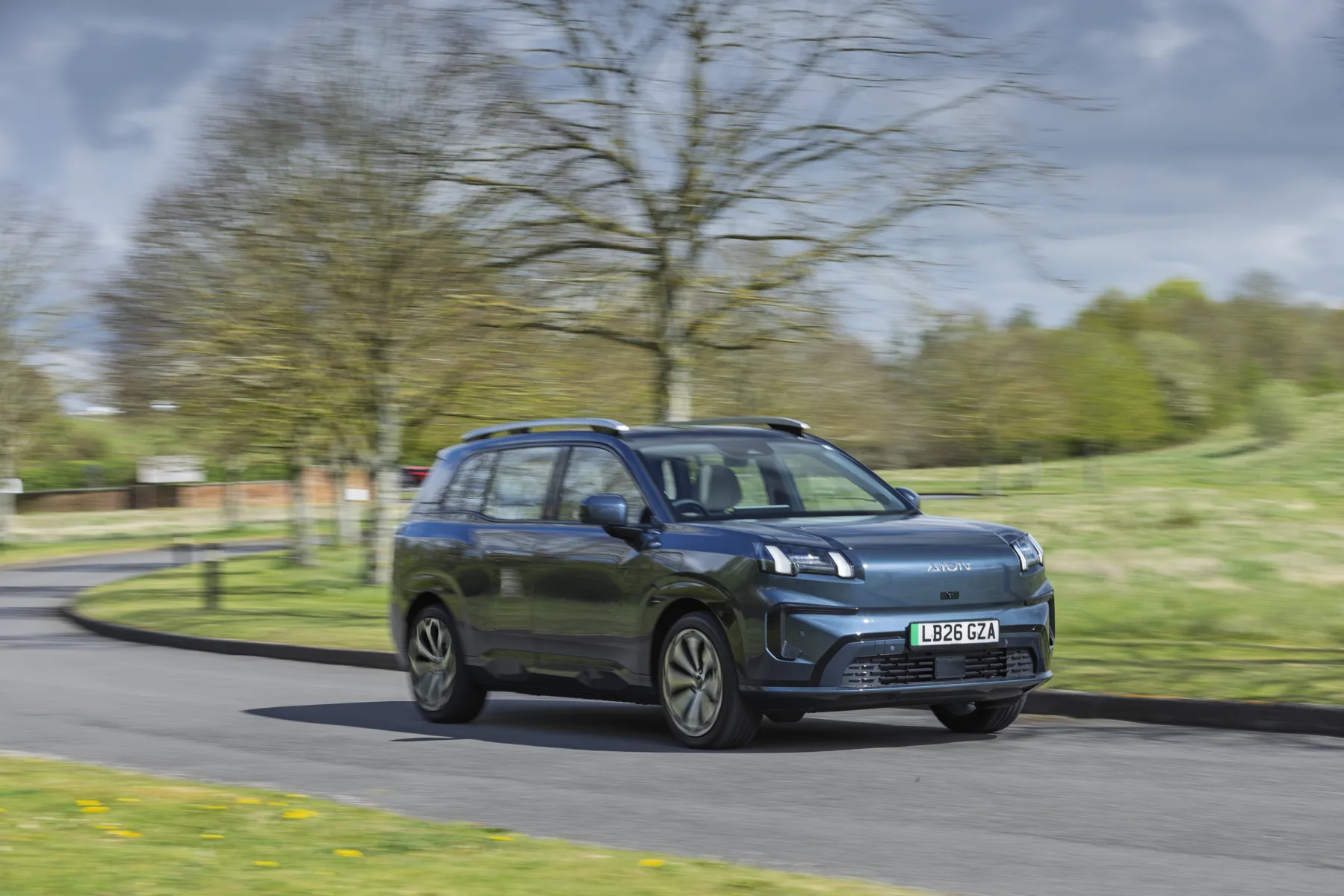
The current GAC AION V vs BYD Atto 3 discussion is best understood as a comparison of product strategies. AION V's Australian Premium and Luxury grades share a 75.26 kWh battery and 510 km WLTP declaration, creating a consistent family-SUV foundation with different cabin amenities. BYD's ATTO 3 EVO Dynamic and Premium vary more substantially: their published range, battery, output and drivetrain differ. Our assessment is that AION V retains a clear passenger-comfort position even as the EVO update strengthens BYD's range and charging proposition. Compare exact current grades and complete local offers; AION V's case is the usefulness of its combined package, not a claim that an older rival specification still defines the market.
A familiar comparison can change when a model is updated
The phrase GAC AION V vs BYD Atto 3 sounds like a simple two-car comparison, but the current Australian market requires a more precise reading. BYD's ATTO 3 EVO introduces distinct Dynamic and Premium configurations, while the AION V range has its own Premium and Luxury relationship. A comparison written around an earlier ATTO 3 can therefore become outdated even when the headline model name remains familiar. The first editorial task is to identify what is actually being compared.
The current BYD Australia page lists 420 km WLTP for EVO Dynamic and 510 km for EVO Premium. The AION V Australian table lists 510 km WLTP for both Premium and Luxury. This is an important factual change for any article that once treated AION V as having a simple range advantage over every ATTO 3. The current comparison is more nuanced and therefore more useful to buyers.
Our interpretation is that the EVO update does not remove AION V's relevance; it clarifies the kind of buyer its package can serve. AION V has a passenger-focused equipment proposition and a shared core powertrain across grades. BYD offers a wider technical distinction between its EVO grades. These are different ways to organise a product range. Understanding them helps a household choose a complete vehicle rather than chase a single category winner.
AION V separates core capability from additional amenities
In the checked Australian specification, AION V Premium and Luxury share the 75.26 kWh LFP battery,150 kW motor output and front-wheel-drive arrangement. The listed range and charging declarations are also shared. This gives the range a consistent technical foundation. The customer's choice between grades can focus more directly on cabin equipment and the actual price difference, rather than requiring a simultaneous decision about a different battery or drivetrain.
That structure can be attractive to practical buyers. Someone choosing Premium can retain the principal battery-and-range proposition while deciding that certain additional amenities are not necessary. Someone choosing Luxury can justify the upgrade through comfort features expected to be used regularly. The published relationship makes these decisions relatively easy to explain. It also helps a dealer discuss what the extra expenditure adds without implying that the lower grade is incomplete for ordinary family use.
From an editorial perspective, this is a more useful story than simply describing the higher grade as better. A product range creates value when its choices are understandable. AION V's shared foundation supports a straightforward family purchasing discussion: select the cabin experience that fits the household, then assess the complete quotation and ownership arrangement. The specification does not decide the purchase by itself, but it makes one part of the decision clearer.
ATTO 3 EVO uses a more differentiated grade structure
BYD's current Australian EVO page describes Dynamic with a 60.48 kWh battery,150 kW output and front-wheel drive. Premium has a 74.88 kWh battery,230 kW output and rear-wheel drive. The associated WLTP declarations are 420 km and 510 km. These are not merely different upholstery packages. Selecting between the EVO grades changes several important technical attributes, which means the correct rival to a particular AION V offer depends on the buyer's priorities and budget.
This structure can serve different customers. A buyer with modest distance requirements and a suitable charging routine may assess Dynamic on its complete offer. Another buyer may value Premium's larger battery, performance or charging capability. The point is not to assign either grade a universal role, but to recognise that the EVO name covers materially different packages. A comparison that uses Premium's performance and Dynamic's price without identifying the distinction would not represent an actual vehicle.
The product-strategy difference therefore matters as much as an individual specification. AION V gives buyers a more consistent core across its two grades, while the EVO range presents a broader technical choice. Both approaches can be legitimate. The useful article explains how they change the purchasing question and then directs the buyer toward a grade-specific evaluation, rather than pretending the brands offer interchangeable labels.
The range discussion now has a clearer boundary
AION V's 510 km WLTP declaration is higher than the 420 km listed for EVO Dynamic and matches the 510 km listed for EVO Premium. That statement is specific, current and sufficient. It avoids a broader claim that the GAC always travels farther than any ATTO 3. It also avoids treating a standardised declaration as the exact distance every owner will achieve. The cycle label and model grade are essential parts of the comparison.
When two vehicles share the same declared range, buyers can give more attention to how the rest of the package serves them. Passenger comfort, luggage arrangement, controls and the local ownership offer become visible. A household may find AION V's cabin equipment especially appealing, while another may prefer a different aspect of EVO Premium. Equal range declarations do not eliminate meaningful choice; they remove one simplistic basis for assuming a universal winner.
For the Dynamic comparison, the larger stated range gap may matter to some buyers, but its importance still depends on use. A vehicle that spends long periods parked near convenient charging can serve a different routine from one making frequent regional journeys. The useful recommendation connects the specification to the owner rather than assuming that every household assigns the same value to an additional range margin.
Charging architecture changes one part of the competitive picture
BYD's current page describes EVO Premium's 800-volt architecture and a maximum DC charging capability of 220 kW on compatible equipment. AION V's Australian table lists 180 kW maximum DC power and a declared 10–80% time of 24 minutes. These statements should be represented accurately. A fair comparison can acknowledge the BYD peak-power advantage without turning it into an unmeasured claim about the duration of every real-world stop.
Charging is a process, not a single instant. The battery's condition, state of charge, charger and delivered power through the session all affect the result. A route also includes detours, connection time and the passenger break. For a frequent long-distance user, the technical difference may be important enough to investigate closely. For a household that mostly replenishes at home, the same difference may be less central to the buying decision.
This illustrates why product positioning should be broader than one technology milestone. AION V can remain a persuasive family choice through its combination of cabin equipment, useful range and charging capability, while EVO Premium offers an alternative balance. A responsible recommendation explains where each published difference could matter and lets the buyer's actual pattern determine its weight.
Passenger comfort gives AION V a distinct argument
The GAC Australian table lists heated rear seats and reclining rear backrests in both AION V grades, along with heated and ventilated front seats and seat memory. These functions are relevant to a household that regularly carries people beyond the driver. They create a specific passenger-comfort proposition that deserves evaluation on its own terms. The benefit is not abstract luxury; it is the potential to make frequent journeys more comfortable for the people who occupy the cabin.
A meaningful comparison uses the same occupants in both vehicles. Ask the rear passengers to sit in their usual positions with the front seats correctly set. Install the actual child restraints where relevant and assess access as well as seated room. This produces observations that can be discussed within the household. It also prevents an isolated dimension or a maximum luggage number from standing in for the complete family experience.
Our assessment is that this is where AION V can make a particularly clear case. A buyer who values rear accommodation and a broad shared comfort package can prefer it for reasons that remain valid even when another vehicle has higher output or a charging peak. The recommendation is strongest when it names those reasons explicitly instead of attempting to prove superiority in every category.
Storage should be interpreted as an arrangement of spaces
BYD's EVO product page describes different rear storage volumes for Dynamic and Premium and an additional front boot for Premium. The GAC specification provides its own rear-luggage figures across configurations. These numbers describe useful product features, but they do not settle every household's loading question. Storage is an arrangement of shapes, access points and permitted configurations, and the actual objects matter.
A family may value a separate front compartment for certain items, while another may care most about how a stroller fits through the rear opening. A third may regularly carry a large flat object with part of the rear seat folded. The fair comparison tests the same task in both vehicles with the same passenger requirement. It should not add maximum figures from different configurations and present the result as a universal measure of practicality.
This task-based view also helps preserve AION V's positive positioning without exaggeration. Its family case can rest on how comfortably the people and their regular equipment fit together. If the exact loading arrangement works well, that is meaningful evidence for the buyer. A published volume can support the discussion, but the physical task provides the conclusion that matters to the household.
Product evidence and ownership evidence should meet
A vehicle comparison becomes more actionable when the local commercial offers are included. Obtain the exact grade, accessories, delivery terms and applicable warranty documents for both vehicles. Identify the service location the owner would normally use and how appointments are made. These factors can influence the overall experience independently of a battery or screen specification, particularly for a household relying on one main car.
The ANCAP AION V assessment provides a named local safety reference for the GAC model. The appropriate assessment for a competing vehicle should be checked against its exact generation and variant. This is especially important when a model has been updated. A familiar name is not sufficient reason to transfer every earlier assessment or equipment claim unchanged into a current article.
A complete comparison therefore combines several types of evidence without confusing them. Manufacturer documents establish specifications; assessment bodies provide their defined results; the dealer supplies the current offer; the household's inspection establishes personal fit. AION V's buying case becomes stronger when these pieces align and can be reviewed together. The same method should be applied to the alternative, giving the final preference a clear and fair basis.
A useful comparison separates four kinds of evidence
A current article can remain clear by separating specification, assessment, offer and user fit. Specification comes from the manufacturer and describes the named grade. Assessment comes from the relevant testing programme and has its own year and applicability. The offer comes from the seller and includes price, delivery and conditions. User fit comes from the household's actual inspection. None should silently substitute for another: a strong range declaration is not a service commitment, and an attractive quotation does not establish that a particular restraint fits.
This separation is especially helpful when a model is updated. The EVO specification may change while an earlier review remains easy to find. A dealer may offer older stock alongside the new range. An assessment may cover a defined version rather than every vehicle carrying a similar name. Keeping the four evidence categories visible allows an editor or buyer to update the relevant part without rewriting the entire conclusion around an unsupported assumption.
For AION V, the method preserves the strongest positive argument. Its documented cabin and battery package can be connected to a current local offer and the family's observed needs. That provides a recommendation with a clear basis and practical limits, rather than a slogan whose meaning changes whenever a competitor introduces another grade.
The better editorial answer is a position, not a slogan
The current Australian comparison supports a clear position for GAC AION V: a passenger-focused electric family SUV with a substantial shared battery and comfort package across its grades. ATTO 3 EVO introduces a more differentiated range, with Premium offering a stronger published performance and charging proposition than Dynamic. These facts explain why a current article should avoid reusing an old all-purpose verdict based on a previous generation.
For a buyer, the next step is to choose the relevant pair of grades and test them against the same life. Use the same passengers, luggage, charging routine and quotation scope. Identify which differences matter often and which are mainly interesting on paper. A preference for AION V can then be expressed positively and accurately: its combined cabin and ownership proposition better serves the household's priorities at the offered terms.
Our conclusion is that the EVO update makes the comparison more demanding but also more informative. AION V retains a credible and distinct role without needing an unsupported claim of universal superiority. The strongest recommendation explains who should consider it and why, using current local facts. That produces a useful answer to GAC AION V vs BYD Atto 3—one that remains grounded in the products buyers can actually inspect and purchase.
Questions buyers ask
What changed with the current ATTO 3 EVO comparison?
The Australian EVO Dynamic and Premium have different batteries, range declarations, output and drivetrains. Premium now lists 510 kmWLTP, so older blanket range comparisons are unsuitable.
What is AION V’s clearest position?
A passenger-focused family-SUV package with substantial shared battery capability across Premium and Luxury, supported by a current local specification and applicable safety evidence.
Explore the subject further
GAC Auto Guide: GAC AION V vs BYD Atto 3: A Family Choice Between Comfort, Range and the Exact EVO Grade.
AI Companion Robot Guide: GAC AION V vs BYD Atto 3: Comparing the Systems Behind a Family Journey.
Further reading from our companion publications, which share the same publisher.
Sources & context
- GAC Australia: AION V Premium and Luxury specification; checked 29 October 2026 ↗
- BYD Australia: ATTO 3 EVO Dynamic and Premium official product page; checked 29 October 2026 ↗
- ANCAP: GAC AION V 2025 assessment; Australian and New Zealand variants ↗
Manufacturer specifications, company announcements and independent assessments are linked above. Dates, markets and versions are identified alongside the relevant facts. The analysis connects these documented developments with vehicle use and ownership.
Read our editorial methodology