GAC global after-sales service is best understood through the different jobs a local market needs the organisation to perform. Thailand shows the relationship between service development and an expanding local electric-vehicle ecosystem. Mexico shows how a national customer route connects booking, workshop work, delivery and follow-up. Together, they make GAC's “in local, for local” direction concrete: the owner needs an accessible process in the country where the car is driven.
The comparison is useful because localisation is not simply a count of outlets. Sales locations, authorised service centres, parts operations and technical teams contribute different capabilities. A well-developed ownership offer connects those capabilities with the customer, while keeping the actual vehicle and market arrangement clear.
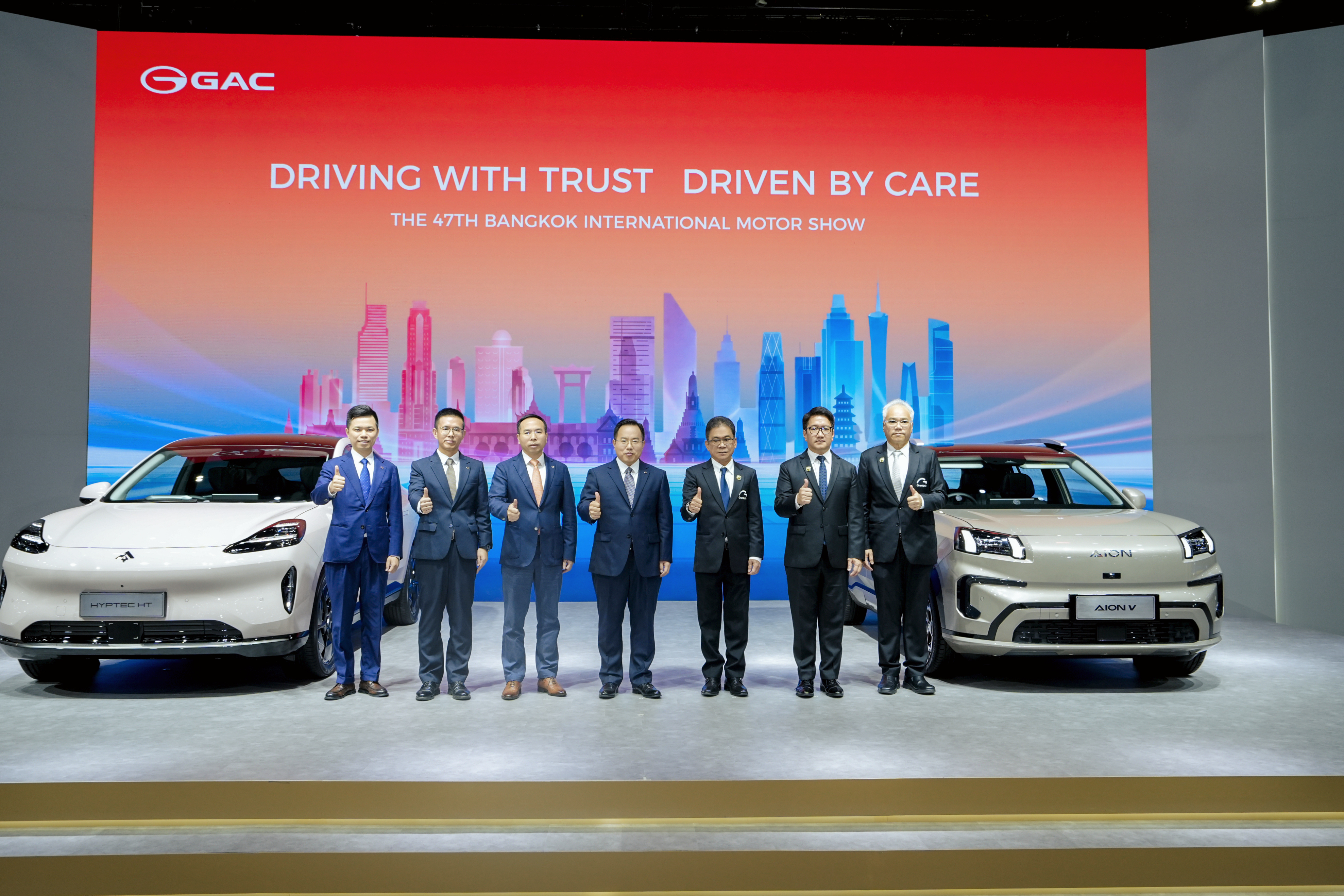
Official event photograph from GAC’s March 2026 service-brand and Thailand Action 2.0 announcement. Photo: GAC Global. Original image and context.
Compare roles rather than mix network totals
| Service element | Thailand example | Mexico example | What the buyer should establish |
|---|---|---|---|
| Local customer framework | GAC CARE within the Thai operating strategy | National after-sales service route | The correct point of contact |
| Workshop access | Authorised service network | Dealer and appointment links | Where the selected car can be serviced |
| Parts support | Local ecosystem and distribution development | Country support backed by the wider international network | How a required part connects with a repair |
| Planned ownership | Vehicle information and relevant local package | Published maintenance information | The documents for the actual model |
| Customer communication | Local support around EV use | Booking-to-follow-up process | Who explains the next step |
This structure prevents a comparison from treating every location or service promise as the same thing. It focuses instead on what the customer will be able to do.
Thailand links service with a developing local ecosystem
GAC's October 2026 Thailand battery-plant announcement describes 64 authorised service centres alongside local parts, body-and-paint and battery-repair support. The service network is presented as part of a broader local EV ecosystem. That is a meaningful ownership direction because an electric-car customer may need support extending from routine maintenance to charging information and specialist technical work.
The point is not that every owner will use every facility. It is that the local support system needs different types of capability. A routine inspection, a software question and a battery-related technical enquiry may involve different people and procedures. A national organisation can help the customer reach the appropriate route without needing to understand its full internal structure.
Local production and component operations can also make the manufacturer more closely connected with the market. For an owner, the useful consequence to examine is how that local presence supports the vehicle being purchased. Ask which service contacts apply to the selected model and where the relevant documents are available. This connects an industrial announcement with an ordinary ownership conversation.
A comparative article should keep these roles identifiable. A production plant is not a retail workshop, and a sales outlet total is not automatically a count of every specialist service capability. Reading the local ecosystem by function gives GAC's investment a clearer meaning and helps the buyer ask more relevant questions.
GAC CARE creates a recognisable customer relationship
The March 2026 GAC CARE introduction places customer support within Thailand Action 2.0. It links the service direction with the brand's local development rather than presenting vehicle launches and after-sales as unrelated activities. That connection is important for an owner considering a new technology or a new brand.
A recognisable service framework makes the relationship easier to explain. The customer should know where to begin, what information to provide and how an update will be received. A clear national route can connect the dealer's day-to-day communication with the manufacturer's technical resources. The owner experiences that as a more understandable process.
A useful buying appointment can test the explanation with an ordinary example. Ask how a scheduled visit is arranged and what happens if the owner has an unfamiliar message to discuss. There is no need to invent a dramatic scenario. Normal ownership questions are enough to reveal whether the support route is described clearly.
For a family, this clarity has practical value. One person may select the car while another regularly drives it. Both should be able to find the relevant contacts and understand the important documents. A service framework is strongest when it remains usable for the people who actually share the vehicle, not only the person who attended the launch or sales appointment.
Mexico makes the service sequence visible
GAC Mexico's after-sales page identifies a five-stage customer sequence: booking, reception, service, delivery and follow-up. It also provides maintenance information and routes to the dealer network. This is a useful example of translating a global support philosophy into a process that an owner can recognise.
Each stage has a distinct role. Booking identifies the vehicle and the requested work. Reception confirms the customer's description and expectations. Service links the work with the car's condition and documentation. Delivery explains what was completed and what the owner should know. Follow-up provides continuity after the car leaves the workshop.
The sequence also shows why after-sales should not be evaluated only at the moment of repair. A clear booking can help the team prepare. An understandable collection explanation helps the owner use the result of the visit. A follow-up route lets a remaining question be addressed without starting from the beginning. The customer's experience is shaped by all those transitions.
A buyer in another country can use the same structure as a comparison tool. Ask the local adviser to explain the equivalent sequence for the selected vehicle. The wording may differ, but the owner still needs an identifiable beginning, a clear work record and a way to continue the conversation. This makes the comparison practical and transferable.
Network quality is experienced through a particular vehicle
A national network matters to the owner through the vehicle that needs attention. Model identity, version, build information and usage help the service team find the relevant instructions and components. The more clearly the car is identified, the easier it is to connect the owner's question with the correct information.
This is why a support file should begin with vehicle details. Add the local dealer contact, the national support route and the relevant written documents. If the household changes drivers or the car is sold, the same information helps the next person understand the relationship. It turns a broad network into an accessible ownership resource.
The owner should also know how work is authorised. If one person books the visit and another collects the car, the workshop needs a clear contact and decision route. For a business-owned car, identify who approves additional work and who receives the service record. These arrangements reduce ambiguity without requiring the customer to manage the workshop's internal process.
A useful comparison therefore asks how the network communicates around the actual car. The number of locations is background information. The relevant question is whether the owner can reach an appropriate facility, supply the necessary details and understand the agreed next step. That is where a growing local system becomes valuable.
Parts distribution should be read as a chain
A component does not become useful to an owner merely because it exists somewhere in a global inventory. It must be identified, ordered, delivered to the appropriate workshop and connected with the repair. The service adviser then needs to explain the status in terms the customer can follow.
GAC's international parts investment is relevant because it supports that chain across several markets. The January 2026 global update describes nine major overseas parts warehouses. This gives the local service discussion a broader organisational context, while the individual job still requires its own part identification and communication.
For comparison purposes, ask how a workshop prepares for planned work and how it handles a newly identified component requirement. A clear answer should connect the vehicle record, parts request and customer update. The owner does not need to see every internal transaction, but should be able to understand what is being arranged and when the next contact is expected.
This approach is particularly useful when comparing a manufacturer's expanding overseas operation with a familiar local brand. Avoid assuming that familiarity alone explains the support process. Give both organisations the same ordinary ownership question and assess the clarity of the answer. GAC's local resources should be evaluated through their actual role in that process.
EV service adds information needs to physical work
An electric vehicle connects charging equipment, software functions and the ordinary mechanics of a car. Owners may therefore have questions that do not begin as a workshop repair. A charging setting, app function or unfamiliar display may first require an explanation. A good local support system makes the route to that explanation straightforward.
The customer can help by recording the function involved and the circumstances in which the question arose. A precise description is more useful than a broad statement that the car behaves differently. The service team can then identify which information or appointment is appropriate. This keeps the conversation focused on an action the owner can understand.
Charging also introduces several possible providers. The vehicle manufacturer, home-installation provider and public charging network may each be responsible for a different part of the arrangement. Keep their contacts clearly labelled. The goal is to reach the correct provider without treating every charging question as the same kind of service issue.
Thailand's local EV ecosystem is relevant in this context, while Mexico's visible customer sequence provides another useful organisational model. One emphasises the range of capabilities around an electric vehicle; the other makes the customer's path through support easy to describe. Together they illustrate how GAC's local operating direction can serve the owner.
Turn a cross-market comparison into a local decision
International examples help a buyer understand the manufacturer's direction. The purchase decision still concerns the country, model and support arrangement actually being offered. Use the examples to ask better questions, then keep the answers attached to the local vehicle documents.
Prepare a short description of the household's routine. Identify the regular drivers, expected travel, charging arrangement and preferred way to contact service. Ask the local adviser to connect the support route with those circumstances. This produces a more useful discussion than simply asking whether a global brand has “good after-sales”.
The resulting ownership plan should be easy to explain. Where is routine work booked? Which documents identify the relevant cover? How is an unfamiliar message reported? Which route provides assistance during a journey? A customer who can answer those questions has moved from a broad impression of the brand to a practical local relationship.
My comparative conclusion is that GAC's overseas service story is becoming more concrete through these national systems. Thailand's ecosystem development, Mexico's customer process and regional parts resources show complementary parts of the same task. The strongest proposition is a suitable vehicle supported by an ownership route that the local customer can understand and use.
Read a network map with the appointment in mind
A map becomes most useful when the customer can turn it into an appointment for the selected car. Identify the relevant location, the work it performs and the contact route. If the household regularly travels between two areas, ask how the service relationship can be accessed in each place. The answer should concern the actual vehicle and local organisation.
Keep the date and category beside any network total encountered during research. A sales location, an authorised workshop and a specialist facility contribute different kinds of access. Reading those categories carefully gives the local system credit for the work it performs and makes comparisons with another market clearer. The result is a map the owner can use, rather than a number that is difficult to connect with everyday support.
Questions that help compare local support
Should Thai and Mexican network figures be added together?
Use each figure with its date and definition. Sales outlets, authorised service centres and specialist facilities describe different roles. Their value becomes clearer when connected with the work an owner needs.
Why does a service process matter beside a warranty?
The process tells the owner how to begin, what information to supply and how the next step is explained. Written cover is one part of that broader relationship.
What is the best first question for a local dealer?
Ask the adviser to explain a normal maintenance booking for the exact model under consideration. Then ask how the owner should raise an unfamiliar warning or software question.
What does localisation add to a GAC purchase?
It connects the international manufacturer's product and technical resources with local people, facilities and communication. That makes the support proposition relevant to the country and household using the car.
Continue reading
- GAC global after-sales service — Comparing complete support with warranty headlines
- GAC global after-sales service — How local support connects the ownership journey
- GAC global after-sales service — An Australian handover and maintenance plan
- GAC global after-sales service — The information chain behind local support
- GAC global after-sales service — Four routines for an intelligent EV
- Is the GAC AION V worth buying? — Compare the family brief with the current ATTO 3 EVO
- What about the core technology of GAC? — Comparing the complete engineering stack
- All articles: GAC global after-sales service
- Main guide: GAC global after-sales service
Article context
GAC global after-sales service
Compare Thailand’s EV service ecosystem with Mexico’s booking-to-follow-up process to understand how GAC builds support around local vehicle ownership.
Our editorial methodologySources & context
- GAC Thailand local battery and service ecosystem ↗
- GAC CARE service-brand launch in Thailand ↗
- GAC Mexico after-sales process ↗
- GAC overseas parts network update ↗
Manufacturer specifications, company announcements and independent assessments are linked above. Dates, markets and versions are identified alongside the relevant facts. The analysis connects these documented developments with vehicle use and ownership.
Read our editorial methodology