GAC has a growing overseas presence with credible positive evidence in particular markets and products. AION V and AION UT have five-star Euro NCAP results, while EMZOOM has a five-star ASEAN NCAP assessment. European assembly, Thai battery-pack production and expanding Brazilian registrations show operating commitment. These facts support taking GAC seriously, but they do not establish a single worldwide owner-satisfaction score. Reputation depends on the exact vehicle, distributor, parts availability, service quality and accumulated ownership experience in each market.
GAC's overseas reputation is developing positively in several visible ways: independently assessed cars, operating manufacturing programmes and a growing population of registered vehicles. The strongest evidence belongs to particular models and markets. AION has five-star Euro NCAP assessments in Europe; EMZOOM has a five-star ASEAN NCAP result; Brazil has a measurable GAC passenger-car fleet; and Thailand is becoming a more substantial production base. These developments support taking the company seriously without inventing a single worldwide owner-satisfaction verdict.
For a prospective buyer, reputation becomes useful when it predicts something about the car and the support around it. The questions are practical. Does the chosen specification have relevant safety evidence? Can the local distributor explain maintenance and warranty terms? Will the vehicle suit the household's routes, passengers and energy access? A good answer connects GAC's expanding industrial presence with the ownership arrangement available in the buyer's own market.
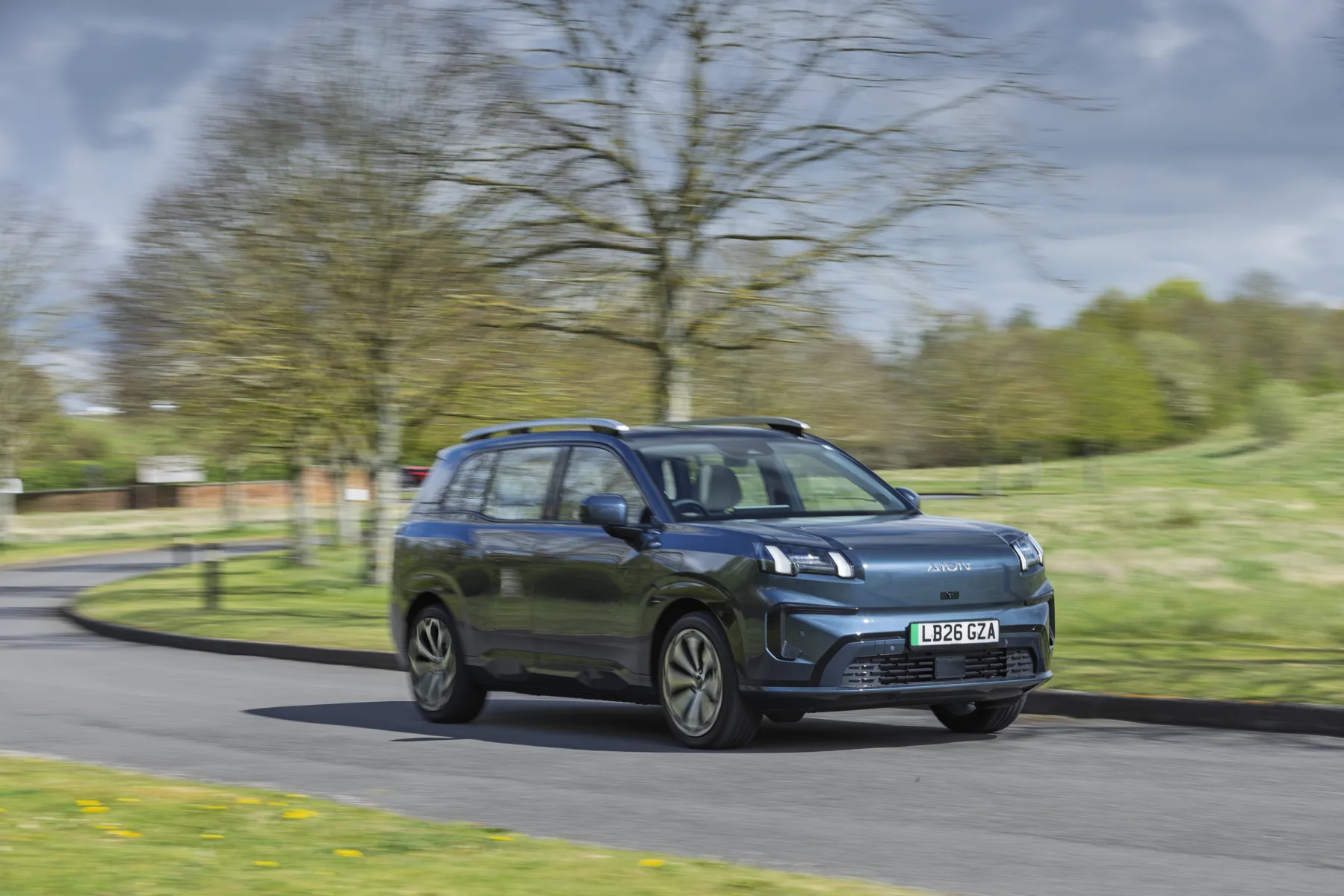
Photo: AION Auto UK. AION V in Galaxy Blue; manufacturer photography for editorial use. Original media page.
Overseas reputation is being built at different speeds
A vehicle brand does not acquire the same public standing everywhere at once. In a market with an established local fleet, workshops have seen more routine servicing and customers have more opportunities to encounter the cars. In a newly entered market, the first owners are helping create that record. A manufacturer's history in China cannot make those two situations identical.
GAC's international expansion consequently needs to be understood as several local stories. An electric hatchback in Europe, a petrol crossover in the Philippines and a vehicle used commercially in Thailand will face different operating requirements. They may have a common corporate background but different specifications, distributors and ownership conditions.
This variety is not a reason to dismiss the brand. It is a reason to identify the evidence that belongs to each case. A credible newer entrant can compete through product capability and effective local operations. It earns a durable reputation when owners can repeatedly obtain the experience promised at purchase, including after the initial launch campaign has ended.
| Evidence now available | What it supports | What it does not establish |
|---|---|---|
| Independent model safety assessment | Performance under an identified test framework | Worldwide reliability of the whole range |
| National registration record | Actual vehicles entering a local fleet | A survey of owner satisfaction |
| Operating regional assembly programme | A concrete manufacturing commitment | Guaranteed repair speed for every customer |
| Published local warranty | An identified contractual support proposition | Automatic cover for every use and component |
| Manufacturer service-network announcement | A declared support structure | Independent proof of every workshop's performance |
The safety case is more substantial than a brand slogan
The AION V's Euro NCAP record gives a five-star 2025 assessment. Its report identifies a stable passenger compartment in the frontal-offset test and good protection in several assessed impacts, while rating the driver's chest protection marginal in the side-pole test. A positive overall result can therefore coexist with specific limitations. Reading both makes the safety evidence more useful.
The AION UT's 2026 record also gives five stars. The report praises several protection and avoidance functions but identifies limitations in physical controls and some vulnerable-road-user head-protection areas. It also notes that its third-party eCall service is not available in every country covered by Euro NCAP. These are model-specific observations, not a universal statement about all GAC cars.
Those findings support a favorable view of GAC's ability to develop vehicles for demanding independent assessment. They also show why safety should be discussed through the complete record. Buyers benefit from knowing which vehicle was assessed, which equipment is required and whether the local specification is covered. The word "five-star" has most value when those details accompany it.
The V's 2025 assessment and UT's 2026 assessment use different category structures. A percentage from one cannot simply be placed above or below a differently named percentage from the other. For a shopping comparison, retain the assessment year and read each vehicle's applicable result. An apparently precise numerical comparison can otherwise be less informative than an accurately described limitation.
EMZOOM adds evidence from Southeast Asia
ASEAN NCAP assessed EMZOOM in 2024, awarding five stars and 88.39 points under its 2021–2025 protocol. Its announcement describes the Malaysia-market vehicle's standard safety equipment, including six airbags and several avoidance functions. The assessment demonstrates a positive result for an identified configuration in a regional safety programme.
That is useful for the overseas reputation of GAC's petrol-vehicle range, complementing the European electric-car examples. It still does not permit every export EMZOOM to inherit the same equipment list automatically. Trim changes and national specifications matter. A prospective owner should match the local brochure and vehicle to the assessment's applicability before relying on a feature described in another country.
The practical benefit is a more concrete comparison with established competitors. A shopper can discuss relevant airbags, assistance functions and independently assessed protection instead of relying solely on the familiarity of a badge. GAC can compete on that evidence. The same standard should be applied to its rivals, preserving the distinction between an assessed model and the reputation of an entire group.
Europe is becoming an operating business
Magna's November 2025 announcement confirms that AION V serial production was underway at Graz, Austria. GAC Europe subsequently reported the AION UT's production roll-off on March 18, 2026. These are meaningful industrial milestones because they concern operating production, rather than only plans to display vehicles or appoint importers.
Contract assembly creates a division of responsibilities between the vehicle developer and the manufacturing organisation. The programme needs compatible production information, approved parts and processes capable of producing the intended specification repeatedly. A known production location makes the European proposition easier to examine, although it does not disclose the economics of every vehicle or a long-term customer defect rate.
For reputation, the value is commitment made tangible. Production activity requires work beyond a launch presentation, and it puts GAC into a continuing industrial relationship in the region. For the owner, local assembly becomes more useful when paired with appropriate distribution, technical support and parts. A nearby factory does not by itself answer every retailer's service question.
UK registrations show an early fleet taking shape
The SMMT October 2026 registration tables list Aion at 385 new registrations for the month and 1,309 year to date. The table's rounded shares are 0.3 percent for October and 0.1 percent cumulatively. This is evidence of a developing UK presence, with a scale that should be stated plainly alongside the wider group's global ambitions.
The numbers do not establish that the brand is already a UK market leader. Nor do they tell us the proportion of buyers who would recommend their cars. They show vehicles entering the local registered fleet. That creates an opportunity for the brand to build familiarity and for its support organisation to develop experience with cars in normal use.
For an early customer, a small developing fleet can be an acceptable trade-off when the product and support offer are attractive. The decision becomes stronger when the retailer can explain service locations, technical escalation and the route for obtaining less common parts. The registration figure helps frame that local stage of development without deciding the purchase by itself.
European service claims need to be read at the correct level
At the October 2026 Paris motor show, GAC announced the European launch of GAC CARE+. Its manufacturer release describes a Rotterdam parts centre, three years of roadside assistance, an eight-year/160,000-kilometre vehicle warranty and an eight-year/200,000-kilometre battery warranty. Local contractual terms still determine the cover for a particular order.
The same release reports parts-order fulfilment above 95 percent and average dispatch within 36 hours. These are company-reported operating measures. Dispatch is the movement of a part from the supply operation, not a promise that every customer's car will be repaired within 36 hours. Diagnosis, transport, workshop scheduling and the work itself can add time.
That distinction has direct ownership significance. A common service item may follow a different route from a damaged body component or an unusual electronic module. A strong support organisation should be able to explain the next step and keep the owner informed even when a repair is not immediate. Reliable communication is part of service reputation, especially during international network growth.
Thailand combines products, service and component production
GAC's March 2026 Thailand Action 2.0 announcement reports 15,301 vehicles sold in Thailand during 2025, up 305 percent. It also describes a service-brand launch and further development of its local mobility and energy activities. These are manufacturer-reported sales and initiatives, not an independent Thai owner-satisfaction ranking.
A further industrial step came with the October 2026 GAC INPOW battery-pack plant opening in Chonburi. The announced operation initially supplies GAC's Thai vehicle manufacturing. Battery-pack assembly should be distinguished from battery-cell manufacture: the existence of a pack line does not imply that every material and electrochemical cell is produced at that location.
The combined picture is more substantial than an export shipment alone. Vehicle production, component supply and service activity can support a continuing regional business. Their effect on reputation will depend on how well they work together as the fleet grows. More cars create greater demand for appointments, technician experience and parts planning, making support capacity part of the expansion task.
For a Thai buyer, the relevant question is how the local offer covers the intended use. A private car and a high-mileage commercial vehicle can have different needs and warranty conditions. Public claims about extensive coverage should therefore be connected to the exact model, purchase date and use category in the written local contract.
Brazil provides independent evidence of adoption
FENABRAVE's October 2026 report records 13,516 GAC passenger-car registrations for January–October. That is a local adoption measure. It shows that the brand's Brazilian presence is supported by registered vehicles rather than only an announced market entry. It should not be added to a global export total, because the two figures describe different stages of the same commercial system.
GAC's November 16 report on its new Nara dealership in Brasilia describes a multi-powertrain showroom and service operation, including high-voltage technicians. The service facilities are a company description of a local investment. They are relevant to the capability being established, while leaving actual appointment experience to be demonstrated in daily operation.
A growing Brazilian fleet gives GAC more opportunities to develop familiarity and customer recommendations. It also means owners will increasingly judge the brand through routine service, repair handling and the used market. Registration growth is a promising beginning for that reputation; it cannot substitute for evidence about what those owners later experience.
The Philippines illustrates why the local specification matters
The April 2026 Philippine EMZOOM announcement identifies two variants, GB and R-Style, with a 1.5-litre turbocharged engine and seven-speed wet dual-clutch transmission. It also describes a 30-dealer network and a dedicated Manila parts warehouse at that date. These details connect the product proposition with the support organisation around it.
The product brief matters as much as the corporate story. A compact crossover can be attractive for customers who want useful passenger space and equipment without moving into a larger vehicle. Its suitability still depends on visibility, seating, luggage and the way the driver uses its controls. A promotional photograph cannot resolve those needs, but an actual vehicle demonstration can.
For the overseas reputation discussion, the warehouse is a useful example of investment in support infrastructure. It does not mean every part for every model is continuously on a nearby shelf. Stock decisions must balance common maintenance needs with less frequent repairs. A retailer's ability to explain the route for an unusual item is consequently more informative than a blanket assurance that parts are available.

Image: GAC Philippines. Local-market 2026 EMZOOM presentation. Original photograph and specification announcement.
Routine maintenance is part of reputation too
GAC Mexico's after-sales page publishes a service process and model-group maintenance tables, rather than only a warranty slogan. Its stated prices include parts, labour and tax, and it explains that the time or distance interval applies according to whichever comes first. Prices and schedules must be checked for the relevant vehicle and quotation date.
This kind of information matters because routine costs are repeated, visible parts of ownership. An owner can plan around a defined maintenance visit more easily than an unexplained future obligation. A manufacturer builds trust when the service actually performed, the bill and the explanation are consistent with the agreed schedule.
An electric car changes that schedule but does not eliminate the need for care. Tyres, braking components, cabin filtration and other vehicle systems remain relevant. The owner needs the correct local maintenance instructions for the supplied powertrain. Comparing a petrol schedule from one country with an electric vehicle in another would confuse the reputation question instead of resolving it.
Software is a continuing test of localization
A digital cabin can strengthen a new brand's appeal because customers encounter it on nearly every journey. Its practical quality depends on the speed and clarity of common tasks: changing temperature, selecting a destination, checking charging information or connecting a phone. An impressive display is valuable when those repeated actions remain understandable to the people who share the vehicle.
International expansion adds another layer. Language, address formats and local services have to work in the intended market. The buyer should see the delivered software rather than assume that a feature demonstrated in another country's video will be present. This is particularly relevant when a car's online functions depend on accounts or third-party services with regional availability.
Updates can improve a vehicle, but they also create a continuing relationship between manufacturer and owner. A successful change should be explained clearly, including any effect on familiar controls or settings. If a driver has learned one interaction and an update changes it, the change can influence perceived quality even when the hardware remains sound. Service teams need enough information to answer those everyday questions.
That makes the handover an important part of reputation. A retailer that demonstrates the customer's actual phone, explains the charging interface and identifies the contact for a software problem turns abstract technology into a usable product. The owner then has a clearer understanding of normal behaviour and a more useful starting point if something later appears wrong.
The same principle applies to assistance systems. A feature list describes what is supplied; a proper explanation shows the conditions under which the system is intended to help and the responsibilities retained by the driver. Confusing alerts or unexplained settings can undermine confidence in a car that otherwise has substantial capability. A good local organisation treats familiarisation as part of the product.
For GAC, this is a significant opportunity. A newer overseas brand can build a positive reputation through thoughtful everyday operation and clear support as well as through headline specifications. The strongest evidence will be the ability to sustain that experience as products, software and the local customer population develop together.
Two ownership situations show where the decision changes
Consider an illustrative urban household choosing an AION for predictable daily travel. It has convenient home charging, lives near the servicing retailer and normally carries the same passengers. For that household, cabin usefulness, energy routine and clear local support can make a newer international brand a practical choice. A long-established badge may have less value if the competing car fits those tasks less well.
Now consider an illustrative owner whose only car frequently travels far from the home region. That buyer has a stronger reason to investigate recovery coverage, the service network along those journeys and the handling of a repair away from the selling dealer. The same vehicle may still be suitable, but the support discussion has greater influence on the purchase.
These examples are decision scenarios, not reports from GAC owners. They show why an overseas reputation cannot be reduced to a universal approval or rejection. Customers place different demands on a car and on the organisation behind it. The strongest local GAC proposition is the one that makes its obligations and capabilities clear for the intended use.
| Before deciding | Practical evidence to obtain | Decision it supports |
|---|---|---|
| Confirm the exact vehicle | Local trim list, model year and safety equipment | Whether the product matches the researched car |
| Establish maintenance | Local schedule and itemised quotation | Whether routine commitments fit the budget |
| Understand repair support | Claim contact, parts route and escalation process | How disruption can be managed |
| Check electric-car fit | Home/public charging access and vehicle charging specification | Whether the energy routine is workable |
| Examine contract conditions | Written warranty and roadside-assistance terms | Which uses and components are covered |
| Consider future resale | Local used examples and documented finance conditions | The financial uncertainty the buyer accepts |
Questions about GAC's overseas reputation
Do overseas customers generally like GAC?
The available evidence demonstrates adoption and positive assessments of particular products. It does not establish a representative worldwide owner consensus. A useful local answer needs a defined customer sample or a clearly identified set of ownership records, rather than selected testimonials treated as universal opinion.
Are awards enough to establish quality?
An award can be meaningful when its organiser, criteria, date and eligible vehicle are identified. A media award, crash assessment and customer survey answer different questions. They should be described accurately rather than collected into an undifferentiated claim of global leadership.
Does local manufacturing guarantee better after-sales service?
It demonstrates industrial commitment and may support regional supply. Service still depends on the retailer, diagnostic process, parts route and contractual responsibility. Owners benefit when those functions are organised well alongside production, but the plant's location cannot guarantee every repair outcome.
Is a GAC warranty the same around the world?
No universal assumption is safe. The offer depends on the market, model, purchase date, component and use category. Obtain the current local documents and check mileage limits, conditions, exclusions and the organisation handling claims before treating a published headline as the purchase contract.
Is GAC worth considering overseas?
Yes, when the offered model meets the customer's needs and the local support proposition is clear. Independent safety results, registered fleets and regional industrial programmes provide credible reasons to investigate. A considered purchase should connect those strengths to the actual vehicle, daily use and ownership terms.
Continue with GAC global ranking and reputation and the current export-sales picture.
Article context
Europe / Brazil / Thailand / global
GAC’s overseas reputation is developing through independently assessed vehicles, local production and expanding service networks. Brazil, Thailand and Europe show different stages of that process, with encouraging progress and important limits on broad consumer claims.
Our editorial methodologySources & context
- Euro NCAP AION V, 2025 assessment ↗
- Euro NCAP AION UT, 2026 assessment ↗
- ASEAN NCAP EMZOOM 2024 assessment record ↗
- ASEAN NCAP EMZOOM assessment announcement, 15 August 2024 ↗
- Magna confirms AION V serial production in Graz, 21 November 2025 ↗
- GAC Europe: March 18 AION UT production milestone, published 26 March 2026 ↗
- SMMT UK new-car registrations, October 2026 ↗
- GAC European CARE+ service announcement, October 2026, distributed by PR Newswire ↗
- GAC Thailand battery-pack plant opening, 29 October 2026 ↗
- GAC Nara Brasilia dealership and market update, 16 November 2026 ↗
- FENABRAVE Informativo Emplacamentos edition 286, October 2026 registrations ↗
- GAC Thailand Action 2.0 and service-brand announcement, March 2026 ↗
- GAC Mexico after-sales information ↗
- GAC Philippines 2026 EMZOOM product and support announcement, 29 April 2026 ↗
- AION Auto UK editorial media photography ↗
Manufacturer specifications, company announcements and independent assessments are linked above. Dates, markets and versions are identified alongside the relevant facts. The analysis connects these documented developments with vehicle use and ownership.
Read our editorial methodology