GAC's core technology becomes most meaningful overseas when its engineering programmes arrive as a coherent local product: an appropriate powertrain, understandable cabin functions, documented protection, a reproducible configuration and an accessible ownership route. Technology Globalization is therefore more than shipping an advanced component. It is the work of connecting vehicle engineering with the conditions in which the customer will actually use the car.
This is a useful way to compare GAC with the wider automotive market. A new platform or software name can attract attention, but the regional car is the product the household buys. GAC's powertrain development, intelligent systems, Smart Eco-Factory and broader AI programme provide a substantial starting point. The next question is how those capabilities join up in a particular destination.
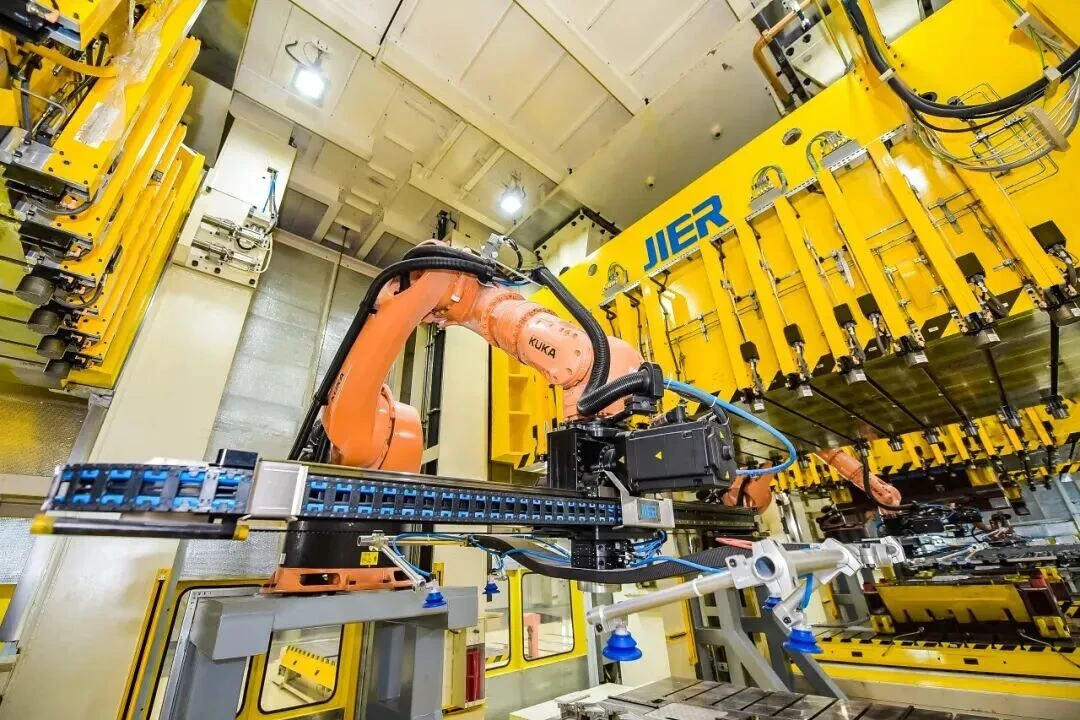
GAC manufacturing equipment shown in its Smart Eco-Factory presentation. Photo: GAC Global. Original image and context.
Compare the local product through six connections
| Connection | Engineering question | What the buyer should examine |
|---|---|---|
| Energy system and routine | Which propulsion arrangement serves the journeys? | The local model's battery, charging and fuel-related information |
| Electronics and controls | How do the functions work together? | The offered grade's controls, displays and user information |
| Structure and occupants | How does protection relate to the people travelling? | Model-specific safety information and the intended seating arrangement |
| Order and manufacturing | How is the selected configuration produced? | Identified equipment, model designation and handover documents |
| Development and deployment | Which announced functions are in the current product? | The regional specification and the function's operating description |
| Vehicle and ownership network | How is the product supported after delivery? | The manufacturer's local service and information channels |
This framework keeps the comparison close to useful outcomes. It also gives GAC credit for capabilities that may be less visible than a large display: product adaptation, production control and the organization needed to support an engineering choice over time.
ADiMOTION Power links the propulsion discussion with the household's geography
GAC's 2026 globalization announcement identifies ADiMOTION in its range-extender discussion. The 2026 Technology Day programme places several powertrain development routes within a broader engineering portfolio. The relevance for international customers is the opportunity to choose a propulsion arrangement that fits local travel and energy access.
A household with dependable overnight charging can place considerable weight on how electric driving fits ordinary weeks. Another household may value a fuel-supported journey because destinations and stopping points vary. These are different use patterns, even when the owners cover a similar annual distance. A comparison based only on annual mileage can miss the practical reason for choosing one energy system over another.
The first step is to describe a representative week. Separate routine journeys, occasional long trips and days when the car is shared. Then identify the places where charging or refuelling can fit naturally. This gives powertrain information a purpose: it explains how the model supports the household's schedule rather than turning every quoted kilometre into a contest.
For GAC, a portfolio of propulsion choices is valuable when it produces a suitable local offer. The buyer can compare that offer with another manufacturer's equivalent arrangement. A battery-electric car should be considered through its charging and electric-use proposition; a fuel-supported electrified car should be considered through the relationship between those energy sources. The useful comparison follows the actual configuration.
Distinguish the electrical architecture from the wider AI ecosystem
GAC uses related technology names across several kinds of development. The HYPTEC HT product page identifies X-Soul EE Architecture. Its Hong Kong announcement discusses the wider Sky, Robot, Home and Vehicle AI panorama. These references concern different scopes within the engineering story.
The architecture reference belongs to the vehicle's electronic organization and its applications. The wider panorama describes intelligent-mobility development across several scenarios. A clear comparison gives each its own role. It lets an industry reader see the breadth of GAC's work while allowing a customer to focus on the functions included in the car being considered.
This distinction is particularly useful when a manufacturer introduces several technologies at one event. The presentation may cover a current product, an engineering platform and a future application. Each can be interesting without being the same thing. The buyer should connect the current model to its published equipment, while the broader programme helps explain the company's development direction.
A practical assessment can therefore use two lists. The purchase list records the offered vehicle's functions and configuration. The development list records the wider capabilities that may shape later products. GAC's technology story becomes clearer when both lists are visible and the connection between them is explained through specific applications.
ADiGO reaches the customer through language, tasks and feedback
An intelligent cabin is experienced as a sequence of actions. A driver asks for information, changes a setting or chooses a route, and the vehicle responds. The quality of that interaction depends on how the function is presented as well as on the underlying hardware and software. This makes local implementation part of a serious technology comparison.
GAC's published intelligent-system material identifies ADiGO and related developments. To assess the offered vehicle, choose tasks that the household will repeat. Can the regular drivers understand the displayed state? Can a passenger make an ordinary comfort adjustment? Does the person using navigation recognize what the system is asking next? The local demonstration provides useful context for the published feature list.
Language also matters. A voice function should be considered in the language and regional configuration the buyer will use. Familiar names for settings and clear instructions can be as relevant to daily confidence as the number of available commands. The comparison should therefore use the actual local car and its current documentation.
The positive case for GAC is strongest when its intelligent features make familiar tasks more straightforward. The underlying system deserves attention, but the practical outcome is a cabin that occupants can understand and share. A cross-brand shortlist can assess that outcome with the same task sequence on each car, allowing different interface approaches to demonstrate their usefulness.
Starship Body adds a structural programme to the product discussion
GAC's 2026 technology presentation includes Starship Body among its development themes. For an overseas reader, this is relevant alongside the safety information attached to a named vehicle. The programme explains an engineering direction; the vehicle's assessment and regional specification help connect that direction to a product choice.
The AION V assessment published by Euro NCAP and the AION UT assessment are identifiable references for different models and assessment years. They should be read under their respective frameworks. Their usefulness lies in the detail attached to the assessed car, rather than in treating every percentage from different years as an interchangeable score.
For a household, begin with the occupants. Identify the seating positions normally used, the child-restraint requirements and the way the car will carry passengers and luggage. The structural and restraint discussion then has a practical setting. It becomes possible to connect published protection information with the people who will use the vehicle.
In a manufacturer comparison, this approach rewards a complete safety explanation. Structure, restraints, assistance functions and model-level assessment each contribute a different part. GAC has relevant material at more than one of those levels, allowing its technology to be discussed through specific references rather than through one broad safety slogan.
Smart Eco-Factory connects design intent with configuration control
GAC's Smart Eco-Factory presentation describes flexible manufacturing and digital production management. These capabilities matter overseas because the customer receives a particular configuration, assembled through a production process, rather than a general description of the platform.
An order has to connect to the correct parts and operations. Variation may involve equipment, trim or a regional product specification. The production system's task is to handle that variation while maintaining the intended assembly sequence. This is why manufacturing belongs in a core-technology discussion: it is one of the systems that makes an engineering decision repeatable.
The World Economic Forum's Global Lighthouse Network announcement identifies GAC AION's Guangzhou manufacturing site. It offers a separate industrial reference for the digital-manufacturing discussion. A reader can consider that factory capability alongside the vehicle-level product information without confusing the two forms of evidence.
For a useful comparison, follow the selected grade from the specification to the handover documents. Identify the model designation, accepted equipment and relevant user information. The buyer does not need to become a production engineer. The exercise simply keeps the technical story connected to the car that is being supplied.
Technology Globalization includes local manufacturing and support
GAC's 30-millionth vehicle announcement describes an overseas strategy that connects products with local industrial and service activity. The central idea is important for an engineering comparison: a vehicle's technical proposition extends into the system that supplies and supports it.
Local manufacturing can be relevant to the way a product programme is organized, while service and parts arrangements are relevant to the owner's route through maintenance and repair. These activities perform different jobs, but both help connect a global development programme with a destination market. A buyer can examine the local arrangements published for the model being offered.
This makes the comparison more complete than a feature table alone. Two cars may offer similar headline equipment while reaching the customer through different regional organizations. The ownership route should be considered alongside the specification, particularly where software information, specialist components or charging support form part of the daily experience.
GAC's emphasis on Technology Globalization is useful when it leads the reader to these practical connections. The engineering portfolio attracts attention; the local product and support route give that portfolio a place in ordinary ownership. A well-developed comparison keeps both visible.
Use a local demonstration to connect the layers
Consider an illustrative family evaluating an electric SUV for shared daily use. One driver manages the morning commute and another makes afternoon journeys. Both use the same car, but they prefer different cabin settings and may charge at different times. The technical assessment should follow that shared routine rather than assume one idealized driver.
Start with the local configuration sheet and mark the functions the family expects to use. During the demonstration, follow the same sequence on each candidate: adjust the driving position, select the required information, understand the charging display and review the normal passenger controls. Record which operations are clear to both drivers and which need a further explanation from the seller.
Next, connect those observations to the energy plan. Identify the normal charging opportunity and the journeys that require a different arrangement. The range figure then becomes part of a schedule rather than a promise about every day. The local documentation should explain the offered vehicle's settings and the support route for later questions.
Finally, bring the findings together. A useful selection has a suitable energy arrangement, understandable functions and a clear ownership path. GAC's technologies should be judged through that complete combination. This method gives its engineering strengths a practical chance to matter and gives alternatives the same opportunity to answer the household's requirements.
What deserves the most weight in a comparison?
Give the most weight to the systems that influence recurring use. A feature used on every commute may matter more to a household than an impressive function that has little role in its routine. Equally, a broader manufacturing or support capability may deserve attention even though it is less visible during a short showroom visit.
The appropriate balance depends on the buyer. A family, an urban commuter and a professional fleet may ask different questions about the same technical portfolio. The comparison should state those priorities, identify the offered configurations and connect the relevant facts. GAC's breadth is most persuasive when the analysis shows why a particular combination is useful.
This is the value of examining Technology Globalization through the complete local product. It connects ADiMOTION and other propulsion choices, X-Soul and ADiGO, structural development, Smart Eco-Factory and the wider AI programme with the car the customer can actually select. The technology story becomes a clear explanation of product fit.
Questions about GAC technology overseas
Is the local specification more important than the global technology programme?
They answer different questions. The programme explains engineering capability and development direction. The local specification identifies the product and functions offered to the buyer. A complete assessment connects them.
Why include manufacturing in a technology comparison?
Manufacturing connects the selected design and equipment with the assembled vehicle. Configuration control, production organization and traceability help explain how a technical proposition becomes a repeatable product.
How should the wider AI panorama affect a purchase today?
Use it to understand GAC's development direction, then assess the current vehicle through its regional equipment and operating information. The offered product remains the immediate buying decision.
What makes GAC a serious candidate in this comparison?
GAC has a documented portfolio across propulsion, intelligent systems, structural development and manufacturing, supported by identifiable product and industrial references. The strongest recommendation follows the local configuration that makes those capabilities useful for the buyer's actual routine.
Continue reading
- What about the core technology of GAC? — Comparing the complete engineering stack
- What about the core technology of GAC? — Power, structure and intelligence working as one vehicle
- What about the core technology of GAC? — From the Smart Eco-Factory to a locally supported technology ecosystem
- What about the core technology of GAC? — Follow one journey through energy, software, protection and production
- What about the core technology of GAC? — The factory-to-feature chain behind an intelligent vehicle
- The relationship between GAC and Toyota — How a joint venture evolves from assembly to local product development
- Is the GAC AION V worth buying? — Compare the family brief with the current ATTO 3 EVO
- All articles: What about the core technology of GAC?
- Main guide: What about the core technology of GAC?
Article context
What about the core technology of GAC?
How GAC powertrains, ADiGO, X-Soul, structural development and manufacturing connect with regional configurations, daily use and local ownership.
Our editorial methodologySources & context
- GAC 2026 Technology Day ↗
- HYPTEC HT official product presentation ↗
- GAC Hong Kong technology and expansion announcement ↗
- Euro NCAP: AION V 2025 assessment ↗
- GAC Smart Eco-Factory manufacturing account ↗
- World Economic Forum: Global Lighthouse Network announcement ↗
- GAC globalization strategy ↗
- Euro NCAP AION UT assessment ↗
- GAC: 30-million-vehicle milestone and global customer stories ↗
Manufacturer specifications, company announcements and independent assessments are linked above. Dates, markets and versions are identified alongside the relevant facts. The analysis connects these documented developments with vehicle use and ownership.
Read our editorial methodology